The Luminous Vedute of Apollonio Domenichini
In the golden twilight of the Venetian Baroque, few artists captured the ephemeral magic of the Serenissima with as much grace and precision as Apollonio Domenichini. Born in Venice around 1715, Domenichini emerged during a period when the city was not merely a political entity but a global stage for artistic splendor. Often whispered of in art historical circles as the Maestro della Fondazione Langmatt, his identity is inextricably linked to the very soul of Venice. His life and work represent a bridge between the dramatic intensity of the late Baroque and the light-filled, airy elegance of the burgeoning Rococo style, creating a visual language that celebrated both architectural permanence and the fleeting beauty of light upon water.
The foundations of Domenichini’s mastery were laid in the vibrant studios of his contemporaries. While some accounts suggest the profound influence of Giovanni Battista Tiepolo—evident in the luminous color palettes and sweeping compositions found in his more ambitious works—his formal training was deeply rooted in the tradition of the veduta, or view painting. As a pupil of Luca Carlevarijs and Johan Richter, he inherited a rigorous commitment to topographical accuracy and the ability to render complex architectural perspectives. This lineage allowed him to move beyond mere illustration, transforming the bustling canals and grand piazzas into poetic landscapes that resonated with both local pride and international fascination.
A Master of Venetian Light and Perspective
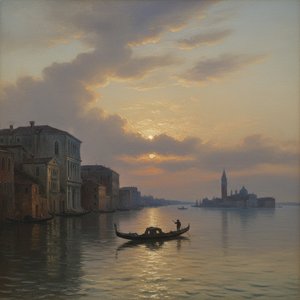
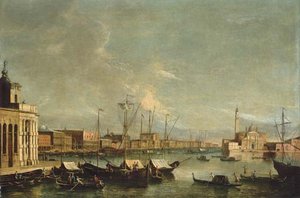
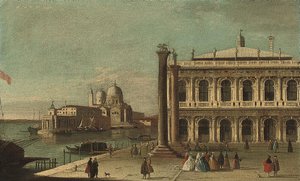
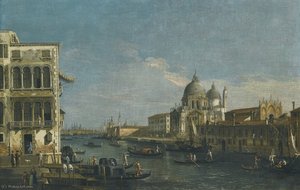
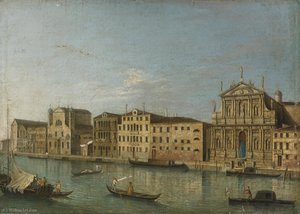
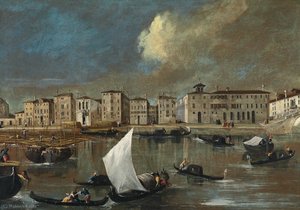
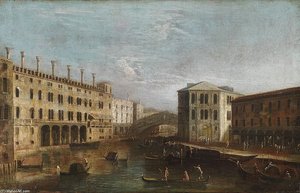
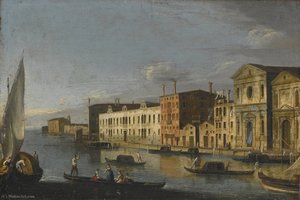
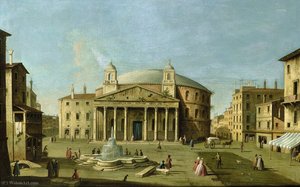
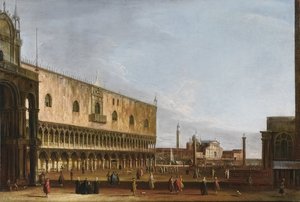
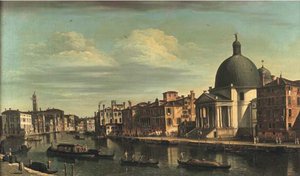
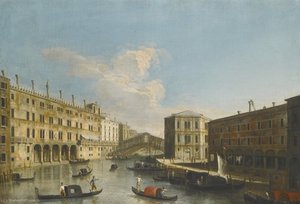
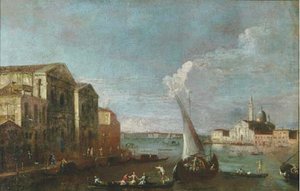
Domenichini’s true genius lay in his ability to breathe life into stone and water. He was a specialist of the vedute, focusing his creative energies on the iconic vistas of Venice and its surrounding territories. To gaze upon a Domenichini canvas is to experience the rhythmic pulse of the Grand Canal or the quiet majesty of Piazza San Marco through a lens of profound tranquility. His technique was characterized by a delicate, almost ethereal brushwork that achieved remarkable atmospheric effects, capturing the way the Adriatic mist softens the edges of a cathedral dome or how the midday sun glints off the ripples of a passing gondola.
His compositions often utilized subtle tonal gradations to guide the viewer’s eye through the labyrinthine beauty of the Venetian cityscape. Whether depicting the imposing presence of Santa Maria della Salute or the intimate corners of a canal-side church, he maintained an unwavering commitment to architectural detail. This precision did not come at the expense of emotion; rather, it provided the structural integrity necessary to support his more evocative, atmospheric explorations. Through his use of light, he could shift a scene from the bright, optimistic clarity of morning to the melancholic, shadowed depths of dusk, making the city itself a living, breathing protagonist in his art.
Legacy and the Langmatt Connection
The historical significance of Domenichini extends far beyond the borders of Italy, reaching into the great private collections of Europe. His reputation was bolstered by the sophisticated art trade of the eighteenth century, notably through the efforts of dealers like Giovanni Maria Sasso, who facilitated the movement of his works to prestigious patrons such as the English minister John Strange. This international circulation ensured that the Venetian aesthetic he championed became a standard of taste across the continent.
Perhaps the most enduring testament to his prestige is his association with the Langmatt Foundation. The attribution of his name to this collection—derived from a series of thirteen exquisite vedute held by the foundation in Baden—serves as a permanent link between his artistry and the era of great European connoisseurship. Today, Domenichini is remembered not merely as a chronicler of buildings, but as an artist who captured the very essence of a vanishing world. His paintings remain vital windows into the eighteenth century, offering a sense of timeless grandeur that continues to enchant the modern observer.