Shusaku Arakawa & Madeline Gins: A Collaborative Journey
Early Life and Background
- Shusaku Arakawa was born on July 6, 1936, in New York City. He initially pursued a career in medicine before turning to art.
- Madeline Gins (born Madeline Helen Gins) was an American poet, writer, and artist. Her diverse background significantly influenced her collaborative work with Arakawa.
Artistic Collaboration & Development
- Arakawa and Gins began their artistic collaboration in the 1960s, forging a unique partnership that spanned painting, sculpture, architecture, and performance art.
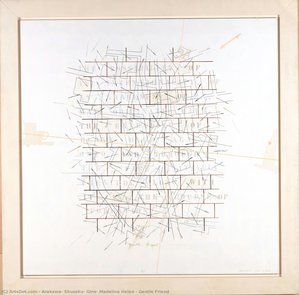
- Their early work challenged conventional notions of perception and representation, often incorporating linguistic puzzles and philosophical inquiries.
- They moved beyond traditional mediums to explore interactive environments and architectural designs intended to alter human consciousness.
Key Influences
- The pair drew inspiration from a wide range of sources including Leonardo da Vinci’s scientific investigations, Albert Einstein’s theories of relativity, and the philosophical writings of Ludwig Wittgenstein.
- They were also influenced by early 20th-century avant-garde movements like Dada and Surrealism, particularly their rejection of traditional artistic norms.
- The exploration of perception was a constant thread throughout their work, informed by studies in neuroscience and psychology.
Major Works & Artistic Style
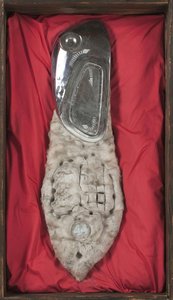
- Notable works include the “Another Cemetery” series, which explores themes of mortality and memory through abstract imagery.
- “The Machanism of Meaning No. 2 Splitting of Meaning” exemplifies their interest in linguistic deconstruction and visual ambiguity.
- Their architectural projects, such as the “Reversible Destiny Lofts,” are designed to disrupt habitual patterns of movement and perception.
- Arakawa and Gins’ style is characterized by its conceptual rigor, intellectual depth, and willingness to challenge artistic boundaries.
The Reversible Destiny Foundation & Architectural Research
- In the 1990s, Arakawa and Gins founded the Reversible Destiny Foundation and the Architectural Body Research Foundation.
- These organizations facilitated interdisciplinary research involving biologists, neuroscientists, physicists, and medical professionals.
- Their goal was to investigate the relationship between the body, environment, and consciousness, leading to innovative architectural designs aimed at prolonging life and enhancing sensory experience.
Historical Significance & Legacy
- Arakawa and Gins’ work represents a significant contribution to conceptual art and experimental architecture.
- They challenged conventional notions of artistic authorship, creating a truly collaborative practice that blurred the boundaries between disciplines.
- Their exploration of perception, mortality, and the human condition continues to resonate with artists, architects, and thinkers today.
- Their legacy lies in their commitment to pushing the limits of art and using it as a tool for philosophical inquiry and social transformation.
Death & Remembrance
- Shusaku Arakawa passed away on May 19, 2010. Madeline Gins continued their collaborative projects until her own passing in 2014.
- Their work remains influential and is exhibited in galleries and museums worldwide.