Menu
FREE ART CONSULTATION

buhot félix hilaire

1847 - 1898

Quick Facts

  • Died: 1898
  • Works on APS: 11
  • Top 3 works:
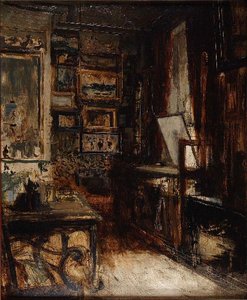
    • Coin d'atelier au 71 Bd de Clichy L'atelier du graveur
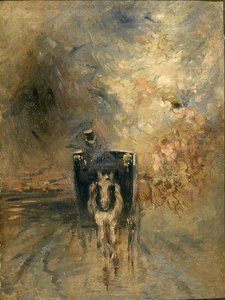
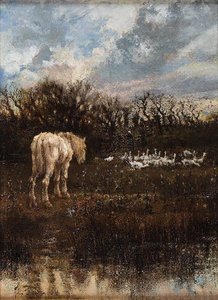
    • Le vieux cheval
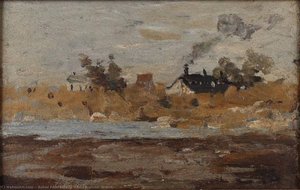
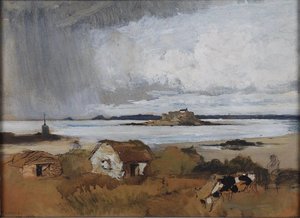
    • Une maison
  • Copyright status: Public domain
  • Born: 1847
  • More…

Art Quiz

There is only one correct answer for each question.

Question 1:
What is Félix Buhot most known for regarding his printmaking techniques?
Question 2:
Which city did Buhot frequently depict in his prints, capturing its atmosphere and street life?
Question 3:
What inspired Buhot’s ‘symphonic margins’?
Question 4:
During which period did Buhot achieve significant success with his prints, exhibiting at the annual Salons?
Question 5:
What was a key characteristic of Buhot’s approach to cityscapes?

Félix Buhot: A Master of Atmospheric Printmaking

Félix Hilaire Buhot (July 9, 1847 – April 26, 1898) stands as a pivotal figure in the history of 19th-century printmaking, an artist who relentlessly pushed the boundaries of technique and vision. Born in Normandy, France, his journey led him to Paris, where he cultivated a unique style characterized by atmospheric landscapes, evocative cityscapes, and a profound engagement with the ephemeral qualities of light and weather. Buhot wasn’t merely a printer; he was a painter translating his observations onto copper plates, creating works that resonate with a deeply felt sense of place and mood. His legacy rests not just on individual prints but on the revolutionary methods he pioneered, most notably his “symphonic margins,” which fundamentally altered how printmaking could be approached.

Early Life and Artistic Training

Buhot’s early life remains somewhat shrouded in detail, though it's known that he received a foundational artistic education in Normandy before relocating to Paris. It was in the bustling metropolis that his passion for printmaking truly ignited. He quickly immersed himself in the established techniques of etching, drypoint, and aquatint – traditional methods employed by many artists of the time. However, Buhot’s ambition extended far beyond simply replicating existing processes; he sought to synthesize them, incorporating modern innovations like photomechanical reproduction alongside these classical approaches. This willingness to experiment, coupled with a keen eye for detail, set him apart from his contemporaries. His early works demonstrated an immediate talent for capturing the nuances of light and shadow, foreshadowing the atmospheric depth that would become his signature style.

The “Symphonic Margins” – A Revolutionary Technique

Buhot’s most enduring contribution to printmaking lies in the development of what he termed "marges symphoniques" – or “symphonic margins.” This ingenious technique involved etching the first, defining image directly onto the same plate as the central subject. Simultaneously, a second, contrasting margin was created on a separate plate and then printed alongside the main image. These margins weren’t merely decorative; they were integral to the overall composition, acting as visual echoes of the scene depicted and contributing significantly to the print's atmospheric effect. This innovative approach allowed Buhot to create layered textures and complex spatial relationships within his prints, elevating them beyond simple representations. The concept was inspired by the marginal decorations found in medieval manuscripts and eighteenth-century French book illustrations – a deliberate nod to tradition blended with a strikingly modern sensibility.

Parisian Landscapes and Urban Scenes

Buhot’s artistic focus frequently centered on his immediate surroundings in Paris, particularly the vibrant neighborhood of Montmartre. He meticulously documented the city's daily life, capturing scenes of bustling street markets, festive holidays, somber funerals, and the ever-changing weather conditions that defined Parisian existence. His prints of “Winter in Paris” (1879) are iconic examples of his ability to convey a specific atmosphere through subtle shifts in tone and texture. He wasn’t simply depicting buildings and people; he was attempting to capture the *feeling* of being in Paris – its energy, its melancholy, its beauty. His depictions of London, particularly Westminster Palace and Bridge, also demonstrate his interest in capturing distinct regional atmospheres.

Influence and Legacy

Buhot’s influence on subsequent generations of printmakers is considerable. He was recognized as one of the most accomplished painter-etchers of his time, admired for his technical skill and artistic vision. His experimentation with multiple processes and techniques paved the way for later developments in printmaking, particularly during the rise of Impressionism. Artists like Charles Jacque, Louis Monziès, and Félix Bracquemond, who worked alongside him, were all influenced by Buhot’s innovative approach. His work was exhibited widely throughout Europe and America, gaining considerable acclaim and establishing a dedicated following among collectors. Today, his prints are treasured for their atmospheric beauty, technical sophistication, and the unique perspective they offer on 19th-century life. His legacy continues to inspire artists who seek to capture the fleeting moments of experience through the art of printmaking.