The Rhythmic Pulse of Yoruba Heritage
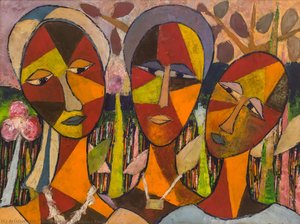
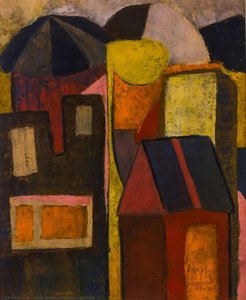
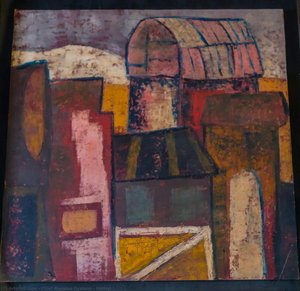
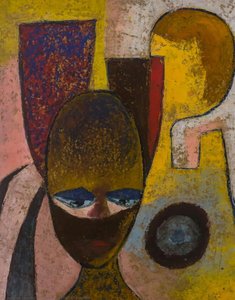
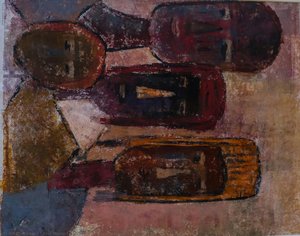
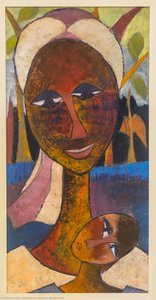
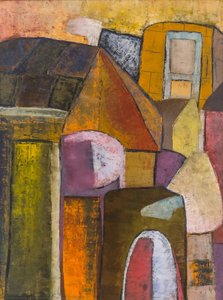
In the vibrant landscapes of postcolonial Nigeria, the artistry of Chief Muraina Oyelami emerged not merely as a visual phenomenon, but as a rhythmic dialogue between sound and sight. Born in 1940 in Iragbiji, Oyelami’s creative soul was forged in the crucible of tradition, where the primordial beats of the dùndún and Batá drums provided the foundational cadence for his later explorations in paint. As a pivotal figure of the Osogbo School of Art, he did not simply observe culture; he performed it, weaving the oral histories of the Yoruba people into a visual language that resonated far beyond the borders of West Africa.His early immersion in the transformative workshops of the Mbari Mbayo Artists and Writers Club, under the visionary guidance of Ulli and Georgina Beier, allowed him to bridge the gap between ancestral storytelling and modern experimentation. This period was marked by a profound synthesis of influences, where the geometric precision of Cubism met the fluid, emotive power of Abstract Expressionism. Oyelami’s work became a canvas for the soul of Nigeria, capturing the essence of folklore through bold colors and an almost tactile, impasto texture that mirrored the rugged beauty of his homeland.
A Symphony of Performance and Paint
To understand Oyelami is to witness the seamless integration of the stage and the studio. His tenure with the Duro Ladipo Theatre Company served as a vital laboratory for his visual development. As an actor and musician, he inhabited the very myths he would later depict on canvas, gaining an intimate understanding of movement, costume, and dramatic tension. This theatricality is unmistakable in his paintings, where figures often emerge from geometric landscapes with a sense of staged importance and ritualistic grace.This multidisciplinary mastery was further refined through his formal studies in theatre design at Obafemi Awolowo University. His ability to structure space and narrative allowed him to treat the canvas as a stage, where:
- Geometric forms act as the architecture of the scene;
- Vibrant palettes evoke the heat and vitality of Yoruba life;
- Abstracted figures embody the archetypes of ancient legends.
A Global Legacy of Cultural Preservation
Oyelami’s journey eventually carried the echoes of Nigeria to the international stage, from the Berlin Festival of Art to a prestigious fellowship at the Harlem Renaissance Theatre in New York. These global encounters did not dilute his cultural essence; rather, they provided new lenses through which to view his heritage. His time as a lecturer and guest professor in Germany further solidified his role as a cultural ambassador, translating the complexities of African studies into a medium accessible to the world.Today, the legacy of Chief Muraina Oyelami stands as a testament to the power of artistic hybridity. He remains a master of the visual poem, an artist who successfully navigated the delicate balance between preserving the sanctity of Yoruba tradition and embracing the limitless possibilities of modernism. His work continues to inspire, reminding us that art is most potent when it vibrates with the authentic pulse of its origins.