The Legacy of Porcelain Mastery: Christian Gottfried Schierholz and Sohn
In the heart of Germany’s Romantic era, a period defined by both industrial burgeoning and profound artistic sensitivity, the name Christian Gottfried Schierholz und Sohn emerged as a beacon of ceramic excellence. The story of this illustrious manufactory is not merely one of business, but a sweeping narrative of inherited passion and entrepreneurial vision. It began in the late 18th century, rooted in the skilled hands of the Heuäcker brothers, renowned porcelain painters who brought the refined elegance of the Plaue Manufactory to life. When tragedy struck the partnership through the death of one brother, Christian Gottfried Schier and his burgeoning spirit stepped into the void, transforming a specialized workshop into a legendary dynasty that would endure for over a century and a half.
Born in 1787 in Arnstadt to a prosperous merchant family, Schierholz possessed a unique blend of commercial acumen and aesthetic appreciation. His journey was marked by strategic movements, most notably his 1817 relocation to Dornheim. This move placed the manufactory at the center of Germany's industrial evolution, allowing the artistry of the porcelain to meet the growing demands of an expanding European market. The early years of the enterprise were characterized by a deep reverence for established traditions; the works produced during this era were masterclasses in Rococo and Meissen-style aesthetics, capturing the delicate whimsy and intricate floral motifs that defined the high-society tastes of the time.
Innovation Through Light and Form
As the 19th century progressed, the Schierholz legacy transitioned from mere imitation of classical styles to groundbreaking technological and artistic innovation. The arrival of Schierholz’s sons, Julius Adelbert and Hugo, in 1851 breathed new life into the company, pushing the boundaries of what porcelain could achieve. One of their most breathtaking achievements was the pioneering of lithophanes—extraordinary porcelain sculptures designed to reveal hidden, photographic-like images when illuminated from behind. This marriage of light and ceramic medium demonstrated a remarkable grasp of emerging technologies, turning functional objects into magical, ephemeral experiences for the discerning collector.
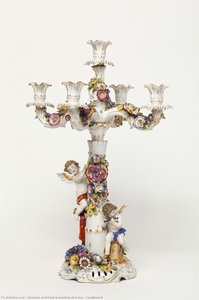
By the mid-1860s, the company underwent a profound stylistic metamorphosis. Moving away from purely industrial or domestic porcelain, the manufactory pivoted toward the creation of exquisite objets d’art. This era saw the rise of highly decorative figurines, ornate vases, and elegant candlesticks that showcased a mastery over form and surface decoration. The artistry began to reflect the shifting tides of European design, incorporating elements of the Secession style and more complex, character-driven modeling. The work of master modelers like Edmund Haase further elevated the collection, introducing a level of psychological depth and realism to porcelain figurines that remains unparalleled.
A Timeless Artistic Significance
The historical significance of Christian Gottfried Schierholz und Sohn lies in their ability to navigate the volatile economic landscapes of Europe while maintaining an unwavering commitment to quality. Their work serves as a tactile timeline of German ceramic history, tracing the path from the ornate flourishes of the Rococo period through the technological marvels of the mid-19th century and into the modern decorative movements. To hold a piece of Schierholz porcelain is to touch a fragment of the Romantic era—a moment when craftsmanship and innovation danced in perfect harmony.
Today, the name remains synonymous with the pinnacle of German porcelain artistry. The enduring legacy of the Schierholz family continues to inspire collectors and historians alike, standing as a testament to a lineage of creators who saw not just clay and pigment, but the potential for light, shadow, and eternal beauty. Their contributions to the world of ceramics ensure that their delicate, translucent masterpieces will continue to be cherished as much for their technical brilliance as for their profound emotional resonance.