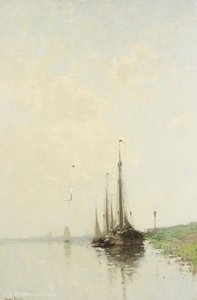
The Soul of the Dutch Countryside
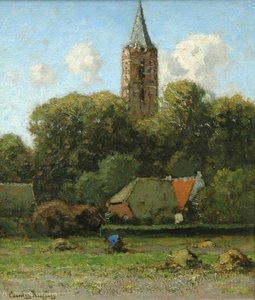
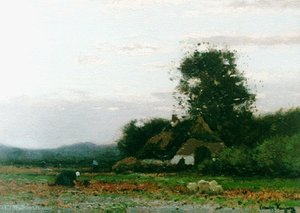
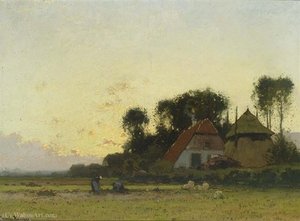
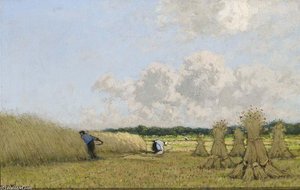
In the quietude of a late nineteenth-century afternoon, one can almost feel the damp mist rising from the waterways and the rhythmic grazing of cattle in the meadows, all captured through the evocative lens of Cornelis Kuypers. Born in Gorinchem in 1864, Kuypers emerged during a transformative era for Dutch art, a period when the nation sought to reconcile its rich historical identity with the burgeoning modern movements of Europe. His life and work serve as a profound meditation on the landscape, embodying a spirit that was simultaneously anchored in the meticulous observation of reality and elevated by a poetic, almost spiritual, appreciation for the natural world. As a prominent figure within the second generation of the
Haagse School, Kuypers did not merely paint scenery; he captured the very breath of the Netherlands.
A Symphony of Light and Realism
The foundation of Kuypers’ mastery was laid in the halls of the Koninklijke Academie voor Beeldende Künsten in Amsterdam. It was here that his technical precision began to harmonize with the shifting artistic tides of his time. He possessed a rare ability to navigate the delicate tension between two seemingly opposing forces: the emotional intensity of
Romanticism and the atmospheric spontaneity of
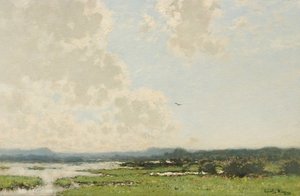
Impressionism. While the Romantic tradition inspired him to seek the sublime grandeur within nature, the Impressionist influence taught him to chase the ephemeral—the way light dances upon a river or how a cloud casts a fleeting shadow over a polder. This synthesis resulted in a style of
Dutch Realism that was as scientifically accurate in its rendering of form as it was emotionally resonant in its depiction of mood. His brushwork, though disciplined, allowed for a luminous quality that brought his canvases to life, making the stillness of a landscape feel vibrantly alive.
Timeless Visions of Nature
Kuypers’ repertoire was a tribute to the diverse beauty of his homeland, ranging from the expansive maritime vistas to the intimate corners of a garden. He had an unparalleled gift for finding the extraordinary within the ordinary, turning simple subjects into icons of pastoral peace. His work often focused on:
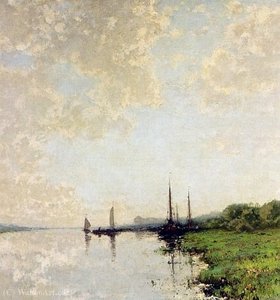
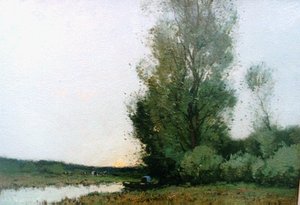
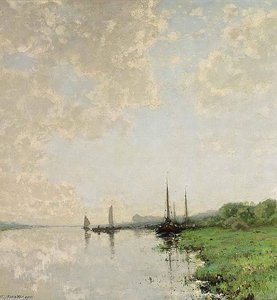
- The serene movement of maritime scenes, where boats glide through tranquil Dutch waterways.
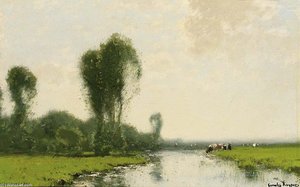
- The rustic charm of pastoral landscapes, featuring cattle wandering through lush, verdant pastures.
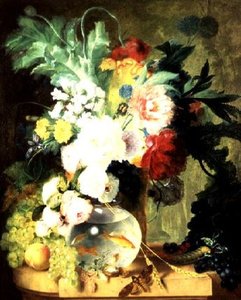
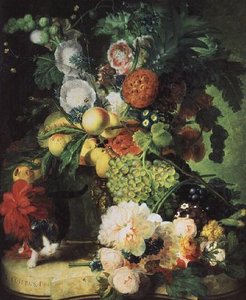
- The delicate intimacy of still life compositions, such as his masterful depictions of vibrant flowers and charming domestic elements.
Through these subjects, Kuypers explored the interplay of texture and light, whether it was the rough bark of a tree, the soft petal of a bloom, or the reflective surface of a stream.
A Lasting Legacy
Though his life came to an end in Soest in 1932, the legacy of Cornelis Kuypers remains etched in the landscape of art history. He stands as a bridge between the classical traditions of the past and the modern sensibilities of the future, providing a sense of continuity to the Dutch painting tradition. His ability to translate the psychological impact of nature onto canvas ensures that his work continues to resonate with contemporary viewers, offering a sanctuary of peace and a profound connection to the earth. To look upon a Kuypers landscape is to experience a moment of timelessness, where the beauty of the Dutch countryside is preserved forever in a state of perfect, luminous grace.