Early Life & Training: Utrecht Roots and Bloemaert’s Influence
The story of Cornelis van Poelenburch begins shrouded in a gentle mystery, his birthplace remaining unknown despite surviving documentation placing him within the walls of Utrecht as early as 1594-1595. This initial glimpse into his existence reveals a young boy, six years old and son to Simon van Poelenburch, a Catholic canon—a detail that subtly hints at the cultural currents shaping his formative years. It was under the tutelage of Abraham Bloemaert, a leading figure in Utrecht’s artistic landscape, that Van Poelenburch first began to cultivate his remarkable talent. Bloemaert's influence is palpable in these early works; a meticulous attention to detail, a refined draftsmanship, and a nascent understanding of composition all bear the hallmarks of his master’s hand. However, even within these initial exercises, a distinct sensibility begins to emerge—a yearning for expansive space and a delicate handling of light that would come to define Van Poelenburch's signature style. Bloemaert provided a solid foundation in the prevailing Mannerist traditions, but it was a journey beyond Utrecht’s borders that truly ignited the artist’s unique vision.
The Roman Years: Founding Member of the Bentvueghels and Italianate Style
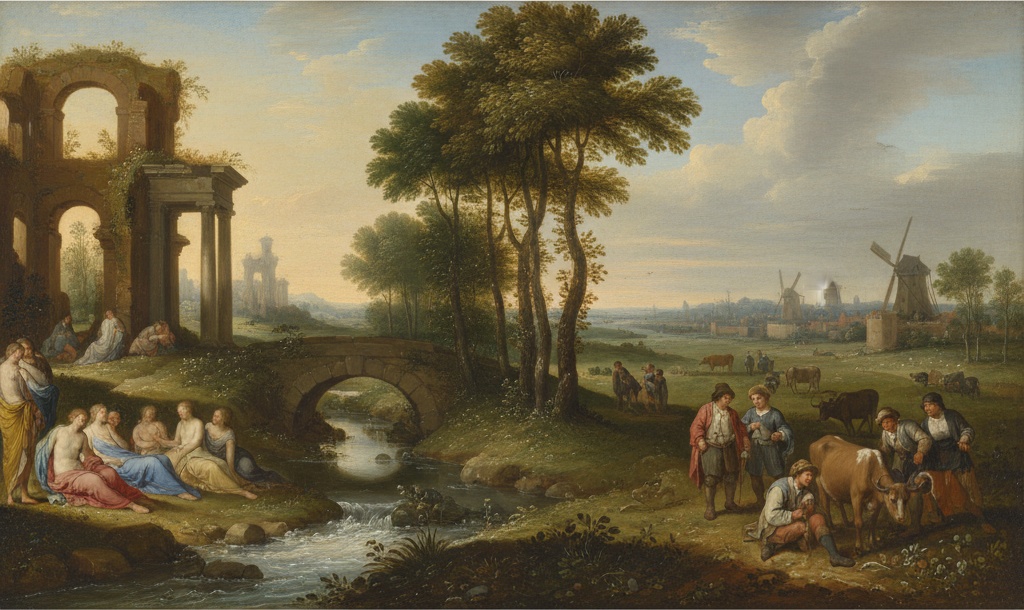
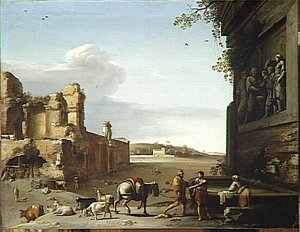
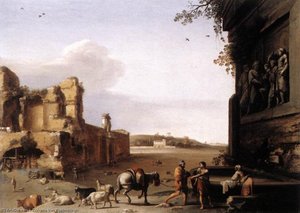
In the early 17th century, Rome served as an irresistible magnet for ambitious Northern European artists seeking inspiration from the classical world. Van Poelenburch was no exception. His arrival in the Eternal City marked a pivotal turning point, immersing him in a vibrant artistic milieu steeped in the legacy of antiquity and the burgeoning Baroque aesthetic. It wasn’t merely observation that defined his Roman experience; he actively participated in it, becoming a founding member of the Bentvueghels—a society of predominantly Flemish and Dutch artists known for their convivial gatherings and often playfully satirical nicknames. Van Poelenburch adopted ‘Satiro’ as his bentname, a fitting moniker considering the frequent presence of mythological figures within his compositions. This period witnessed the birth of his celebrated “Italianate” landscapes – small-scale paintings that masterfully blended classical ruins, verdant scenery, and delicately rendered human figures enacting biblical or mythological narratives. The influence of Adam Elsheimer, another Northern artist captivated by Rome’s allure, is readily apparent in Van Poelenburch's early Roman works; a shared preference for intimate scale and atmospheric perspective.
A Master of Scale: Poelenburch's Distinctive Landscape Paintings
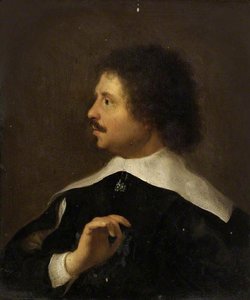
Cornelis van Poelenburgh or Cornelis van Poelenburch (1594 – 12 August 1667), was a Dutch landscape painter and draughtsman. He was the leading representative of the first generation of Dutch landscape painters who were active in Rome in the early 1...
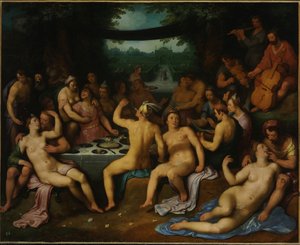
Van Poelenburch distinguished himself through an unwavering commitment to a particular scale. Unlike the grand, sweeping canvases favored by some of his contemporaries, he consistently produced smaller works—intimate scenes designed for close contemplation. This deliberate choice wasn’t a limitation but rather a defining characteristic, allowing him to focus on exquisite detail and nuanced storytelling within a contained space. His landscapes are not merely backdrops; they are active participants in the narrative, imbued with a sense of tranquility and timeless beauty. The figures populating these scenes—whether biblical protagonists or mythological deities—are often dwarfed by the surrounding environment, emphasizing humanity’s place within the vastness of nature. He possessed an exceptional ability to populate his landscapes with small-scale figures enacting complex narratives, seamlessly integrating them into the natural world. This skill is particularly evident in works like ‘Satyrs Spying on Nymphs,’ where the mischievous antics unfold amidst a lush Italianate vista, inviting the viewer to become a silent observer of this hidden drama.
Patronage and English Sojourn: Serving Charles I and Royal Commissions
Van Poelenburch’s talent did not go unnoticed. His reputation extended beyond the Roman art world, attracting the attention of discerning patrons—including several prominent cardinals who commissioned works for their private collections. However, it was an invitation from Charles I of England that brought him north in the 1630s. The English court, eager to cultivate a sophisticated artistic environment, sought Van Poelenburch’s expertise to create small “cabinet pieces”—intimate paintings intended for display within royal residences. Records indicate he shared lodgings with Alexander Keirincx, another artist employed by the king, and received regular payments for his services. While details of these commissions remain somewhat elusive, it is clear that Van Poelenburch’s refined style and meticulous technique were highly valued by the English monarch. This period represents a fascinating intersection between Dutch artistry and the opulent world of the Stuart court.
Poelenburch’s Legacy: Pupils, Influence & Lasting Artistic Impact
Dutch Golden Age painting is the painting of the Dutch Golden Age, a period in Dutch history roughly spanning the 17th century, during and after the later part of the Eighty Years' War (1568–1648) for Dutch independence. The new Dutch Republic was th...
Upon his return to Utrecht, Van Poelenburch continued to paint prolifically, solidifying his position as a leading figure in Dutch landscape painting. He also generously shared his knowledge and expertise with a generation of aspiring artists, among whom Daniël Vertangen, Dirck van der Lisse, François Verwilt, and Jan van Haensbergen stand out as particularly successful pupils. Arnold Houbraken, the renowned 18th-century art historian, even singled out Joan vander Lis from Breda as his most gifted student. Van Poelenburch’s influence extended beyond his immediate circle of students; his distinctive style—characterized by small scale, meticulous detail, and a harmonious blend of classical and naturalistic elements—resonated with artists throughout the Dutch Golden Age. Though he passed away in 1667, just years after his esteemed teacher Abraham Bloemaert, his legacy endures through the numerous paintings that continue to captivate audiences today. His work serves as a testament to the power of observation, the beauty of Italianate landscapes, and the enduring appeal of classical mythology.
Exploring Poelenburch’s Oeuvre: Key Works and Recurring Themes
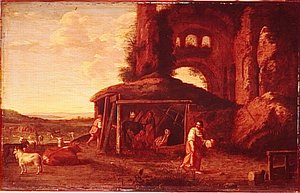
A closer examination of Van Poelenburch's body of work reveals recurring themes and stylistic hallmarks. Biblical scenes, such as ‘Christ on the Road to Emmaus,’ are frequently set within idyllic Italianate landscapes, imbuing them with a sense of serenity and timelessness. Mythological narratives, like ‘Paysage aux Cinq Baigneuses’, often feature playful interactions between nymphs and satyrs, reflecting his Bentvueghels spirit. His mastery of light is particularly noteworthy; he skillfully employs chiaroscuro to create depth and atmosphere, drawing the viewer’s eye towards key focal points within each composition. The consistent use of small scale encourages intimate contemplation, inviting viewers to immerse themselves in the details of each scene. His paintings are not grand statements but rather quiet meditations on beauty, faith, and the enduring power of storytelling. Through his art, Van Poelenburch offers a glimpse into a world where classical mythology and biblical narratives coexist harmoniously within the tranquil embrace of the Italian countryside.