 Preview
 Send
Send Share
Share
 Details

 Download
 Similars
 X-Ray
X-Ray Diaporama
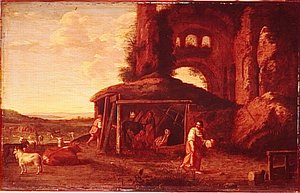
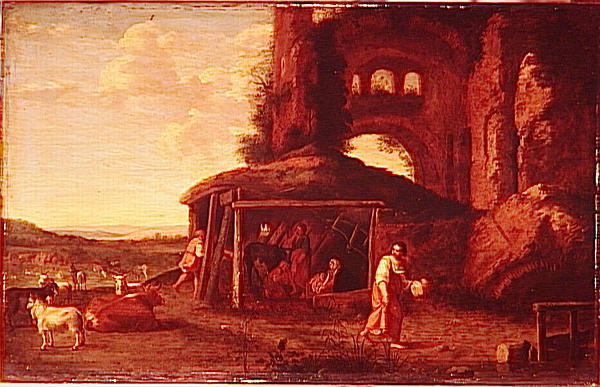
L'ADORATION DES BERGERS


 Read More
Hand Made Oil Reproduction
Hand-painted oil on canvas in your size and frame, made to order by our artists. ( Buy Print Buy Image)




P118B $10

P118H $10

P118W $10

P438Z $10

P508JH $12

P508YH $12

P805H $10

P805Z $10

P919BZ $10

P919G $10

P919XJ $10

P959ZH $10

P968JZ $12

W106C $8

W218G $10

W218JH $8

W218Y $10

W307PJ $10

W316G $10

W316PJ $8

W316Y $10

W398PJ $8

W4111J $10

W500HY $15

W500JH $15

W692G $12

W849H $8

W940BG $15

W953PJ $8




Pick from our preset sizes that match the artwork's original proportions.

You may enter your own dimensions to fit a specific frame or space. If your selected size does not match the original image's proportions, we will either crop the artwork or extend the painting with additional hand-painted elements. A digital mockup will be sent for your approval before production begins.
Please note that the on-screen preview does not reflect the actual cropping or extension. Only the mockup will accurately show the final composition.
While custom sizes are available, we recommend selecting a dimension from the predefined list to preserve the original proportions.
After order, ArtsDot.com team will email client for instructions and provide a mockup preview
Worldwide Delivery () in 3/4 weeks instead of standard 5 weeks. (21 August). No compromise on quality.

Free Worldwide Express Shipping

High-Quality Linen Canvas

Full Shipping Insurance

Customs Tax Refund Guarantee

True Color Matching Guarantee

60-Day Return Policy (Defects Only)

100% Money-Back Guarantee

Bulk Discount Offer
 Glass option is only available in size under 110 CM

L'ADORATION DES BERGERS
Reproduction Medium
Reproduction Size
-


Total Price
$ 313
Artwork Description
L'ADORATION DES BERGERS: A Window Into Dutch Baroque Pastoralism
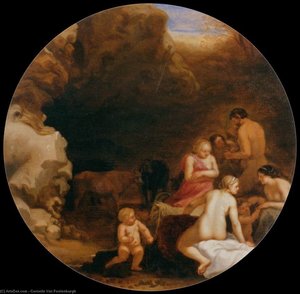
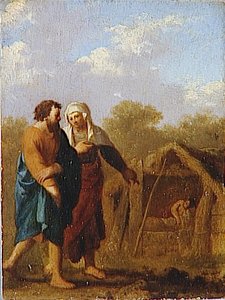
Cornelis van Poelenburch’s “L’Adoration des Bergers,” painted circa 1630, stands as a quintessential example of the burgeoning Dutch Baroque landscape tradition—a movement that sought to capture not merely visual beauty but also profound spiritual contemplation. More than just depicting shepherds reverently gazing upon the newborn Christ in a stable setting, this artwork embodies the artistic sensibilities of its time and offers a glimpse into the intellectual currents shaping European art during the early 17th century.
Composition & Style: Bridging Mannerism and Italian Influence
The painting’s horizontal format immediately establishes a sense of calm stability, mirroring the serene atmosphere conveyed by the muted palette dominated by earthy reds, browns, and oranges. Unlike the stylized figures characteristic of Mannerist art—which prioritized expressive distortion—van Poelenburch employs a technique rooted in observation and blending, prioritizing soft lines and diffused light to create an illusionistic depth that echoes the grandeur of Italianate landscapes championed by artists like Caravaggio and Guido Reni. The artist skillfully utilizes atmospheric perspective – layering distant hills and a hazy sky – subtly guiding the viewer’s gaze towards the central architectural element: a rocky outcrop adorned with arched openings framing the interior scene.
Technique & Materials: Oil Paint on Canvas - A Legacy of Renaissance Precision
Executed in oil paint on canvas, “L’Adoration des Bergers” exemplifies the meticulous craftsmanship demanded by Baroque artists. Van Poelenburch meticulously applied pigment mixed with linseed oil binder to a primed surface, achieving remarkable tonal gradations and textural nuances. The artist's layering technique—building up color gradually—allowed for nuanced blending and subtle shading effects that contribute significantly to the painting’s hazy luminescence. This careful attention to detail reflects the enduring legacy of Renaissance artistic principles – prioritizing realism and illusionism – adapting them to the expressive needs of the Baroque period.
Symbolism & Narrative: Echoes of Biblical Tradition
Beyond its aesthetic qualities, “L’Adoration des Bergers” resonates with rich symbolic significance. The shepherds themselves represent humility and innocence—qualities considered paramount in Christian iconography. Their gesture of adoration embodies faith and reverence for divine majesty, mirroring the biblical narrative of the Nativity. Furthermore, the inclusion of animals – cows, sheep, and chickens – serves as a visual reminder of God’s providence and beneficence, reinforcing the painting's overarching message of spiritual solace and contemplation.
Emotional Impact & Artistic Legacy
"L’ADORATION DES BERGERS" transcends mere depiction; it aspires to evoke emotion. The subdued color palette and soft lighting foster a feeling of tranquility and serenity—a deliberate choice reflecting the Baroque preoccupation with conveying profound psychological states. Van Poelenburch's work solidified his position as one of the foremost landscape painters of his era, influencing subsequent generations of artists and establishing a lasting aesthetic tradition that continues to inspire admiration today. Its enduring appeal lies in its ability to transport viewers back to a moment of contemplative beauty—a testament to the power of art to communicate spiritual truths.
Related Artworks
Artist Biography
early life and training
cornelis van poelenburgh, a prominent dutch landscape painter, was born in utrecht, netherlands in 1594. he initially trained with abraham bloemaert, a renowned artist of the time. this foundational training laid the groundwork for van poelenburch's future success.artistic career and influences
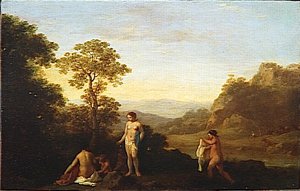
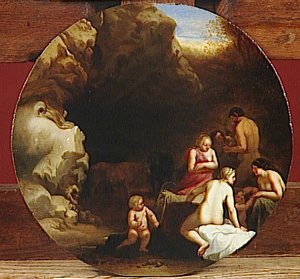
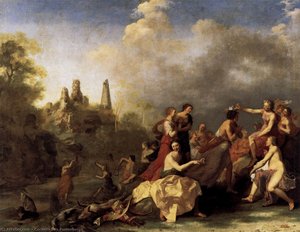
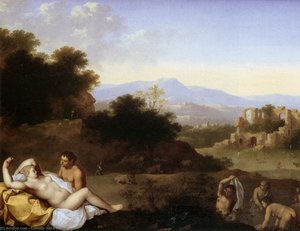
van poelenburch's travels to rome in the early 17th century significantly influenced his work, making him a leading representative of the first generation of dutch landscape painters active in italy. his small-scale paintings, often featuring italianate landscapes with small figures enacting biblical or mythological scenes, showcased his unique style. notable works:- satyrs spying on nymphs (after 1627), a characteristic example of van poelenburch's work, featuring archaic landscapes with figures bathing. (view on ArtsDot)
- council of the gods (c. 1630), a painting showcasing van poelenburch's idealized hilly landscape and roman-inspired goddesses, now housed in the mauritshuis (the hague, netherlands). (view on ArtsDot)
legacy and later life
van poelenburch's work was highly regarded by his contemporaries, including the grand duke of tuscany and the dutch stadholder. he later returned to utrecht, where he passed away in 1667, just a few years after his old teacher abraham bloemaert. key points:- born in utrecht, netherlands in 1594
- trained with abraham bloemaert
- influenced by his time in rome
- known for small-scale italianate landscapes with figures
- died in utrecht in 1667 view cornelis van poelenburch's artworks on ArtsDot learn more about cornelis van poelenburgh on wikipedia
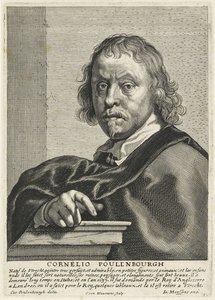
cornelis van poelenburch
1594 - 1667 , Netherlands
Quick Facts
- Artistic Movement Or Style: Dutch Landscape, Romanate
- Artists Or Movements Influenced By This Artist: ['Claude Lorraine']
- Artists Who Influenced This Artist: ['Abraham Bloemaert']
- Date Of Birth: 1594, Utrecht, Netherlands
- Date Of Death: 1667, Utrecht, Netherlands
- Full Name: Cornelis van Poelenburgh
- Nationality: Dutch
- Notable Artworks:
- Satyrs spying on nymphs
- Council of the gods
- Place Of Birth: Utrecht, Netherlands
Related Articles
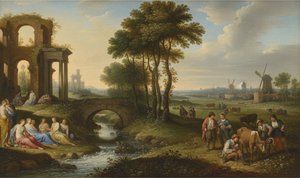
Cornelis van Poelenburch: Bridging Mannerism & the Dutch Baroque Landscape
Discover Cornelis van Poelenburch, a pivotal Dutch Baroque landscape painter bridging Mannerism & Italianate styles. Explore his life, key works, and lasting influence on 17th-century art with ArtsDot.
Van Gogh's Masterpieces: Explore 25 Iconic Paintings & Art for Your Home
Journey through Vincent van Gogh's 25 most iconic paintings! Explore 'Starry Night', 'Sunflowers,' and more—discover the stories, techniques & emotions behind these Post-Impressionist masterpieces. Find museum-quality art reproductions for your home at ArtsDot.com.

Dutch Baroque Masters: 10 Paintings That Shaped an Era | ArtsDot
Journey through the Golden Age with our guide to the Top 10 Dutch Baroque masterpieces! Explore iconic paintings by Rembrandt, Vermeer & Frans Hals. Find museum-quality art reproductions and elevate your home decor at ArtsDot.com.
Jan van Goyen: Master of Dutch Landscape & Atmospheric Perspective
Discover Jan van Goyen, the master of Dutch landscape painting. Explore his subtle technique, atmospheric realism & lasting influence on art history. Learn about this 17th-century pioneer at ArtsDot.

Rembrandt's Masterpieces: Explore 25 Iconic Paintings & Prints | ArtsDot
Journey through Rembrandt van Rijn's 25 most iconic paintings & etchings. Explore Dutch Golden Age masterpieces, dramatic chiaroscuro, and timeless portraits. Find museum-quality art reproductions to elevate your home decor on ArtsDot.com.