Preview
 Send
Send Share
Share
 Details

 Download
 Similars
 X-Ray
X-Ray Diaporama
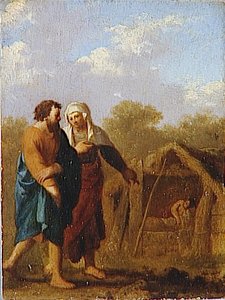
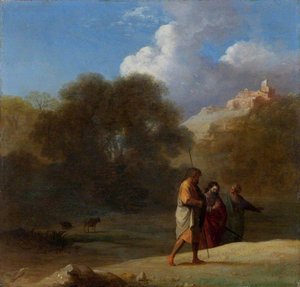
Christ on the Road to Emmaus
 Oil On Canvas
- WallArt
- Dutch Golden Age
 1641
1641 18.0 x 18.0 cm
 National Trust
 Read More
Hand Made Oil Reproduction
Hand-painted oil on canvas in your size and frame, made to order by our artists. ( Buy Print Buy Image)




P118B $10

P118H $10

P118W $10

P438Z $10

P508JH $12

P508YH $12

P805H $10

P805Z $10

P919BZ $10

P919G $10

P919XJ $10

P959ZH $10

P968JZ $12

W106C $8

W218G $10

W218JH $8

W218Y $10

W307PJ $10

W316G $10

W316PJ $8

W316Y $10

W398PJ $8

W4111J $10

W500HY $15

W500JH $15

W692G $12

W849H $8

W940BG $15

W953PJ $8




Pick from our preset sizes that match the artwork's original proportions.

You may enter your own dimensions to fit a specific frame or space. If your selected size does not match the original image's proportions, we will either crop the artwork or extend the painting with additional hand-painted elements. A digital mockup will be sent for your approval before production begins.
Please note that the on-screen preview does not reflect the actual cropping or extension. Only the mockup will accurately show the final composition.
While custom sizes are available, we recommend selecting a dimension from the predefined list to preserve the original proportions.
After order, ArtsDot.com team will email client for instructions and provide a mockup preview
Worldwide Delivery () in 3/4 weeks instead of standard 5 weeks. (17 August). No compromise on quality.

Free Worldwide Express Shipping

High-Quality Linen Canvas

Full Shipping Insurance

Customs Tax Refund Guarantee

True Color Matching Guarantee

60-Day Return Policy (Defects Only)

100% Money-Back Guarantee

Bulk Discount Offer
 Glass option is only available in size under 110 CM

Christ on the Road to Emmaus
Reproduction Medium
Reproduction Size
-


Total Price
$ 313
Artwork Description
A Pastoral Meditation on Faith: Cornelis van Poelenburch’s Christ on the Road to Emmaus
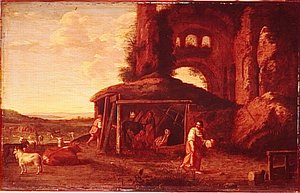
Cornelis van Poelenburch's "Christ on the Road to Emmaus," painted in 1641, transcends mere landscape depiction; it embodies a profound exploration of faith and spiritual awakening within the serene confines of Dutch Golden Age artistry. This unassuming oil painting—measuring just 18 x 18 cm—holds an extraordinary power to transport viewers into a contemplative space reminiscent of Rembrandt’s masterful use of chiaroscuro, albeit executed with a distinctly calmer palette and compositional approach.The Landscape as Symbol: Echoes of Arcadia
The scene unfolds against a backdrop of idealized Dutch countryside – rolling hills bathed in soft sunlight, punctuated by mature trees and rocky outcrops. Van Poelenburch skillfully employs atmospheric perspective, subtly diminishing the detail of distant elements to convey depth and heighten the sense of tranquility. This technique aligns perfectly with the broader artistic currents of the era, drawing inspiration from the classical ideals of Arcadia—the pastoral paradise celebrated by poets like Virgil—and reflecting a humanist fascination with the beauty and harmony of nature as mirrors of divine order. The muted earth tones – browns, ochres, and greens – aren’t merely aesthetically pleasing; they serve to underscore the painting's spiritual core, symbolizing humility and grounding amidst contemplation.Technique and Detail: Mastering Illusionism
Van Poelenburch’s meticulous brushwork demonstrates a mastery of illusionistic painting—a cornerstone of Dutch Baroque art. Layers upon layers of paint create texture and luminosity, particularly noticeable in the foliage, where impasto techniques lend physicality to the depiction of leaves and branches. Careful blending ensures smooth transitions between tones, contributing to the overall impression of realism while simultaneously conveying an emotional resonance. The artist’s attention to detail—evident in the rendering of rocks and figures—further enhances the painting's immersive quality, inviting viewers to linger on its surface and absorb its contemplative atmosphere.Biblical Narrative Illuminated: A Moment of Revelation
The central subject matter is undeniably rooted in Christian iconography – the biblical narrative of Jesus appearing to two disciples on their journey back from Jerusalem after witnessing his crucifixion. This familiar tale—a cornerstone of Western spirituality—is presented with understated grace, emphasizing the transformative power of encountering divine presence. The figures are positioned centrally within the landscape, subtly directing the viewer’s gaze and reinforcing the painting's thematic focus on spiritual enlightenment.Emotional Resonance: Quiet Contemplation
Ultimately, “Christ on the Road to Emmaus” succeeds in capturing a palpable sense of serenity and contemplation. It speaks to an enduring human desire for connection with something greater than oneself—a yearning expressed through the beauty of nature and illuminated by the quiet dignity of faith. This painting remains a testament to Van Poelenburch’s ability to distill complex theological ideas into a visually arresting composition, securing its place as a cherished exemplar of Dutch Golden Age landscape art.Related Artworks
Artist Biography
early life and training
cornelis van poelenburgh, a prominent dutch landscape painter, was born in utrecht, netherlands in 1594. he initially trained with abraham bloemaert, a renowned artist of the time. this foundational training laid the groundwork for van poelenburch's future success.artistic career and influences
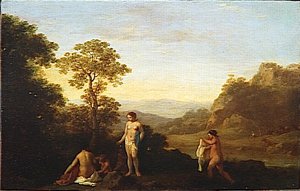
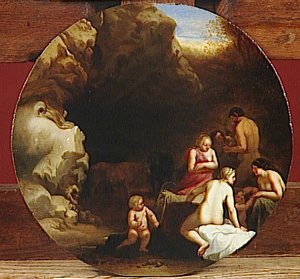
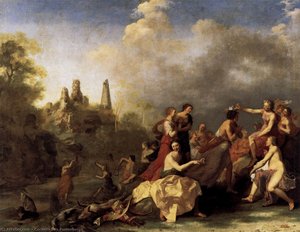
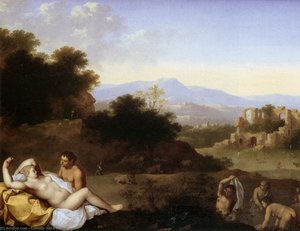
van poelenburch's travels to rome in the early 17th century significantly influenced his work, making him a leading representative of the first generation of dutch landscape painters active in italy. his small-scale paintings, often featuring italianate landscapes with small figures enacting biblical or mythological scenes, showcased his unique style. notable works:- satyrs spying on nymphs (after 1627), a characteristic example of van poelenburch's work, featuring archaic landscapes with figures bathing. (view on ArtsDot)
- council of the gods (c. 1630), a painting showcasing van poelenburch's idealized hilly landscape and roman-inspired goddesses, now housed in the mauritshuis (the hague, netherlands). (view on ArtsDot)
legacy and later life
van poelenburch's work was highly regarded by his contemporaries, including the grand duke of tuscany and the dutch stadholder. he later returned to utrecht, where he passed away in 1667, just a few years after his old teacher abraham bloemaert. key points:- born in utrecht, netherlands in 1594
- trained with abraham bloemaert
- influenced by his time in rome
- known for small-scale italianate landscapes with figures
- died in utrecht in 1667 view cornelis van poelenburch's artworks on ArtsDot learn more about cornelis van poelenburgh on wikipedia
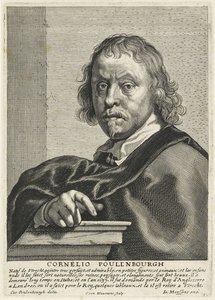
cornelis van poelenburch
1594 - 1667 , Netherlands
Quick Facts
- Artistic Movement Or Style: Dutch Landscape, Romanate
- Artists Or Movements Influenced By This Artist: ['Claude Lorraine']
- Artists Who Influenced This Artist: ['Abraham Bloemaert']
- Date Of Birth: 1594, Utrecht, Netherlands
- Date Of Death: 1667, Utrecht, Netherlands
- Full Name: Cornelis van Poelenburgh
- Nationality: Dutch
- Notable Artworks:
- Satyrs spying on nymphs
- Council of the gods
- Place Of Birth: Utrecht, Netherlands
Related Articles
Van Gogh's Masterpieces: Explore 25 Iconic Paintings & Art for Your Home
Journey through Vincent van Gogh's 25 most iconic paintings! Explore 'Starry Night', 'Sunflowers,' and more—discover the stories, techniques & emotions behind these Post-Impressionist masterpieces. Find museum-quality art reproductions for your home at ArtsDot.com.

Dutch Masters: 10 Golden Age Paintings That Still Inspire |
Journey into the Dutch Golden Age! Explore 10 iconic paintings by Rembrandt, Vermeer & Hals. Discover the stories behind these Baroque masterpieces and find museum-quality art reproductions to elevate your home decor on .

Rembrandt's Masterpieces: Explore 25 Iconic Paintings & Prints | ArtsDot
Journey through Rembrandt van Rijn's 25 most iconic paintings & etchings. Explore Dutch Golden Age masterpieces, dramatic chiaroscuro, and timeless portraits. Find museum-quality art reproductions to elevate your home decor on ArtsDot.com.

Golden Age Reflections: Dutch Baroque Painting & Cultural Innovation
Explore the Dutch Golden Age of painting! Discover key artists like Vermeer & ter Borch, their innovative techniques, and the rich cultural context behind these Baroque masterpieces. Learn about collecting & appreciating this iconic art period.
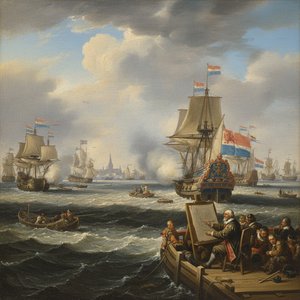
Willem van de Velde the Elder: Master of Maritime Painting & Chronicler of the Dutch Golden Age
Discover the captivating maritime paintings of Willem van de Velde the Elder, a master chronicler of the Dutch Golden Age. Explore his unparalleled realism and lasting influence on naval art history.