 Preview
 Send
Send Share
Share
 Details

 Download
 Similars
 X-Ray
X-Ray Diaporama
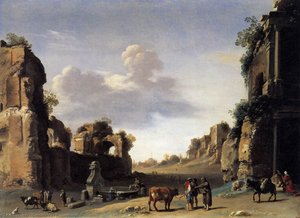
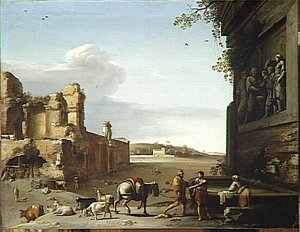
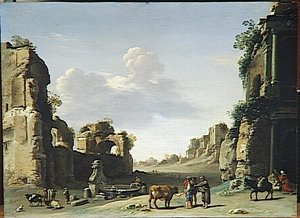
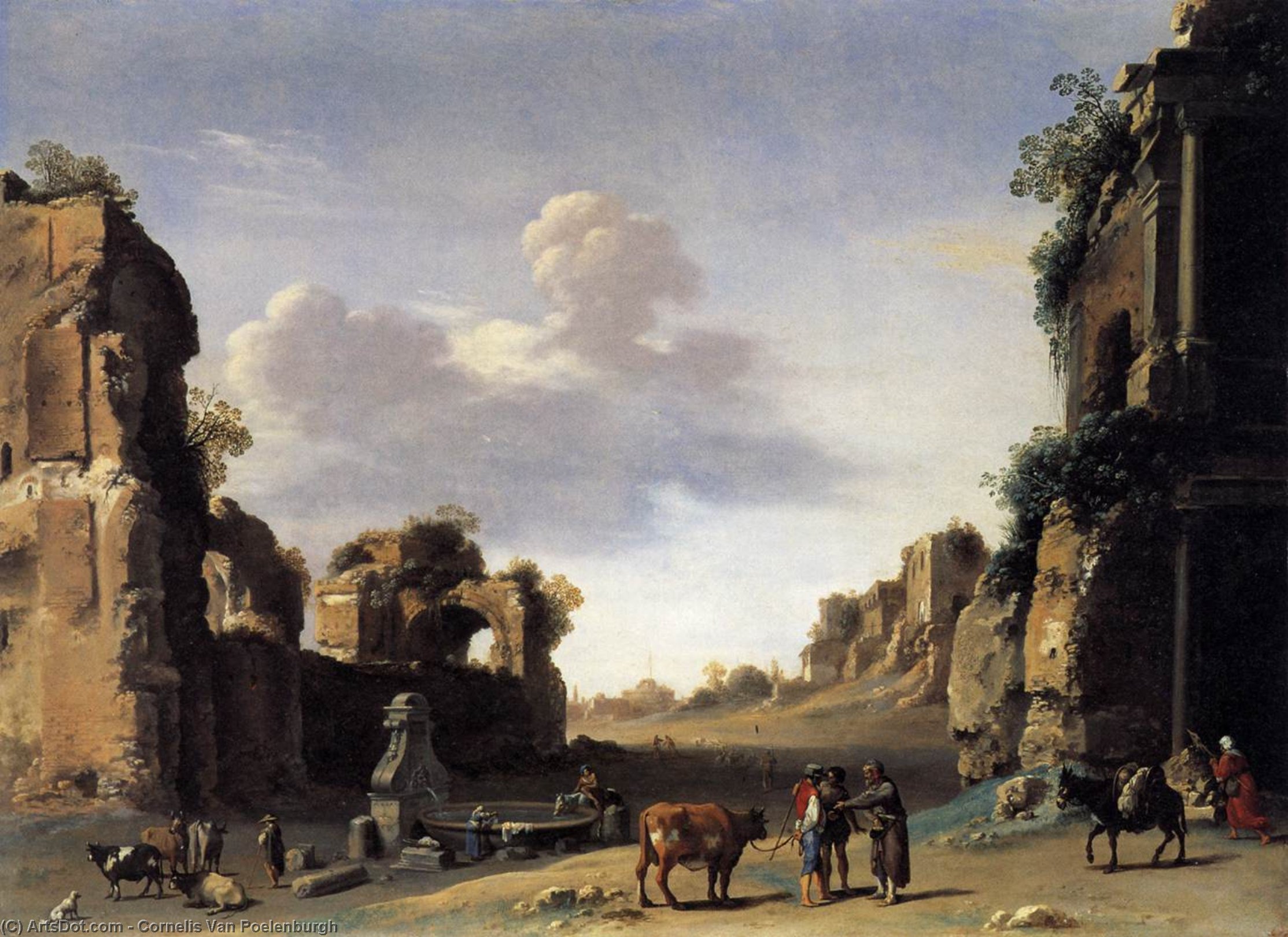
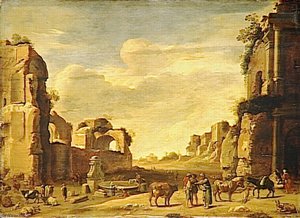
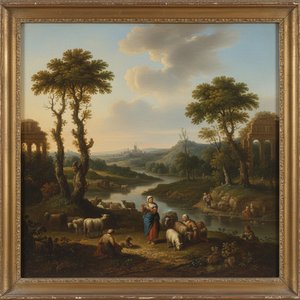
View of the Campo Vaccino
 Oil On Canvas
- WallArt
- Baroque
 1620
1620 40.0 x 55.0 cm
 The Louvre
 Read More
Hand Made Oil Reproduction
Hand-painted oil on canvas in your size and frame, made to order by our artists. ( Buy Print Buy Image)




P118B $10

P118H $10

P118W $10

P438Z $10

P508JH $12

P508YH $12

P805H $10

P805Z $10

P919BZ $10

P919G $10

P919XJ $10

P959ZH $10

P968JZ $12

W106C $8

W218G $10

W218JH $8

W218Y $10

W307PJ $10

W316G $10

W316PJ $8

W316Y $10

W398PJ $8

W4111J $10

W500HY $15

W500JH $15

W692G $12

W849H $8

W940BG $15

W953PJ $8




Pick from our preset sizes that match the artwork's original proportions.

You may enter your own dimensions to fit a specific frame or space. If your selected size does not match the original image's proportions, we will either crop the artwork or extend the painting with additional hand-painted elements. A digital mockup will be sent for your approval before production begins.
Please note that the on-screen preview does not reflect the actual cropping or extension. Only the mockup will accurately show the final composition.
While custom sizes are available, we recommend selecting a dimension from the predefined list to preserve the original proportions.
After order, ArtsDot.com team will email client for instructions and provide a mockup preview
Worldwide Delivery () in 3/4 weeks instead of standard 5 weeks. (16 August). No compromise on quality.

Free Worldwide Express Shipping

High-Quality Linen Canvas

Full Shipping Insurance

Customs Tax Refund Guarantee

True Color Matching Guarantee

60-Day Return Policy (Defects Only)

100% Money-Back Guarantee

Bulk Discount Offer
 Glass option is only available in size under 110 CM

View of the Campo Vaccino
Reproduction Medium
Reproduction Size
-


Total Price
$ 313
Artwork Description
View of the Campo Vaccino – A Baroque Masterpiece Reflecting Decay and Divine Presence
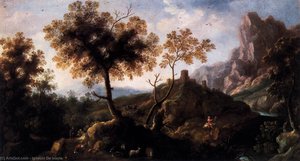
Cornelis van Poelenburgh’s “View of the Campo Vaccino” (1620) stands as a testament to the burgeoning Baroque landscape tradition in Dutch art, capturing not merely a picturesque vista but also profound meditations on mortality and faith. Executed in oil paint on copper – a medium favored by artists striving for luminosity and detail – this artwork transports viewers back to 17th-century Rome, where van Poelenburgh honed his skills amidst the artistic fervor of his time.
- Subject Matter: The painting depicts a dramatic scene centered around the Campo Vaccino—the Roman Forum—which served as an enclosure for cattle during market days. However, it’s not simply a topographical representation; rather, it's framed by two imposing gorges that dominate the composition, drawing the eye upwards towards a radiant sky.
- Style: Van Poelenburgh firmly established himself within the Baroque aesthetic, characterized by theatrical lighting and heightened emotional expression. The artwork embodies this spirit through its dramatic chiaroscuro—the interplay of light and shadow—creating an atmosphere of grandeur and solemn contemplation.
- Technique: The artist’s meticulous brushstrokes reveal a masterful command of oil paint, achieving subtle gradations of color that imbue the landscape with palpable depth. Textures vary across the canvas – rough stone surfaces juxtaposed against smoother areas representing foliage and celestial hues—demonstrating van Poelenburgh's dedication to capturing the materiality of his subject.
- Historical Context: Van Poelenburgh’s formative years in Rome exposed him to the influence of Italian Mannerism, which subtly informed his artistic sensibilities. Yet, he swiftly embraced the Baroque idiom, aligning himself with artists like Pietro Testa and Domenichino who championed a grand, emotive style.
- Symbolism: The crumbling Roman ruins serve as potent symbols of impermanence and decay—a reminder of human ambition’s ultimate futility against the relentless march of time. Simultaneously, the figures scattered throughout the landscape represent humanity's enduring connection to divine providence, suggesting a harmonious balance between earthly vulnerability and spiritual transcendence.
The painting’s color palette leans predominantly towards cool tones—blues and greens dominating the sky and foliage—creating a serene yet melancholic mood. Lines are assertive, delineating the contours of the gorges and architectural elements with precision. Shapes are geometric – arches and columns – combined with organic forms like trees and clouds – contributing to the artwork’s overall visual harmony.
“View of the Campo Vaccino” continues to resonate with audiences today due to its masterful execution, evocative imagery, and profound philosophical undercurrents. It exemplifies the Baroque tradition's ability to convey complex emotions through deceptively simple forms, securing its place as a cornerstone of Dutch landscape art history.
Additional Research:- The Colosseum from the Campo Vaccino: https://en.wikipedia.org/wiki/The_Colosseum_from_the_Campo_Vaccino – This Wikipedia article delves into the painting's subject matter and its depiction of the Colosseum, providing valuable context for understanding van Poelenburgh’s artistic vision.
- View of the Campo Vaccino: /en/art/cornelis-van-poelenburch-view-of-the-campo-vaccino-8LHQLZ-en/ – Explore this ArtsDot.com artwork database entry for detailed information about the painting’s dimensions, provenance, and artistic significance.
- Cornelis van Poelenburch: /en/artists/cornelis-van-poelenburch-en/ – Discover more about Cornelis van Poelenburgh’s life and artistic career on ArtsDot.com, examining his influences and key achievements.
- An Italianate Landscape with an Unidentified Subject from the Old Testament, Cornelis van Poelenburch, c. 1620 - c. 1627: /en/art/cornelis-van-poelenburch-an-italianate-landscape-with-an-unidentified-subject-from-the-old-testament-c.-1620---c.-1627-D37QAW-en/ – Examine this ArtsDot.com artwork database entry for detailed information about the painting’s dimensions, provenance, and artistic significance.
- Cornelis van Poelenburch: Bridging Mannerism & the Dutch Baroque Landscape: /en/articles/cornelis-van-poelenburch-bridging-mannerism-the-dutch-baroque-landscape-en/ – Delve into scholarly analysis of Cornelis van Poelenburgh’s artistic legacy and his role in shaping the Dutch Baroque landscape movement.
Related Artworks
Artist Biography
early life and training
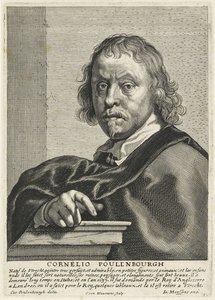
cornelis van poelenburgh, a prominent dutch landscape painter, was born in utrecht, netherlands in 1594. he initially trained with abraham bloemaert, a renowned artist of the time. this foundational training laid the groundwork for van poelenburch's future success.artistic career and influences
van poelenburch's travels to rome in the early 17th century significantly influenced his work, making him a leading representative of the first generation of dutch landscape painters active in italy. his small-scale paintings, often featuring italianate landscapes with small figures enacting biblical or mythological scenes, showcased his unique style. notable works:- satyrs spying on nymphs (after 1627), a characteristic example of van poelenburch's work, featuring archaic landscapes with figures bathing. (view on ArtsDot)
- council of the gods (c. 1630), a painting showcasing van poelenburch's idealized hilly landscape and roman-inspired goddesses, now housed in the mauritshuis (the hague, netherlands). (view on ArtsDot)
legacy and later life
van poelenburch's work was highly regarded by his contemporaries, including the grand duke of tuscany and the dutch stadholder. he later returned to utrecht, where he passed away in 1667, just a few years after his old teacher abraham bloemaert. key points:- born in utrecht, netherlands in 1594
- trained with abraham bloemaert
- influenced by his time in rome
- known for small-scale italianate landscapes with figures
- died in utrecht in 1667 view cornelis van poelenburch's artworks on ArtsDot learn more about cornelis van poelenburgh on wikipedia
cornelis van poelenburch
1594 - 1667 , Netherlands
Quick Facts
- Artistic Movement Or Style: Dutch Landscape, Romanate
- Artists Or Movements Influenced By This Artist: ['Claude Lorraine']
- Artists Who Influenced This Artist: ['Abraham Bloemaert']
- Date Of Birth: 1594, Utrecht, Netherlands
- Date Of Death: 1667, Utrecht, Netherlands
- Full Name: Cornelis van Poelenburgh
- Nationality: Dutch
- Notable Artworks:
- Satyrs spying on nymphs
- Council of the gods
- Place Of Birth: Utrecht, Netherlands
Related Articles
Cornelis van Poelenburch: Bridging Mannerism & the Dutch Baroque Landscape
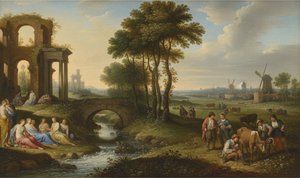
Discover Cornelis van Poelenburch, a pivotal Dutch Baroque landscape painter bridging Mannerism & Italianate styles. Explore his life, key works, and lasting influence on 17th-century art with ArtsDot.
Baroque Classicism: Reconciling Drama & Order in 17th-Century Art
Explore the captivating world of Baroque Classicism! Discover its history, key artists like Caravaggio & Rubens, and defining characteristics. Expert insights & high-quality reproductions at ArtsDot.

Dutch Baroque Masters: 10 Paintings That Shaped an Era | ArtsDot
Journey through the Golden Age with our guide to the Top 10 Dutch Baroque masterpieces! Explore iconic paintings by Rembrandt, Vermeer & Frans Hals. Find museum-quality art reproductions and elevate your home decor at ArtsDot.com.
Nicolaes Berchem: Dutch Golden Age Pastoralism & the Evolution of Landscape Painting
Explore the captivating world of Nicolaes Berchem, a leading Dutch Golden Age painter. Discover his idyllic landscapes, masterful technique & lasting influence on art history. Learn more at ArtsDot.

Golden Age Reflections: Dutch Baroque Painting & Cultural Innovation
Explore the Dutch Golden Age of painting! Discover key artists like Vermeer & ter Borch, their innovative techniques, and the rich cultural context behind these Baroque masterpieces. Learn about collecting & appreciating this iconic art period.