 Preview
 Send
Send Share
Share
 Details

 Download
 Similars
 X-Ray
X-Ray Diaporama
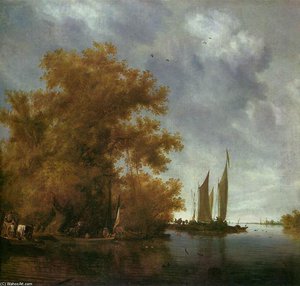
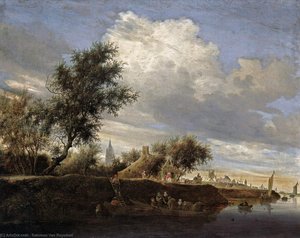
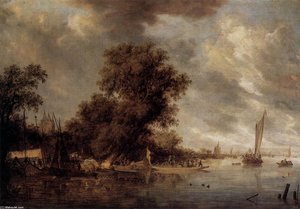
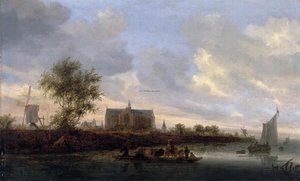
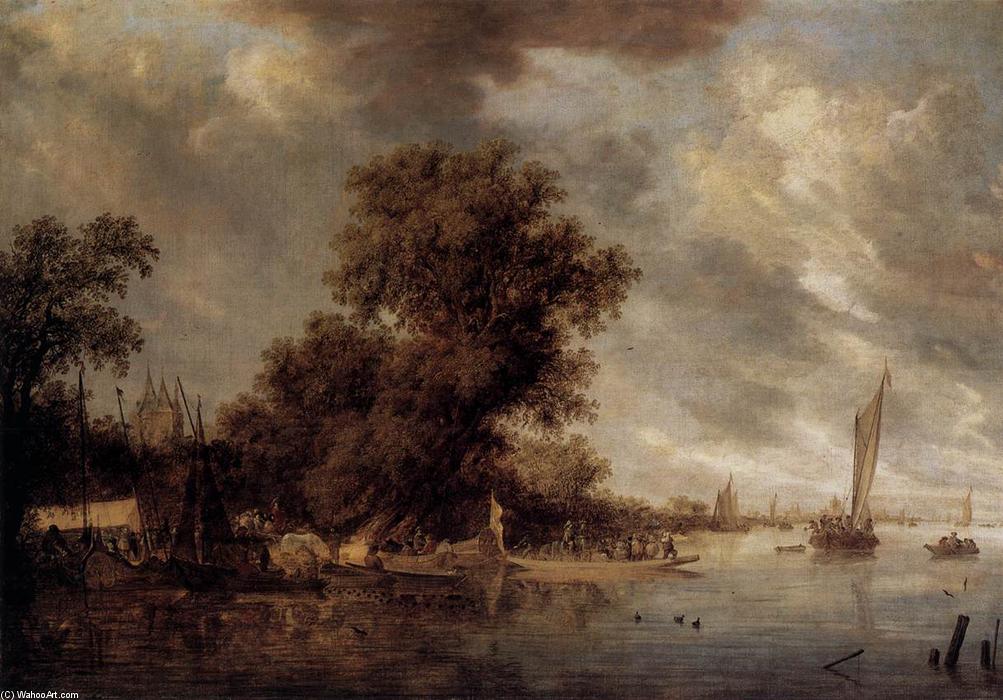
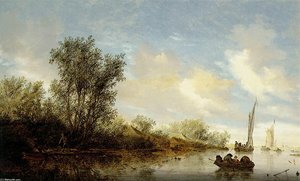
River Landscape at Arnheim
 Oil On Canvas
- WallArt
- Baroque
 1642
1642 115.0 x 165.0 cm
 Staatliche Museen
 Read More
Hand Made Oil Reproduction
Hand-painted oil on canvas in your size and frame, made to order by our artists. ( Buy Print Buy Image)




P118B $10

P118H $10

P118W $10

P438Z $10

P508JH $12

P508YH $12

P805H $10

P805Z $10

P919BZ $10

P919G $10

P919XJ $10

P959ZH $10

P968JZ $12

W106C $8

W218G $10

W218JH $8

W218Y $10

W307PJ $10

W316G $10

W316PJ $8

W316Y $10

W398PJ $8

W4111J $10

W500HY $15

W500JH $15

W692G $12

W849H $8

W940BG $15

W953PJ $8




Pick from our preset sizes that match the artwork's original proportions.

You may enter your own dimensions to fit a specific frame or space. If your selected size does not match the original image's proportions, we will either crop the artwork or extend the painting with additional hand-painted elements. A digital mockup will be sent for your approval before production begins.
Please note that the on-screen preview does not reflect the actual cropping or extension. Only the mockup will accurately show the final composition.
While custom sizes are available, we recommend selecting a dimension from the predefined list to preserve the original proportions.
After order, ArtsDot.com team will email client for instructions and provide a mockup preview
Worldwide Delivery () in 3/4 weeks instead of standard 5 weeks. (16 August). No compromise on quality.

Free Worldwide Express Shipping

High-Quality Linen Canvas

Full Shipping Insurance

Customs Tax Refund Guarantee

True Color Matching Guarantee

60-Day Return Policy (Defects Only)

100% Money-Back Guarantee

Bulk Discount Offer
 Glass option is only available in size under 110 CM

River Landscape at Arnheim
Reproduction Medium
Reproduction Size
-


Total Price
$ 288
Artwork Description
Salomon van Ruysdael: The Subtle Master of Dutch Landscape
Salomon van Ruysdael (1602 – 1670), born in Naarden, Netherlands, stands as a cornerstone figure within the illustrious Dutch Golden Age artistic movement. Though overshadowed by his brother Jacob – who achieved greater fame – Salomon’s contribution to landscape painting is undeniable, characterized by an exquisite sensitivity to light and atmosphere that distinguishes him from many of his contemporaries. His legacy resides not merely in prolific output but in establishing a uniquely refined aesthetic that continues to inspire admiration today.
Early Life and Artistic Formation
Salomon’s upbringing was shaped by the pragmatic tradesmanship of his father, Jacob Jansz de Gooyer, who practiced as a woodworker specializing in crafting elaborate ebony frames for mirrors and paintings – a craft that instilled in Salomon an appreciation for meticulous detail and craftsmanship. Recognizing his aptitude for artistic pursuits beyond woodworking, he embarked on a path toward mastering the art of painting, honing his skills under influential mentors.
The Baroque Style: Drama and Atmosphere
Van Ruysdael’s landscapes exemplify the Baroque style, which flourished in Europe during the 17th century. Unlike earlier Renaissance approaches prioritizing idealized beauty, Baroque painters sought to evoke emotion and grandeur through dramatic use of light and shadow—a technique known as chiaroscuro. This stylistic choice is powerfully evident in ‘River Landscape at Arnheim,’ where a muted overcast sky casts long shadows across the tranquil river scene.
The artist’s meticulous attention to detail – particularly in rendering the textures of foliage, bark, and water – contributes significantly to the painting's immersive quality. Furthermore, the composition—featuring a prominent tree framing the vista—creates depth and guides the viewer’s gaze across the landscape, mirroring the Baroque fascination with spatial illusion.
Technique and Materials: A Legacy of Craftsmanship
‘River Landscape at Arnheim’ is executed in oil on panel, utilizing traditional pigments mixed with linseed oil. This medium allowed for layering and blending colors to achieve subtle gradations of tone—a hallmark of Baroque painting. The artist skillfully manipulated brushstrokes to convey the fluidity of water and the solidity of trees, demonstrating a mastery of technique that reflects the artistic values of his time.
The subdued color palette—dominated by browns, grays, and greens—underscores the melancholic mood conveyed by the scene. It’s a testament to Van Ruysdael's ability to capture not just what he saw but also how it felt—a profound connection with the natural world that resonates powerfully across centuries.
Symbolism and Emotional Impact
'River Landscape at Arnheim' transcends mere visual representation; it embodies symbolic ideas prevalent in Baroque art. The river itself represents life’s flow, while the tree symbolizes strength and resilience. Together, they evoke feelings of serenity, contemplation, and a quiet appreciation for beauty—themes that continue to captivate audiences today.
The painting's enduring appeal lies in its ability to transport viewers back to 17th-century Holland, offering a glimpse into the artistic sensibilities of a period defined by intellectual curiosity and spiritual fervor. Its masterful execution and evocative atmosphere solidify Salomon van Ruysdael’s position as one of the Dutch Golden Age’s most celebrated landscape painters.
Explore this iconic masterpiece at ArtsDot.com and discover other remarkable works by Salomon van Ruysdael!
Related Artworks
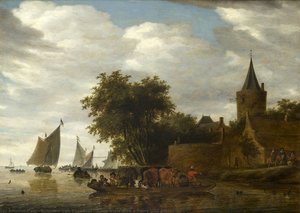
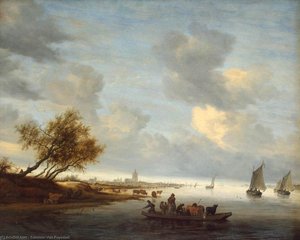
Artist Biography
The Subtle Master of Dutch Landscape: The Life of Salomon van Ruysdael
In the golden era of the seventeenth-century Netherlands, a period defined by unprecedented prosperity and artistic flourishing, Salomon van Ruysdael emerged as a painter of profound atmospheric sensitivity. Born around 1602 in Naarden, his life was deeply intertwined with the very fabric of the Dutch Golden Age. While history often casts a long shadow over his more famous brother, Jacob van Ruisdael, Salomon carved out a distinct and irreplaceable niche within the canon of landscape painting. His work does not merely depict the land; it captures the breathing essence of the Dutch countryside, where light and water perform a silent, eternal dance across the canvas.
The foundations of his artistry were laid in a household where craftsmanship and precision were paramount. His father, Jacob Jansz de Gooyer, was a skilled woodworker specializing in the intricate ebony frames that housed the era's most precious mirrors and paintings. This early exposure to the meticulous details of framing likely instilled in Salomon a lifelong reverence for texture and structural integrity. Though his formal education was surprisingly broad—encompassing the complexities of Latin and even medicine—his heart remained tethered to the visual world. By joining the prestigious Haarlem Guild of St. Luke in 1623, he entered an elite circle of creators, coming under the direct influence of masters such as Jan Porcellis and Esaias van de Velde. These mentors, champions of atmospheric perspective and observational realism, provided the technical vocabulary that Salomon would later use to compose his serene, water-centric vistas.
A Symphony of Water and Light
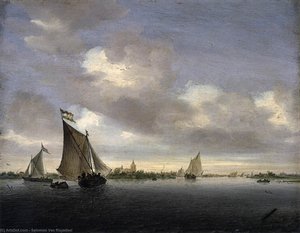
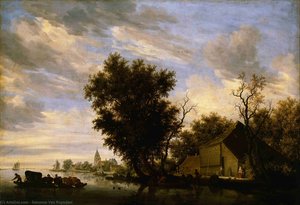
Salomon van Ruysdael’s true mastery lies in his ability to render the ephemeral qualities of the Dutch atmosphere. Unlike many of his contemporaries who sought out dramatic, sweeping vistas or turbulent storms, Salomon found his greatest inspiration in the quietude of inland waterways. His compositions often center on the rhythmic flow of rivers and the tranquil expanse of lakes, where the sky and water meet in a seamless transition of muted tones and soft light. In masterpieces such as River View near Deventer, one can observe how he utilizes a delicate palette to evoke the damp, cool air of the Netherlands, inviting the viewer to step into a moment of profound stillness.
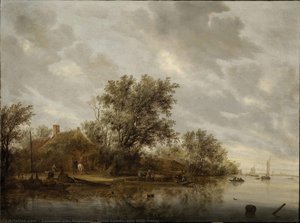
His technical prowess is particularly evident in his treatment of marine and riverine subjects. In works like Sailing Vessels on an Inland Body of Water, he demonstrates an unparalleled ability to capture the weight and movement of boats navigating through calm currents. The integration of human elements—such as the subtle presence of fishermen in River with Fishermen—is never intrusive; rather, these figures serve to provide scale and a sense of lived reality to the landscape. Through his brush, the water becomes more than just a surface; it becomes a mirror reflecting the shifting clouds and the soft, diffused light that characterizes the Dutch sky.
Legacy and Artistic Significance
The historical significance of Salomon van Ruysdael resides in his role as a pioneer of the atmospheric landscape. He moved away from the rigid, topographical depictions of earlier eras toward a more emotive, sensory experience of nature. His ability to blend the precision of still-life elements with the vastness of landscape painting created a unique aesthetic that resonated with the Dutch middle class, who sought art that reflected their own peaceful, industrious environment.
Today, his legacy is preserved in some of the world's most esteemed institutions, including the Museo Thyssen-Bornemisza. To study a Van Ruysdael is to undergo a lesson in patience and observation. His work remains a testament to the beauty found in the understated, reminding us that the most profound artistic truths are often found in the quietest reflections of a river or the softest glow of a departing sun. His contribution to the Dutch Golden Age remains an essential chapter in the story of how humanity learned to see the world not just as it is, but as it feels.
Salomon van Ruysdael
1602 - 1670 , Netherlands
Quick Facts
- Artistic Movement Or Style: Dutch Golden Age Landscape Painting
- Artists Or Movements Influenced By This Artist: ['Jacob Van Ruisdael']
- Artists Who Influenced This Artist:
- Jan Porcellis
- Esaias van de Velde
- Date Of Birth: Naarden, Netherlands (1602)
- Date Of Death: November 3, 1670
- Full Name: Salomon van Ruysdael
- Nationality: Dutch
- Notable Artworks:
- River landscape
- Ferry near Gorinchem
- View of Deventer
- Place Of Birth: Naarden
Related Articles

Van Gogh's Masterpieces: Explore 25 Iconic Paintings & Art for Your Home
Journey through Vincent van Gogh's 25 most iconic paintings! Explore 'Starry Night', 'Sunflowers,' and more—discover the stories, techniques & emotions behind these Post-Impressionist masterpieces. Find museum-quality art reproductions for your home at ArtsDot.com.
Cornelis van Poelenburch: Bridging Mannerism & the Dutch Baroque Landscape
Discover Cornelis van Poelenburch, a pivotal Dutch Baroque landscape painter bridging Mannerism & Italianate styles. Explore his life, key works, and lasting influence on 17th-century art with ArtsDot.

Dutch Baroque Masters: 10 Paintings That Shaped an Era | ArtsDot
Journey through the Golden Age with our guide to the Top 10 Dutch Baroque masterpieces! Explore iconic paintings by Rembrandt, Vermeer & Frans Hals. Find museum-quality art reproductions and elevate your home decor at ArtsDot.com.
Jan van Goyen: Master of Dutch Landscape & Atmospheric Perspective
Discover Jan van Goyen, the master of Dutch landscape painting. Explore his subtle technique, atmospheric realism & lasting influence on art history. Learn about this 17th-century pioneer at ArtsDot.

Rembrandt's Masterpieces: Explore 25 Iconic Paintings & Prints | ArtsDot
Journey through Rembrandt van Rijn's 25 most iconic paintings & etchings. Explore Dutch Golden Age masterpieces, dramatic chiaroscuro, and timeless portraits. Find museum-quality art reproductions to elevate your home decor on ArtsDot.com.