 Preview
 Send
Send Share
Share
 Details

 Download
 Similars
 X-Ray
X-Ray Diaporama
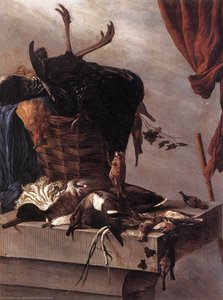
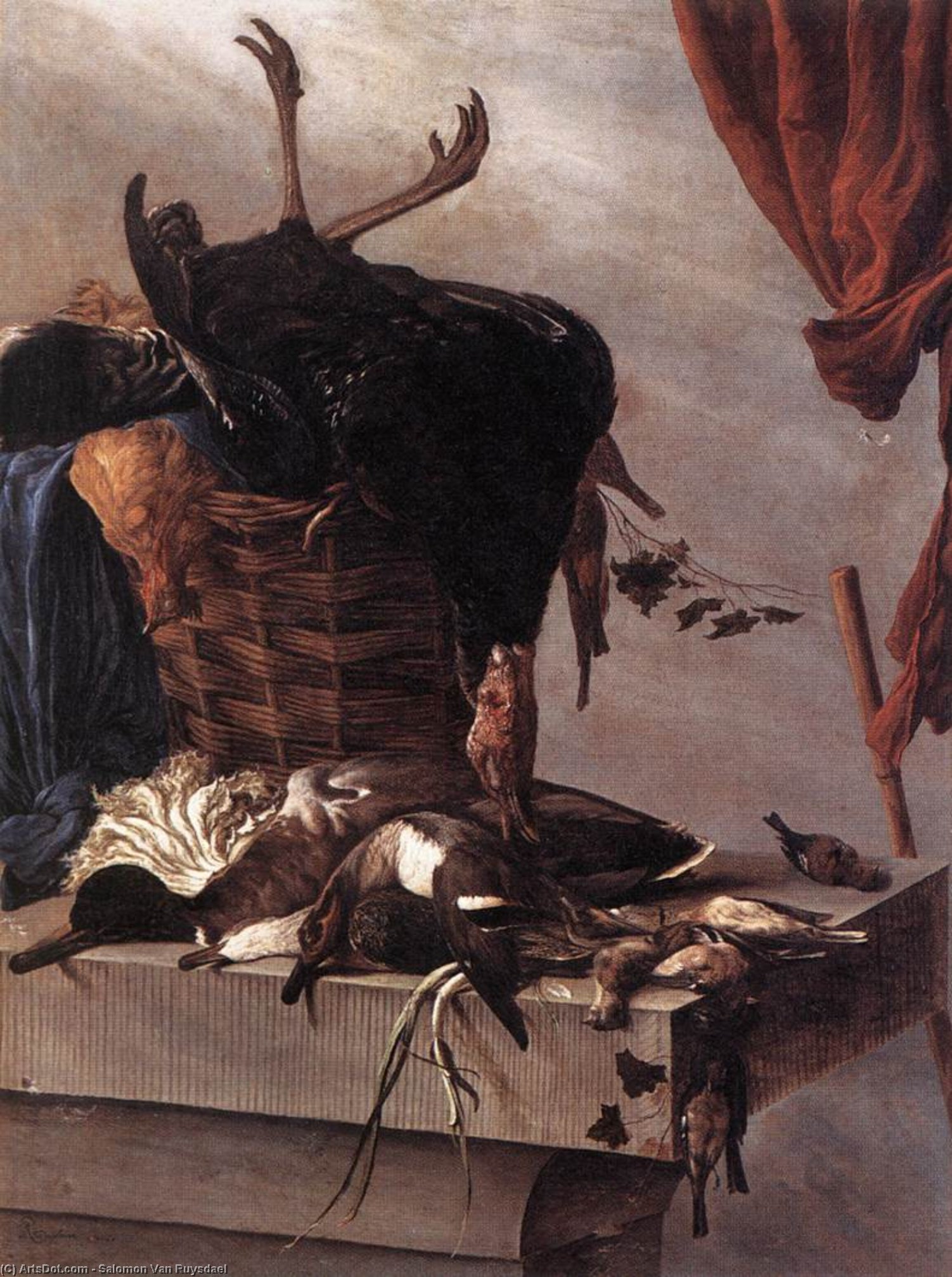
Still-Life with a Turkey
 Oil On Canvas
- WallArt
- Dutch Golden Age Landscape
 1661
1661 112.0 x 85.0 cm
 The Louvre
 Read More
Hand Made Oil Reproduction
Hand-painted oil on canvas in your size and frame, made to order by our artists. ( Buy Print Buy Image)




P118B $10

P118H $10

P118W $10

P438Z $10

P508JH $12

P508YH $12

P805H $10

P805Z $10

P919BZ $10

P919G $10

P919XJ $10

P959ZH $10

P968JZ $12

W106C $8

W218G $10

W218JH $8

W218Y $10

W307PJ $10

W316G $10

W316PJ $8

W316Y $10

W398PJ $8

W4111J $10

W500HY $15

W500JH $15

W692G $12

W849H $8

W940BG $15

W953PJ $8




Pick from our preset sizes that match the artwork's original proportions.

You may enter your own dimensions to fit a specific frame or space. If your selected size does not match the original image's proportions, we will either crop the artwork or extend the painting with additional hand-painted elements. A digital mockup will be sent for your approval before production begins.
Please note that the on-screen preview does not reflect the actual cropping or extension. Only the mockup will accurately show the final composition.
While custom sizes are available, we recommend selecting a dimension from the predefined list to preserve the original proportions.
After order, ArtsDot.com team will email client for instructions and provide a mockup preview
Worldwide Delivery () in 3/4 weeks instead of standard 5 weeks. (17 August). No compromise on quality.

Free Worldwide Express Shipping

High-Quality Linen Canvas

Full Shipping Insurance

Customs Tax Refund Guarantee

True Color Matching Guarantee

60-Day Return Policy (Defects Only)

100% Money-Back Guarantee

Bulk Discount Offer
 Glass option is only available in size under 110 CM

Still-Life with a Turkey
Reproduction Medium
Reproduction Size
-


Total Price
$ 263
Artwork Description
The Quiet Majesty of Salomon van Ruysdael’s Still-Life with a Turkey
Salomon van Ruysdael's 1661 painting, “Still-Life with a Turkey,” isn’t merely a depiction of fruit and fowl; it’s a carefully constructed meditation on abundance, mortality, and the fleeting beauty of the natural world. Housed within the hallowed halls of the Louvre in Paris, this oil-on-canvas work transcends its humble subject matter to reveal a profound understanding of light, texture, and the human condition – qualities that have secured its place as a cornerstone of Dutch Golden Age art.
The scene unfolds with an almost startling stillness. A plump turkey, proudly perched atop a rustic wicker basket, dominates the composition, its vibrant plumage a splash of color against the muted tones of the surrounding objects. Apples gleam with a subtle sheen, nestled amongst pears and pomegranates, their ripeness hinting at both bounty and decay. A loaf of bread, partially sliced, rests beside them, alongside a small earthenware jug and a delicate glass goblet – each element contributing to a tableau of domestic comfort and understated luxury. The background, rendered in soft, hazy blues and greens, suggests an unseen window, offering a glimpse into a warmly lit interior, further emphasizing the painting’s intimate atmosphere.
A Masterclass in Chiaroscuro and Atmospheric Perspective
Van Ruysdael's technical skill is immediately apparent. He employs a masterful use of chiaroscuro – the dramatic interplay of light and shadow – to sculpt the forms of the objects, lending them a remarkable sense of volume and realism. Notice how the light catches the curve of the turkey’s neck, highlighting its feathers with exquisite detail, while simultaneously plunging the lower portion of the composition into soft shadows. This technique isn't merely decorative; it creates a powerful emotional effect, drawing the viewer’s eye to the focal point and imbuing the scene with a sense of depth and drama.
Furthermore, Van Ruysdael demonstrates an exceptional understanding of atmospheric perspective – a technique used to create the illusion of distance. Objects in the foreground are rendered with greater detail and clarity, while those receding into the background become increasingly blurred and paler, mimicking how we perceive objects at different distances. This subtle manipulation of color and tone effectively conveys the spatial relationships within the painting, creating a convincing sense of depth and realism.
Contextualizing a Dutch Still-Life Tradition
“Still-Life with a Turkey” is firmly rooted in the rich tradition of Dutch still-life painting that flourished during the 17th century. These paintings weren’t simply exercises in depicting objects; they were often imbued with symbolic meaning, reflecting on themes of wealth, mortality, and the transience of earthly pleasures. The turkey itself, a symbol of abundance and prosperity, is juxtaposed against the inevitable decay represented by the ripening fruit – a poignant reminder of life's fleeting nature.
Van Ruysdael’s work aligns with the broader artistic trends of his time, drawing inspiration from artists like Jacob van Ruisdael, whose mastery of landscape and atmospheric effects profoundly influenced him. However, Van Ruysdael distinguishes himself through a remarkable sensitivity to light and color, creating paintings that are both technically brilliant and emotionally resonant. The painting’s placement within the Louvre speaks volumes about its enduring value and significance in the history of art.
A Timeless Appeal: Reproduction and Beyond
Reproductions of “Still-Life with a Turkey” offer an accessible way to experience the beauty and artistry of this iconic masterpiece. Whether displayed as a statement piece in a grand salon or incorporated into a more intimate setting, its evocative imagery continues to captivate viewers centuries after its creation. Consider commissioning a hand-painted reproduction – a faithful recreation that captures the essence of Van Ruysdael’s vision, bringing a touch of Dutch Golden Age elegance to your home.
Related Artworks

Artist Biography
The Subtle Master of Dutch Landscape: The Life of Salomon van Ruysdael
In the golden era of the seventeenth-century Netherlands, a period defined by unprecedented prosperity and artistic flourishing, Salomon van Ruysdael emerged as a painter of profound atmospheric sensitivity. Born around 1602 in Naarden, his life was deeply intertwined with the very fabric of the Dutch Golden Age. While history often casts a long shadow over his more famous brother, Jacob van Ruisdael, Salomon carved out a distinct and irreplaceable niche within the canon of landscape painting. His work does not merely depict the land; it captures the breathing essence of the Dutch countryside, where light and water perform a silent, eternal dance across the canvas.
The foundations of his artistry were laid in a household where craftsmanship and precision were paramount. His father, Jacob Jansz de Gooyer, was a skilled woodworker specializing in the intricate ebony frames that housed the era's most precious mirrors and paintings. This early exposure to the meticulous details of framing likely instilled in Salomon a lifelong reverence for texture and structural integrity. Though his formal education was surprisingly broad—encompassing the complexities of Latin and even medicine—his heart remained tethered to the visual world. By joining the prestigious Haarlem Guild of St. Luke in 1623, he entered an elite circle of creators, coming under the direct influence of masters such as Jan Porcellis and Esaias van de Velde. These mentors, champions of atmospheric perspective and observational realism, provided the technical vocabulary that Salomon would later use to compose his serene, water-centric vistas.
A Symphony of Water and Light
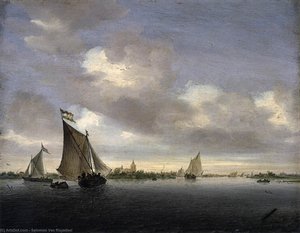
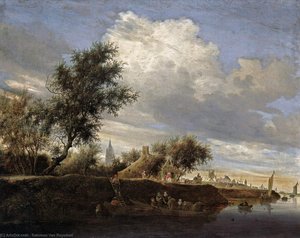
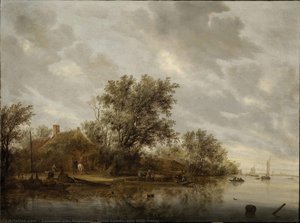
Salomon van Ruysdael’s true mastery lies in his ability to render the ephemeral qualities of the Dutch atmosphere. Unlike many of his contemporaries who sought out dramatic, sweeping vistas or turbulent storms, Salomon found his greatest inspiration in the quietude of inland waterways. His compositions often center on the rhythmic flow of rivers and the tranquil expanse of lakes, where the sky and water meet in a seamless transition of muted tones and soft light. In masterpieces such as River View near Deventer, one can observe how he utilizes a delicate palette to evoke the damp, cool air of the Netherlands, inviting the viewer to step into a moment of profound stillness.
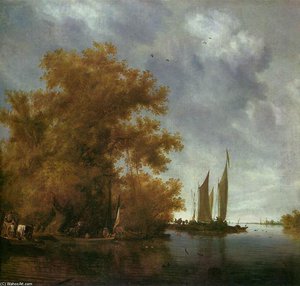
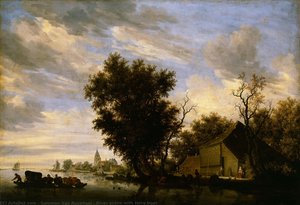
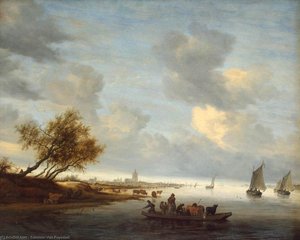
His technical prowess is particularly evident in his treatment of marine and riverine subjects. In works like Sailing Vessels on an Inland Body of Water, he demonstrates an unparalleled ability to capture the weight and movement of boats navigating through calm currents. The integration of human elements—such as the subtle presence of fishermen in River with Fishermen—is never intrusive; rather, these figures serve to provide scale and a sense of lived reality to the landscape. Through his brush, the water becomes more than just a surface; it becomes a mirror reflecting the shifting clouds and the soft, diffused light that characterizes the Dutch sky.
Legacy and Artistic Significance
The historical significance of Salomon van Ruysdael resides in his role as a pioneer of the atmospheric landscape. He moved away from the rigid, topographical depictions of earlier eras toward a more emotive, sensory experience of nature. His ability to blend the precision of still-life elements with the vastness of landscape painting created a unique aesthetic that resonated with the Dutch middle class, who sought art that reflected their own peaceful, industrious environment.
Today, his legacy is preserved in some of the world's most esteemed institutions, including the Museo Thyssen-Bornemisza. To study a Van Ruysdael is to undergo a lesson in patience and observation. His work remains a testament to the beauty found in the understated, reminding us that the most profound artistic truths are often found in the quietest reflections of a river or the softest glow of a departing sun. His contribution to the Dutch Golden Age remains an essential chapter in the story of how humanity learned to see the world not just as it is, but as it feels.
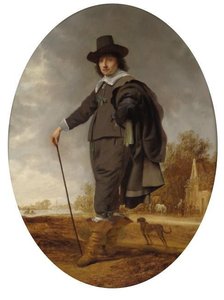
Salomon van Ruysdael
1602 - 1670 , Netherlands
Quick Facts
- Artistic Movement Or Style: Dutch Golden Age Landscape Painting
- Artists Or Movements Influenced By This Artist: ['Jacob Van Ruisdael']
- Artists Who Influenced This Artist:
- Jan Porcellis
- Esaias van de Velde
- Date Of Birth: Naarden, Netherlands (1602)
- Date Of Death: November 3, 1670
- Full Name: Salomon van Ruysdael
- Nationality: Dutch
- Notable Artworks:
- River landscape
- Ferry near Gorinchem
- View of Deventer
- Place Of Birth: Naarden
Related Articles
Van Gogh's Masterpieces: Explore 25 Iconic Paintings & Art for Your Home
Journey through Vincent van Gogh's 25 most iconic paintings! Explore 'Starry Night', 'Sunflowers,' and more—discover the stories, techniques & emotions behind these Post-Impressionist masterpieces. Find museum-quality art reproductions for your home at ArtsDot.com.

Dutch Masters: 10 Golden Age Paintings That Still Inspire |
Journey into the Dutch Golden Age! Explore 10 iconic paintings by Rembrandt, Vermeer & Hals. Discover the stories behind these Baroque masterpieces and find museum-quality art reproductions to elevate your home decor on .
Abraham Hendricksz van Beyeren: Pioneering Dutch Still Life & the Banquet Tradition
Explore the captivating world of Dutch Golden Age still life with Abraham van Beyeren. Discover his innovative techniques, symbolic banquet scenes & lasting influence on art history. Learn about collecting these masterpieces.

Rembrandt's Masterpieces: Explore 25 Iconic Paintings & Prints | ArtsDot
Journey through Rembrandt van Rijn's 25 most iconic paintings & etchings. Explore Dutch Golden Age masterpieces, dramatic chiaroscuro, and timeless portraits. Find museum-quality art reproductions to elevate your home decor on ArtsDot.com.

Golden Age Reflections: Dutch Baroque Painting & Cultural Innovation
Explore the Dutch Golden Age of painting! Discover key artists like Vermeer & ter Borch, their innovative techniques, and the rich cultural context behind these Baroque masterpieces. Learn about collecting & appreciating this iconic art period.