 Preview
 Send
Send Share
Share
 Details

 Download
 Similars
 X-Ray
X-Ray Diaporama
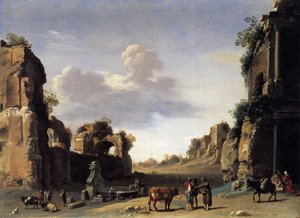
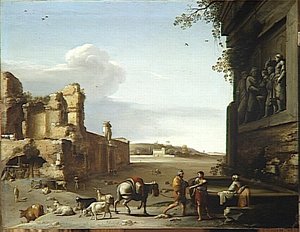
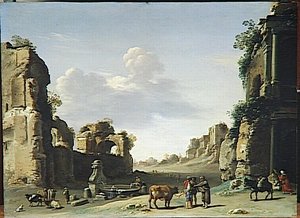
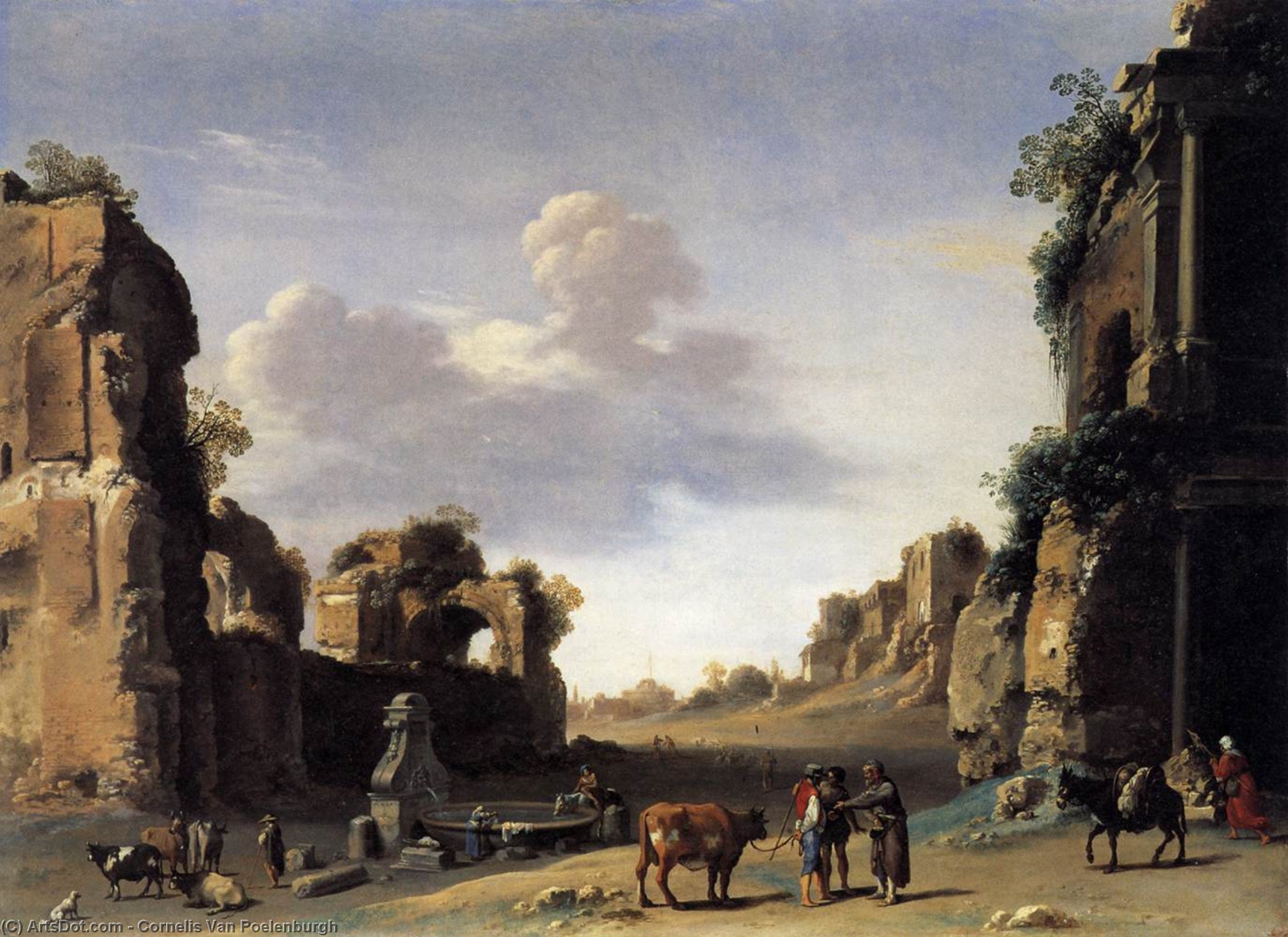
View of the Campo Vaccino
 Oil On Copper
- WallArt
- Baroque
 1620
1620- Early Modern
 40.0 x 55.0 cm
 The Louvre
 Read More
Hand Made Oil Reproduction
Hand-painted oil on canvas in your size and frame, made to order by our artists. ( Buy Print Buy Image)




P118B $10

P118H $10

P118W $10

P438Z $10

P508JH $12

P508YH $12

P805H $10

P805Z $10

P919BZ $10

P919G $10

P919XJ $10

P959ZH $10

P968JZ $12

W106C $8

W218G $10

W218JH $8

W218Y $10

W307PJ $10

W316G $10

W316PJ $8

W316Y $10

W398PJ $8

W4111J $10

W500HY $15

W500JH $15

W692G $12

W849H $8

W940BG $15

W953PJ $8




Pick from our preset sizes that match the artwork's original proportions.

You may enter your own dimensions to fit a specific frame or space. If your selected size does not match the original image's proportions, we will either crop the artwork or extend the painting with additional hand-painted elements. A digital mockup will be sent for your approval before production begins.
Please note that the on-screen preview does not reflect the actual cropping or extension. Only the mockup will accurately show the final composition.
While custom sizes are available, we recommend selecting a dimension from the predefined list to preserve the original proportions.
After order, ArtsDot.com team will email client for instructions and provide a mockup preview
Worldwide Delivery () in 3/4 weeks instead of standard 5 weeks. (27 August). No compromise on quality.

Free Worldwide Express Shipping

High-Quality Linen Canvas

Full Shipping Insurance

Customs Tax Refund Guarantee

True Color Matching Guarantee

60-Day Return Policy (Defects Only)

100% Money-Back Guarantee

Bulk Discount Offer
 Glass option is only available in size under 110 CM

View of the Campo Vaccino
Reproduction Medium
Reproduction Size
-


Total Price
$ 313
Artwork Description
A Window into Antiquity: The Luminous World of Van Poelenburgh
In the quiet intimacy of Cornelis van Poelenburgh’s View of the Campo Vaccino, we are invited to step through a portal into the heart of 17th-century Rome. Painted in 1620, this exquisite oil on copper masterpiece does far more than document a topographical location; it captures a profound meditation on the passage of time and the enduring presence of the divine amidst earthly decay. The scene centers upon the Roman Forum—the legendary Campo Vaccino—which, in the artist's era, had transitioned from a seat of imperial power to a pastoral enclosure for cattle. Through his masterful command of light, van Poelenburgh transforms a landscape of ruins into a stage for spiritual contemplation, where the crumbling grandeur of the past meets the soft, breathing vitality of the present.
The composition is anchored by two dramatic, imposing gorges that frame the central vista like theatrical curtains, guiding the viewer’s gaze upward toward a radiant, celestial sky. This structural choice creates an immediate sense of depth and monumental scale, even within the small-scale format typical of Dutch cabinet paintings. As the eye wanders along a winding road that meanders through the skeletal remains of classical architecture, it encounters small, delicate figures and livestock, their presence adding a layer of human narrative to the vastness of the landscape. The lighting is nothing short of transformative; a soft, diffused glow suggests an overcast day, yet bright highlights dance upon the clouds and the weathered surfaces of stone, imbuing the entire scene with a sense of quiet, atmospheric magic.
The Mastery of Light and Texture
To behold this work is to witness the pinnacle of the Baroque landscape tradition. Van Poelenburgh utilizes the unique properties of copper as his support, a medium prized by masters for its ability to hold incredibly fine detail and produce an unparalleled luminosity. His technique is characterized by meticulous brushstrokes that achieve subtle gradations of color, allowing for a seamless transition between the rough, tactile surfaces of ancient stone and the ethereal, smooth textures of the sky and foliage. This interplay of light and shadow—the chiaroscuro—is central to the painting's emotional resonance, creating an atmosphere that oscillates between the somber weight of history and the hopeful brilliance of a new day.
The color palette is a sophisticated balance of cool and warm tones. Deep blues and lush greens define the distant foliage and the expansive sky, providing a serene backdrop that allows the warmer, earthy ochres and sun-bleached greys of the ruins to stand out. This careful chromatic arrangement ensures that the viewer remains captivated by the intricate details of the architecture while never losing sight of the broader, atmospheric mood. For the discerning collector or interior designer, such a piece offers a profound sense of depth and sophistication, acting as a focal point that brings both historical weight and a tranquil, contemplative energy to any curated space.
Symbolism and the Eternal Cycle
Beyond its aesthetic splendor, View of the Campo Vaccino is rich with symbolic meaning. The crumbling Roman ruins serve as potent memento mori—reminders of mortality and the inevitable impermanence of even the mightiest human empires. Yet, this sense of decay is not presented with despair; rather, it is juxtaposed with the enduring cycles of nature and the persistent presence of life. The cattle grazing amidst the columns and the radiant light breaking through the clouds suggest a divine continuity, an idea that beauty and spirit persist long after the structures of man have fallen.
This duality makes the painting an exceptionally versatile piece for modern decoration. It possesses the ability to evoke nostalgia and reverence for antiquity while providing a calming, meditative quality that complements contemporary minimalist or classical interiors alike. Whether viewed as a historical document of the Dutch Italianate movement or as a purely emotive landscape, van Poelenburgh’s work remains a timeless testament to the beauty found in the intersection of ruin and renewal.
Related Artworks
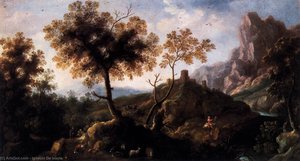
Artist Biography
early life and training
cornelis van poelenburgh, a prominent dutch landscape painter, was born in utrecht, netherlands in 1594. he initially trained with abraham bloemaert, a renowned artist of the time. this foundational training laid the groundwork for van poelenburch's future success.artistic career and influences
van poelenburch's travels to rome in the early 17th century significantly influenced his work, making him a leading representative of the first generation of dutch landscape painters active in italy. his small-scale paintings, often featuring italianate landscapes with small figures enacting biblical or mythological scenes, showcased his unique style. notable works:- satyrs spying on nymphs (after 1627), a characteristic example of van poelenburch's work, featuring archaic landscapes with figures bathing. (view on ArtsDot)
- council of the gods (c. 1630), a painting showcasing van poelenburch's idealized hilly landscape and roman-inspired goddesses, now housed in the mauritshuis (the hague, netherlands). (view on ArtsDot)
legacy and later life
van poelenburch's work was highly regarded by his contemporaries, including the grand duke of tuscany and the dutch stadholder. he later returned to utrecht, where he passed away in 1667, just a few years after his old teacher abraham bloemaert. key points:- born in utrecht, netherlands in 1594
- trained with abraham bloemaert
- influenced by his time in rome
- known for small-scale italianate landscapes with figures
- died in utrecht in 1667 view cornelis van poelenburch's artworks on ArtsDot learn more about cornelis van poelenburgh on wikipedia
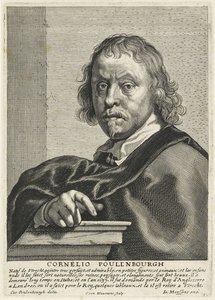
cornelis van poelenburch
1594 - 1667 , Netherlands
Quick Facts
- Artistic Movement Or Style: Dutch Landscape, Romanate
- Artists Or Movements Influenced By This Artist: ['Claude Lorraine']
- Artists Who Influenced This Artist: ['Abraham Bloemaert']
- Date Of Birth: 1594, Utrecht, Netherlands
- Date Of Death: 1667, Utrecht, Netherlands
- Full Name: Cornelis van Poelenburgh
- Nationality: Dutch
- Notable Artworks:
- Satyrs spying on nymphs
- Council of the gods
- Place Of Birth: Utrecht, Netherlands
Related Articles
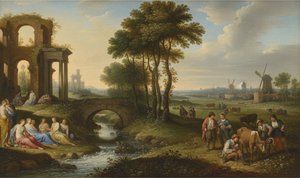
Cornelis van Poelenburch: Bridging Mannerism & the Dutch Baroque Landscape
Discover Cornelis van Poelenburch, a pivotal Dutch Baroque landscape painter bridging Mannerism & Italianate styles. Explore his life, key works, and lasting influence on 17th-century art with ArtsDot.

Baroque Classicism: Reconciling Drama & Order in 17th-Century Art
Explore the captivating world of Baroque Classicism! Discover its history, key artists like Caravaggio & Rubens, and defining characteristics. Expert insights & high-quality reproductions at ArtsDot.

Dutch Baroque Masters: 10 Paintings That Shaped an Era | ArtsDot
Journey through the Golden Age with our guide to the Top 10 Dutch Baroque masterpieces! Explore iconic paintings by Rembrandt, Vermeer & Frans Hals. Find museum-quality art reproductions and elevate your home decor at ArtsDot.com.
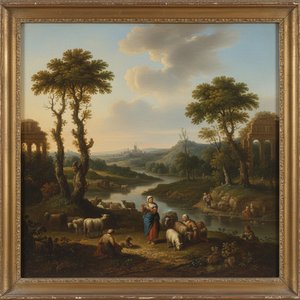
Nicolaes Berchem: Dutch Golden Age Pastoralism & the Evolution of Landscape Painting
Explore the captivating world of Nicolaes Berchem, a leading Dutch Golden Age painter. Discover his idyllic landscapes, masterful technique & lasting influence on art history. Learn more at ArtsDot.

Golden Age Reflections: Dutch Baroque Painting & Cultural Innovation
Explore the Dutch Golden Age of painting! Discover key artists like Vermeer & ter Borch, their innovative techniques, and the rich cultural context behind these Baroque masterpieces. Learn about collecting & appreciating this iconic art period.