 Preview
 Send
Send Share
Share
 Details

 Download
 Similars
 X-Ray
X-Ray Diaporama
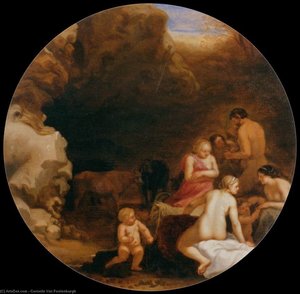
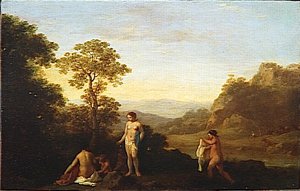
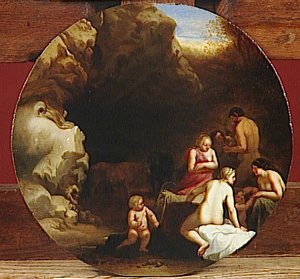
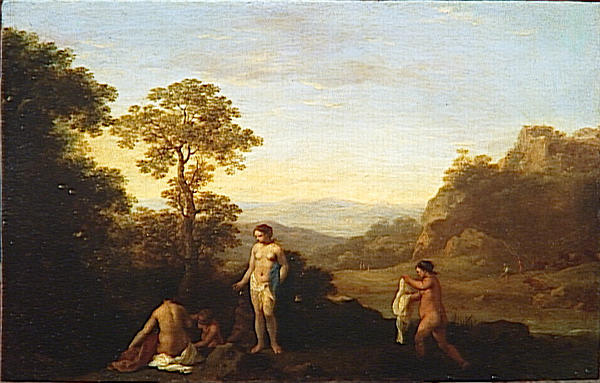
PAYSAGE AUX CINQ BAIGNEUSES


 Read More
Hand Made Oil Reproduction
Hand-painted oil on canvas in your size and frame, made to order by our artists. ( Buy Print Buy Image)




P118B $10

P118H $10

P118W $10

P438Z $10

P508JH $12

P508YH $12

P805H $10

P805Z $10

P919BZ $10

P919G $10

P919XJ $10

P959ZH $10

P968JZ $12

W106C $8

W218G $10

W218JH $8

W218Y $10

W307PJ $10

W316G $10

W316PJ $8

W316Y $10

W398PJ $8

W4111J $10

W500HY $15

W500JH $15

W692G $12

W849H $8

W940BG $15

W953PJ $8




Pick from our preset sizes that match the artwork's original proportions.

You may enter your own dimensions to fit a specific frame or space. If your selected size does not match the original image's proportions, we will either crop the artwork or extend the painting with additional hand-painted elements. A digital mockup will be sent for your approval before production begins.
Please note that the on-screen preview does not reflect the actual cropping or extension. Only the mockup will accurately show the final composition.
While custom sizes are available, we recommend selecting a dimension from the predefined list to preserve the original proportions.
After order, ArtsDot.com team will email client for instructions and provide a mockup preview
Worldwide Delivery () in 3/4 weeks instead of standard 5 weeks. (17 August). No compromise on quality.

Free Worldwide Express Shipping

High-Quality Linen Canvas

Full Shipping Insurance

Customs Tax Refund Guarantee

True Color Matching Guarantee

60-Day Return Policy (Defects Only)

100% Money-Back Guarantee

Bulk Discount Offer
 Glass option is only available in size under 110 CM

PAYSAGE AUX CINQ BAIGNEUSES
Reproduction Medium
Reproduction Size
-


Total Price
$ 338
Artwork Description
Cornelis van Poelenburch’s Paysage aux Cinq Baigneuses: A Symphony of Light and Myth
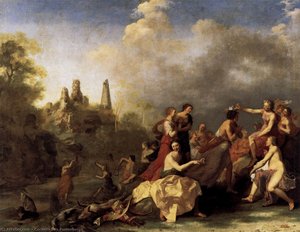
Paysage aux cinq baigneuses (Landscape with Five Bathers) by Cornelis van Poelenburch stands as a cornerstone of Dutch Baroque landscape painting, embodying the artistic fervor of its era while simultaneously reflecting profound humanist ideals. Executed around 1627-1630, this captivating oil on copper masterpiece transports viewers to an idealized Roman hillside bathed in warm sunlight—a scene steeped in mythological allusion and imbued with a palpable sense of serenity. More than just a depiction of scenery, it’s a carefully crafted meditation on beauty, pleasure, and the harmonious relationship between humanity and nature.- Subject Matter & Mythological Narrative: The painting portrays five nude figures—men and women—engaged in bathing amidst lush foliage and rocky outcrops. This imagery draws directly from classical mythology, specifically referencing scenes depicting nymphs and satyrs indulging in sensual pleasures within idyllic landscapes. Van Poelenburch’s deliberate choice of subject matter underscores the Renaissance preoccupation with humanist ideals – celebrating the human body as a vessel of beauty and intellect—and elevates the scene beyond mere visual representation into a symbolic exploration of desire and contemplation.
- Style & Artistic Influences: Van Poelenburch's style firmly establishes itself within the Baroque tradition, inheriting influences from Mannerism while forging its own distinctive path. The artist skillfully employs flattened perspective and subtly distorted forms—characteristic features of Mannerist painting—to heighten visual drama and create a sense of spatial ambiguity. However, unlike his Mannerist predecessors, Van Poelenburch prioritizes clarity and balance, achieving an equilibrium that reflects the Baroque’s fascination with grandeur and ornamentation.
- Technique & Composition: The artist's masterful technique is evident in the meticulous layering of oil paint—a hallmark of Baroque painting—to build up depth and texture. Light plays a crucial role in shaping the composition, emanating from an unseen source and casting soft shadows that delineate form and volume. Horizontal lines dominate the landscape elements—mountains and hills—creating a sense of stability and grandeur, while vertical lines define the figures’ postures and contribute to the overall balance.
- Color Palette & Emotional Impact: The painting's color palette is dominated by earthy tones—ochres, browns, and muted greens—harmoniously blended with splashes of gold and pale blues in the sky. These colors evoke a feeling of warmth and tranquility, mirroring the idyllic setting depicted. Van Poelenburch’s careful attention to detail—particularly in rendering skin tones and drapery folds—further enhances the painting's emotional impact, inviting viewers into a contemplative space where beauty and contemplation converge.
- Historical Context & Legacy: Produced during the early 17th century—a period marked by artistic innovation and intellectual ferment—Paysage aux Cinq Baigneuses exemplifies the burgeoning interest in Italianate landscapes within Dutch art circles. It stands as a testament to Van Poelenburch’s ability to synthesize classical influences with humanist sensibilities, securing his place among the foremost landscape painters of his time and establishing a lasting legacy for Baroque aesthetics.
Currently housed at Musée du Louvre, Salle 851, this artwork continues to inspire admiration for its masterful execution and profound symbolic resonance.
Related Artworks
Artist Biography
early life and training
cornelis van poelenburgh, a prominent dutch landscape painter, was born in utrecht, netherlands in 1594. he initially trained with abraham bloemaert, a renowned artist of the time. this foundational training laid the groundwork for van poelenburch's future success.artistic career and influences
van poelenburch's travels to rome in the early 17th century significantly influenced his work, making him a leading representative of the first generation of dutch landscape painters active in italy. his small-scale paintings, often featuring italianate landscapes with small figures enacting biblical or mythological scenes, showcased his unique style. notable works:- satyrs spying on nymphs (after 1627), a characteristic example of van poelenburch's work, featuring archaic landscapes with figures bathing. (view on ArtsDot)
- council of the gods (c. 1630), a painting showcasing van poelenburch's idealized hilly landscape and roman-inspired goddesses, now housed in the mauritshuis (the hague, netherlands). (view on ArtsDot)
legacy and later life
van poelenburch's work was highly regarded by his contemporaries, including the grand duke of tuscany and the dutch stadholder. he later returned to utrecht, where he passed away in 1667, just a few years after his old teacher abraham bloemaert. key points:- born in utrecht, netherlands in 1594
- trained with abraham bloemaert
- influenced by his time in rome
- known for small-scale italianate landscapes with figures
- died in utrecht in 1667 view cornelis van poelenburch's artworks on ArtsDot learn more about cornelis van poelenburgh on wikipedia
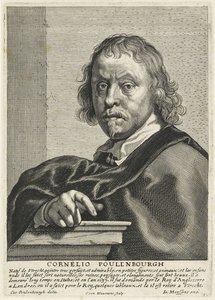
cornelis van poelenburch
1594 - 1667 , Netherlands
Quick Facts
- Artistic Movement Or Style: Dutch Landscape, Romanate
- Artists Or Movements Influenced By This Artist: ['Claude Lorraine']
- Artists Who Influenced This Artist: ['Abraham Bloemaert']
- Date Of Birth: 1594, Utrecht, Netherlands
- Date Of Death: 1667, Utrecht, Netherlands
- Full Name: Cornelis van Poelenburgh
- Nationality: Dutch
- Notable Artworks:
- Satyrs spying on nymphs
- Council of the gods
- Place Of Birth: Utrecht, Netherlands
Related Articles

Van Gogh's Masterpieces: Explore 25 Iconic Paintings & Art for Your Home
Journey through Vincent van Gogh's 25 most iconic paintings! Explore 'Starry Night', 'Sunflowers,' and more—discover the stories, techniques & emotions behind these Post-Impressionist masterpieces. Find museum-quality art reproductions for your home at ArtsDot.com.
Cornelis van Poelenburch: Bridging Mannerism & the Dutch Baroque Landscape
Discover Cornelis van Poelenburch, a pivotal Dutch Baroque landscape painter bridging Mannerism & Italianate styles. Explore his life, key works, and lasting influence on 17th-century art with ArtsDot.
Jan van Goyen: Master of Dutch Landscape & Atmospheric Perspective
Discover Jan van Goyen, the master of Dutch landscape painting. Explore his subtle technique, atmospheric realism & lasting influence on art history. Learn about this 17th-century pioneer at ArtsDot.

Rembrandt's Masterpieces: Explore 25 Iconic Paintings & Prints | ArtsDot
Journey through Rembrandt van Rijn's 25 most iconic paintings & etchings. Explore Dutch Golden Age masterpieces, dramatic chiaroscuro, and timeless portraits. Find museum-quality art reproductions to elevate your home decor on ArtsDot.com.
Jacob van Ruisdael: Master of Dutch Landscape & the Evocation of National Identity
Explore the life & work of Jacob van Ruisdael, the preeminent Dutch landscape painter. Discover his technical brilliance, symbolic depth, and lasting influence on art history. Learn about collecting Ruisdael's masterpieces.