A Champion’s Brush: The Life and Art of Tatyana Dektyareva
Tatyana Gavrilievna Dektyareva, born in 1981 in the Siberian city of Yekaterinburg, Russia, is a figure whose life embodies both athletic prowess and artistic expression. While widely celebrated as an Olympic gold medalist in track and field – specifically, the demanding discipline of the 100-meter hurdles – Dektyareva’s story extends beyond the stadium into the realm of visual art, where she finds another powerful means of communication through painting. Her journey is a compelling testament to the multifaceted nature of talent and the enduring human need for creative outlet. Though her athletic career initially defined public perception, a deeper exploration reveals an artist deeply connected to her cultural roots and driven by a desire to capture the spirit of her homeland, particularly the traditions of the Yakut people.
From Track to Canvas: A Parallel Pursuit
Dektyareva’s dedication to sport was evident from a young age, culminating in international success that included not only Olympic gold at the 2004 Athens Games but also silver at the 2005 World Championships in Helsinki and bronze at the 2006 European Championships in Gothenburg. However, alongside this rigorous training schedule, Dektyareva quietly cultivated a passion for painting. This wasn’t a sudden post-athletic endeavor; rather, art was a constant companion throughout her competitive years, offering a sanctuary of self-expression away from the pressures of elite performance. Her artistic focus centers on depictions of traditional Yakut life and mythology, often rendered in vibrant colors and dynamic compositions that echo the energy she brought to the track. The influence of local artists and the rich visual heritage of the Sakha Republic are palpable in her work.
The Artistic Legacy of “Patterns Myuriu”
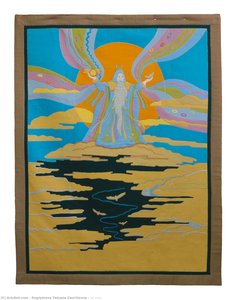
A significant aspect of Dektyareva’s artistic identity is her association with the Creative Association "Patterns Myuriu," based in Yakutsk, Russia. This collective champions and preserves the traditional art forms of the region, particularly intricate beadwork and embroidery known as *koryak*. Dektyareva's contributions to this group are not merely as a participant but as an interpreter and innovator within these established traditions. Her paintings often incorporate elements inspired by koryak patterns, translating them into larger-scale visual narratives. One notable work, “Aar Toyon,” exemplifies this fusion of athletic energy and cultural symbolism. The painting depicts a scene from Yakut folklore, rendered with bold brushstrokes and a striking color palette that reflects the dramatic landscapes of Siberia. The association’s commitment to preserving indigenous art forms has profoundly shaped Dektyareva's aesthetic sensibility, fostering a deep respect for craftsmanship and storytelling.
Themes and Techniques: A Celebration of Yakut Culture
Dektyareva’s paintings are characterized by their vibrant depictions of Yakut life, mythology, and the natural world. Recurring themes include shamanic rituals, traditional clothing, horse breeding – central to Yakut culture – and the breathtaking landscapes of Siberia. Her technique blends elements of realism with a more expressive, almost impressionistic style. She employs bold color palettes that evoke the intensity of Siberian light and shadow, and her compositions often convey a sense of movement and energy reminiscent of her athletic background. The use of gold leaf in some of her works adds another layer of symbolism, referencing both the preciousness of Yakut traditions and the spiritual significance of gold within their cosmology. Her work isn’t simply about *representing* Yakut culture; it's about actively celebrating its resilience and beauty.
Historical Significance: Bridging Worlds
Tatyana Dektyareva occupies a unique position in contemporary art, bridging the worlds of athletic achievement and cultural preservation. Her success as an Olympic athlete brought international attention to Russia, while her artistic endeavors offer a powerful voice for the Yakut people and their rich heritage. She demonstrates that creative expression is not limited by profession or circumstance; it’s an intrinsic human need that can flourish alongside other pursuits. Dektyareva's work serves as a reminder of the importance of preserving indigenous art forms in a rapidly globalizing world, and her paintings offer a compelling glimpse into a culture often overlooked by mainstream narratives. Her legacy extends beyond medals and records; it’s a testament to the power of art to connect us to our roots, celebrate diversity, and inspire future generations.