A Visionary of the Unknown: The Life and Legacy of Emília Freitas
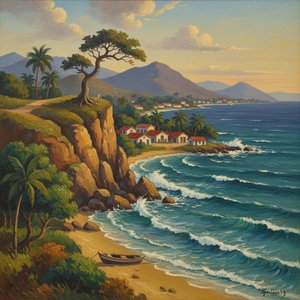
In the tapestry of Brazilian literary history, few threads shine with as much singular brilliance and foresight as that of Emília Freitas. Born in 1855 amidst the coastal landscapes of Aracati, Ceará, Freitas emerged not merely as a writer, but as a pioneer who dared to navigate the uncharted territories of the human imagination. Her life was a journey of profound intellectual pursuit, shaped by both personal hardship and an unyielding thirst for knowledge. Following the untimely loss of her father, she moved to Fortaleza, where her education in French, English, geography, and arithmetic laid the foundation for a mind capable of bridging the gap between the tangible world and the ethereal realms of fantasy.
Freitas’s early literary voice was forged in the vibrant press of the late 19th century. Beginning her poetic journey as early as 1873, she contributed to influential newspapers such as O Libertador, O Cearense, and O Lyrio e A Brisa. These early verses, which would eventually coalesce into her collection Canções do Lar (Songs of Home) in 1891, were deeply rooted in the social fabric of her time. Her poetry captured the delicate nuances of domesticity and femininity while simultaneously whispering of a broader desire for social justice. This duality—the ability to find profound meaning within the intimate and the political—would become a hallmark of her creative spirit.
The Architect of Utopian Dreams
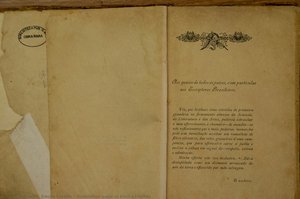
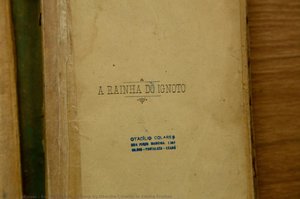
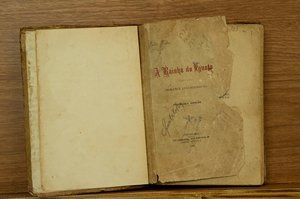
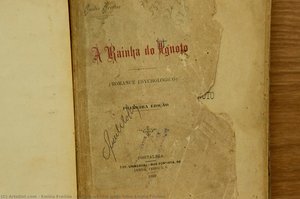
The zenith of Freitas’s literary achievement arrived in 1899 with the publication of A Rainha do Ignoto (The Queen of the Unknown). This work stands as a monumental milestone, widely recognized by scholars as Brazil’s first true foray into the genre of fantasy literature. In this "psychological novel," Freitas did more than just tell a story; she constructed an entire universe. She envisioned a utopian society inhabited by women, a radical concept that challenged the patriarchal structures of the 19th century and offered a glimpse into a reimagined social order. Through her prose, the boundaries of reality were dissolved, replaced by a landscape where the fantastic and the political intersected.
Beyond the fantastical, Freitas was a woman of action and conviction. Her commitment to progress was evident in her active participation in the Sociedade das Cearenses Libertadoras, an abolitionist society. To witness her speaking in the gallery of such assemblies was to see a woman using her voice as a tool for liberation. This intersection of her literary imagination and her social activism suggests that her "unknown" realms were never truly disconnected from the struggles of the real world; rather, they served as a laboratory for testing the possibilities of a more just and equitable existence.
A Lasting Impression on Brazilian Culture
The trajectory of Emília Freitas’s life took her from the classrooms of Fortaleza to the burgeoning landscapes of Manaus, where she continued her vocation as an educator. Even as she moved through different regions of Brazil, her intellectual influence remained anchored in her groundbreaking narratives. Though her most famous work fell out of print for decades, its rediscovery in the late 20th century sparked a renaissance of feminist literary criticism, allowing modern readers to appreciate the depth of her social commentary and the sophistication of her world-building.
Today, we remember Emília Freitas not just as a novelist or a poet, but as a visionary who expanded the horizons of Brazilian literature. Her legacy is found in:
- The Birth of Fantasy: Establishing the foundational elements of the fantasy genre within the Brazilian canon.
- Feminist Foresight: Utilizing utopian fiction to explore gender roles and female agency long before it became a mainstream literary movement.
- Social Advocacy: Merging her poetic voice with abolitionist activism, proving that literature can be a powerful instrument for social change.
Emília Freitas remains a luminous figure, reminding us that the most profound truths are often found in the realms of the unknown.