A Pioneer of Catalan Lacquer: The Life and Art of Enriqueta Benigani
Enriqueta Pascual Benigani, often known as Enriqueta P. Benigani or simply Enriqueta Benigani, stands as a compelling figure in the landscape of 20th-century Spanish art. Born in Barcelona in 1905 and passing away in her beloved city in 1969, she carved a unique niche for herself not merely as a painter, but as a true innovator—a pioneer who brought the exquisite technique of lacquer artistry to prominence within Catalonia. Her story is one of artistic exploration, collaborative spirit, and a dedication to reviving and reimagining traditional crafts.
Early Life and Artistic Foundations
Benigani’s introduction to the world of art was deeply intertwined with her personal life. She married Lluís Bracons, an artist and engraver who would become not only her partner but also a crucial collaborator in her artistic journey. It was at the Superior School of Fine Arts and Crafts in Barcelona in 1921 that Benigani first encountered lacquer—a technique Bracons had been studying. This encounter proved transformative. While painting formed an initial part of her practice, it was the captivating possibilities of lacquer that truly ignited her passion.
The Revival of Lacquer Art
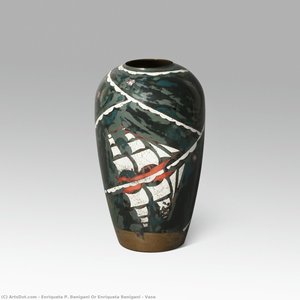
Prior to Benigani’s work, lacquer art held a relatively marginal position within Catalan artistic circles. She and Bracons dedicated themselves to mastering this complex process, which involves applying multiple layers of resin derived from the sap of the lacquer tree, often adorned with intricate designs and embellishments. Their commitment wasn't simply about replicating existing styles; they sought to innovate, experimenting with new materials, techniques, and aesthetic approaches. Benigani’s skill quickly became apparent, and she is rightfully considered one of the first artists to seriously champion lacquer as a fine art medium in Catalonia.
Style and Major Achievements
Benigani's artistic style is characterized by its delicate intricacy and refined elegance. Her lacquer work often features detailed floral motifs, geometric patterns, and subtle color palettes—reflecting influences from the Art Deco movement alongside traditional Catalan decorative arts. While specific details about her broader painting oeuvre remain less documented, it’s clear that her lacquer pieces represent a significant body of work. She wasn't simply applying decoration; she was building layers of meaning and texture through meticulous craftsmanship.
Legacy and Historical Significance
The impact of Enriqueta Benigani extends beyond the beauty of her individual artworks. Her dedication to lacquer art helped establish it as a legitimate form of artistic expression within Catalonia, inspiring subsequent generations of artists to explore its potential. Her collaborative relationship with Lluís Bracons further demonstrates the power of shared artistic vision and mutual learning. Though perhaps not as widely recognized internationally as some of her contemporaries, Benigani’s contribution to Spanish art is significant—a testament to her skill, innovation, and unwavering commitment to preserving and evolving a unique artistic tradition.