The Melodic Brush: The Life and Art of Ferdinand Schimon
Ferdinand Schimon (1797–1852) occupied a unique space in the cultural tapestry of the nineteenth century, moving with equal grace between the dramatic stages of the opera house and the quiet intensity of the painter's studio. Born in Buda during a period of profound transformation, Schimon’s early life was defined by a dual passion for music and visual art. Before he became a recognized name in portraiture, he pursued a career as an opera tenor, a formative experience that would forever alter his approach to the canvas. This musical foundation instilled in him a deep sensitivity to rhythm, drama, and the emotional crescendos of human expression, allowing him to capture not just the physical likeness of his subjects, but their very psychological resonance.
The transition from singer to painter was guided by the mentorship of Johann Baptist von Lampi the Younger, a master whose commitment to realism and meticulous detail provided Schimon with a rigorous technical foundation. Moving to Vienna to study under Lampi, Schimon immersed himself in the heart of European artistic innovation. It was during this period that his talent for capturing character began to flourish. His early works often focused on the theatrical world, including portraits of prominent actors from the Burgtheater, where he could apply his understanding of dramatic lighting and gesture to freeze a moment of performance in time.
A Master of Romantic Realism
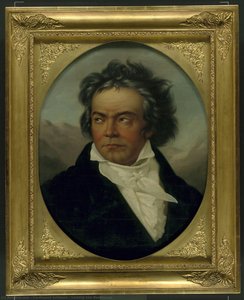
Schimon’s artistic style is best described as a sophisticated blend of Romanticism and realism. While his technique remained grounded in the precise craftsmanship learned from Lame, his soul was deeply attuned to the turbulent emotions of the Romantic era. He possessed a rare ability to use light and shadow—a technique known as chiaroscuro—to direct the viewer's gaze and evoke mood. This is perhaps most famously seen in his 1819 portrait of Ludwig van Beethoven. In this work, Schimon does not merely paint a composer; he captures a tempestuous spirit. Through the stark contrast of light against dark textures and the focused intensity of the subject's gaze, Schimon translates the auditory power of music into a visual language of profound gravity.
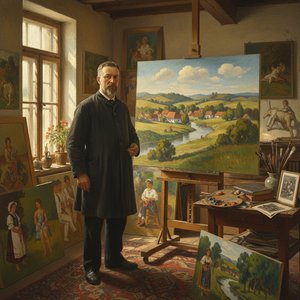
Beyond the high-profile portraits of nobility and musical legends, Schimon’s oeuvre holds a deep reverence for the cultural heritage of his homeland. He produced evocative scenes of Hungarian peasant life, rendering rural communities with a sensitivity that avoided mere caricature. In these works, he captured the dignity of labor and the quiet beauty of tradition, providing a vital historical record of a bygone era. His ability to pivot from the aristocratic elegance of a formal portrait to the earthy, textured reality of folk life demonstrates a versatile mastery over both subject and sentiment.
Legacy and Historical Significance
The legacy of Ferdinand Schimon is one of intersectionality, where the boundaries between different art forms dissolve. His life serves as a testament to the interconnectedness of the arts during the nineteenth century, proving that the discipline of a performer can enrich the vision of a painter. Though he may not have achieved the singular global fame of some of his contemporaries, his contributions to Hungarian and German portraiture remain indispensable. He provided a window into the social strata of his time, from the prestigious halls of Vienna to the vibrant rural landscapes of Hungary.
Today, Schimon’s work continues to resonate with collectors and historians alike. His paintings are valued not only for their technical excellence but for their ability to act as emotional conduits to the past. To look upon a Schimon portrait is to encounter the pulse of the Romantic era—a period defined by the struggle between reason and emotion, order and chaos. Through his brush, the fleeting expressions of humanity and the enduring spirit of tradition are preserved in a permanent, luminous dance of pigment and light.