Menu
FREE ART CONSULTATION

fyodor gordeyevich gordeyev

1744 - 1810

Quick Facts

  • Art period: Early Modern
  • Died: 1810
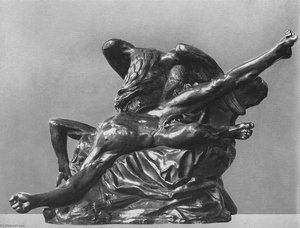
  • Top 3 works: Prometheus
  • Born: 1744, Tsaritsyn, Russia
  • Works on APS: 1
  • More…
  • Top-ranked work: Prometheus
  • Museums on APS: State Russian Museum
  • Nationality: Russia
  • Copyright status: Public domain
  • Lifespan: 66 years

Art Quiz

There is only one correct answer for each question.

Question 1:
Q1: Where was Fyodor Gordeyev born?
Question 2:
Q2: Which academy did Fyodor Gordeyev attend?
Question 3:
Q3: Where did Fyodor Gordeyev study during his European trip?
Question 4:
Q4: Who was Fyodor Gordeyev’s influential teacher in Paris?
Question 5:
Q5: What famous sculpture did Fyodor Gordeyev create?

Fyodor Gordeyev (1744 – 4 February 1810): A Sculptor Shaped by Enlightenment and Classical Ideals

Fyodor Gordeyevich Gordeyev (Russian: Фёдор Гордеевич Гордеев; 1744 – 4 February 1810) was a Russian sculptor whose career spanned the turbulent years of the Enlightenment, leaving an indelible mark on the artistic landscape of his time. Born in Saint Petersburg, he possessed a remarkable talent nurtured by formal education at the Imperial Academy of Fine Arts and enriched by formative journeys to Paris and Rome – experiences that profoundly shaped his artistic sensibilities.

Early Life and Education

Gordeyev’s upbringing within the aristocratic circles of Saint Petersburg instilled in him an appreciation for refined aesthetics and intellectual curiosity. Recognizing his potential, he enrolled at the Imperial Academy of Fine Arts, where he honed his skills under Jean-Baptiste Lemoyne, a leading figure of Neoclassical art. This mentorship proved invaluable, exposing Gordeyev to the stylistic principles championed by Enlightenment thinkers – reason, order, and imitation of classical antiquity. The Academy’s curriculum emphasized meticulous observation and technical mastery, equipping him with the foundational tools for his artistic endeavors.

European Influences: Paris and Rome

A generous bursary enabled Gordeyev to undertake a crucial study trip abroad, commencing in Paris in 1769. Surrounded by the vibrant intellectual atmosphere of the French capital, he immersed himself in the studio of Lemoyne, absorbing the nuances of Neoclassical sculpture. However, his artistic pilgrimage didn’t conclude there; he traveled to Rome – the epicenter of classical art and culture – where he encountered Michelangelo Buonarroti's sculptures and absorbed the grandeur of Roman monumental art. This immersion solidified his commitment to reviving the ideals of Greek and Roman antiquity, mirroring the broader cultural movement sweeping across Europe.

Notable Works: Mercury Entrusting Bacchus

Gordeyev’s artistic output reflected his unwavering dedication to classical principles. His most celebrated achievement remains the bas-relief sculpture “Mercury Entrusting Bacchus,” commissioned for the Academy of Fine Arts in Saint Petersburg. This monumental piece exemplifies Gordeyev's masterful technique and profound understanding of sculptural form—a testament to his ability to translate idealized notions into tangible artistic expression. The sculpture’s depiction of Mercury, symbolizing intellect and divine inspiration, transferring grapes (representing fertility and abundance) to Bacchus, the god of wine and revelry, encapsulates the Enlightenment fascination with mythology and allegory. It stands as a cornerstone of Russian Neoclassical art, demonstrating Gordeyev's ability to convey complex ideas through elegant sculptural composition.

Legacy and Historical Significance

Fyodor Gordeyev’s contribution to Russian sculpture extends beyond his individual masterpieces. He served as a teacher at the Imperial Academy of Fine Arts, fostering the development of subsequent generations of sculptors who embraced Neoclassical ideals. His influence permeated the artistic discourse of his era, shaping aesthetic sensibilities and promoting scholarly pursuits. Gordeyev's work embodies the spirit of the Enlightenment – a period characterized by intellectual ferment and a renewed interest in classical culture—solidifying his place as one of Russia’s foremost sculptors of the 18th century. He remains an enduring symbol of artistic excellence and intellectual curiosity, reminding us of the transformative power of education and engagement with the heritage of Western civilization.