Georges Louis Poilleux Saint-Ange: A Parisian Echo of the French School
Georges Louis Poilleux Saint-Ange, born in Paris in 1853 and tragically passing away in Rothéneuf in 1911, represents a fascinating, if somewhat understated, figure within the vibrant landscape of late 19th-century French painting. His life’s work, deeply rooted in the traditions of the *École de Barbizon* and significantly shaped by his apprenticeship under Isidore Pils, offers a poignant glimpse into the artistic currents flowing through Parisian society at the turn of the century. Saint-Ange's story is one of quiet dedication to capturing the essence of rural life and the dramatic beauty of the Breton coast – themes that resonated powerfully with the prevailing artistic sensibilities of his time.
Early Life and Artistic Training
Born into a family connected to the Parisian art world—his father was Ange Louis Poilleux, and his mother Eugénie Pauline Reveillon—Saint-Ange’s path toward becoming an artist began with a formal apprenticeship under Isidore Pils. Pils, a prominent figure in the *École de Barbizon*, championed a style emphasizing direct observation of nature and rejecting academic conventions. This influence is immediately apparent in Saint-Ange's work; he learned to prioritize capturing light and atmosphere over meticulous detail or idealized forms. Pils’s emphasis on plein air painting—working directly from nature—provided Saint-Ange with the foundational skills necessary for his future explorations of Breton landscapes. The rigorous training instilled a deep respect for the natural world, a characteristic that would become central to his artistic vision.
A Breton Vision: Landscapes and Narrative
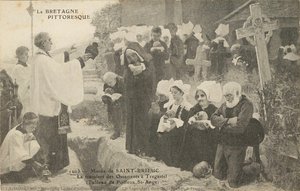
Saint-Ange’s oeuvre is overwhelmingly defined by his depictions of Brittany—a region he seems to have adopted as his primary subject matter. He wasn't merely recording scenery; he was attempting to convey a sense of place, imbued with the spirit of its people and traditions. His paintings frequently depict scenes from Breton folklore and religious rituals, particularly those related to death and remembrance. The most celebrated example is undoubtedly “Le Transfert des Ossements à Tregastel” (The Transfer of Bones at Tregastel), a monumental work that vividly portrays a solemn procession carrying the remains of deceased villagers to their final resting place on the rugged Breton coast. This painting, and others like it, are not simply landscapes; they are imbued with symbolic weight, reflecting the deep-seated beliefs and rituals of the region.
Technique and Style – Echoes of Pils and Barbizon
Saint-Ange’s artistic style is characterized by a loose, expressive brushwork—a direct inheritance from his mentor, Isidore Pils. He employed a palette dominated by earthy tones—ochres, browns, and greens—to create a sense of atmospheric depth and realism. His compositions are often dynamic, capturing the movement of figures within the landscape. While he shared Pils’s commitment to *plein air* painting, Saint-Ange developed his own distinctive approach, imbuing his scenes with a heightened emotional intensity. His use of light is particularly noteworthy; he masterfully employed chiaroscuro—the dramatic contrast between light and shadow—to create a sense of drama and heighten the emotional impact of his subjects.
Legacy and Historical Significance
Though often overshadowed by more prominent figures of the French School, Georges Louis Poilleux Saint-Ange’s contribution to 19th-century art deserves recognition. He represents a crucial link between the *École de Barbizon* and subsequent generations of landscape painters. His dedication to capturing the authentic spirit of Brittany—its landscapes, its people, and its traditions—provides valuable insight into the cultural identity of the region. His work serves as a reminder that artistic expression can be deeply intertwined with local history and folklore, offering a powerful means of preserving and celebrating regional heritage. The quiet intensity of his paintings continues to resonate today, inviting viewers to contemplate the beauty and solemnity of the Breton coast and the enduring power of human memory.