Heinrich Carl Reinhold (1788–1825): A Romantic Vision of Italy
Heinrich Carl Reinhold emerged as a prominent figure in the burgeoning Romantic movement within German art circles, leaving behind a legacy primarily defined by his captivating landscapes and meticulously rendered depictions of Italian scenery. Born in Gera, Thuringia, in 1788, Reinhold’s artistic journey began under the tutelage of his father and half-brother, fostering an early appreciation for drawing and establishing him as a student at Dresden Academy of Fine Arts.
- Early Influences: Reinhold's formative years were marked by exposure to classical ideals alongside burgeoning Romantic sensibilities. Notably, he absorbed the stylistic innovations championed by Joseph Anton Koch, whose landscapes served as a cornerstone for Reinhold’s artistic vision.
- Vienna and Parisian Academia: Seeking further refinement, Reinhold relocated to Vienna in 1806 and subsequently enrolled at the Akademie der bildenden Künste Wien, where he honed his skills under the guidance of Dominique Vivant Baron de Denon, Director of Museums in Paris. This pivotal move propelled him into the heart of artistic discourse and cemented his connection with influential contemporaries.
- Parisian Period (1809–1814): Reinhold’s time in Paris proved instrumental in shaping his artistic style and broadening his intellectual horizons. He diligently documented Napoleon's campaigns, capturing the grandeur and drama of military history through a masterful blend of observation and artistic interpretation.
- Return to Vienna & Italian Travels (1819–1825): Renewed enthusiasm for Romanticism spurred Reinhold’s return to Vienna in 1819, where he collaborated with Johann Christoph Erhard on an ambitious expedition to Italy. Their journey encompassed visits to Rome and Naples, allowing Reinhold to immerse himself in the artistic milieu of his time and directly inspire his subsequent paintings.
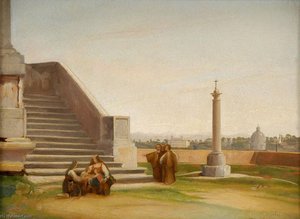
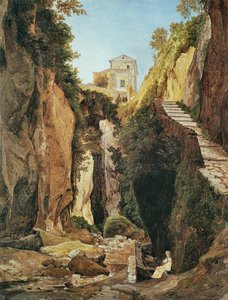
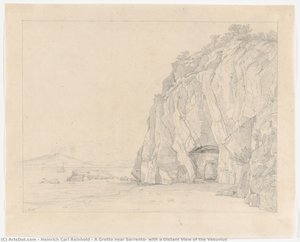
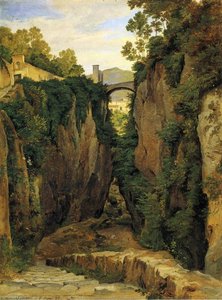
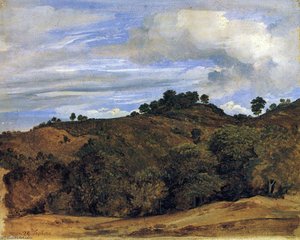
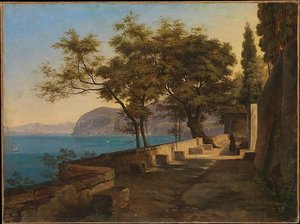
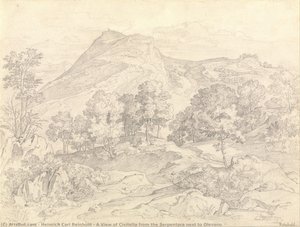
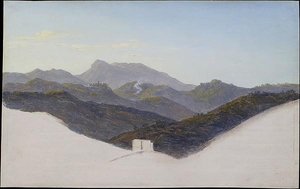
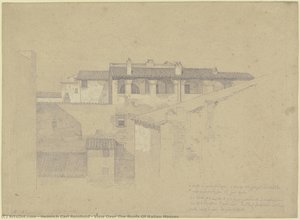
Reinhold’s oeuvre is characterized by a remarkable sensitivity to light and atmosphere—a hallmark of Romantic painting—and an unwavering commitment to capturing the sublime beauty of nature. His landscapes are imbued with meticulous detail, reflecting a profound understanding of geological formations and botanical specimens. Reinhold's artistic achievements include “Terrace of the Capucin Priory in Sorrento,” “Family at the Foot of a Staircase of a Roman Palace” and “A Grotto near Sorrento, with a Distant View of the Vesuvius.”
Reinhold’s untimely demise in Rome in 1825—attributed to illness exacerbated by his arduous travels—marked the end of a brilliant artistic career. His monument in the Protestant Cemetery of Rome stands as a testament to his enduring legacy, sculpted by Bertel Thorvaldsen and embodying the spirit of Romantic idealism.
Further Research: Explore Reinhold’s work at ArtsDot.com for detailed images and contextual information.