A Legacy Etched in Light and Shadow
Hubertine Heijermans (1936 – 2022) emerged from the vibrant artistic landscape of Amsterdam, Netherlands, establishing herself as a singular voice within Dutch Contemporary Realism. Her journey into the delicate world of printmaking began with foundational painting lessons under Jos Rovers at the academy, followed by mentorship from Gé Röling, which shaped her early artistic sensibilities and instilled in her a profound respect for classical technique. A scholarship secured after three decades of preparatory studies cemented her path toward mastering both vision and execution, allowing her to bridge the gap between traditional Dutch training and the expansive possibilities of European printmaking.
In 1958, life took a transformative turn when she married Nils Tellander, leading her relocation to Lausanne, Switzerland. This move proved pivotal, fostering an environment conducive to artistic exploration and collaboration as she welcomed their son, Anian, into the world in 1960. Her thirst for technical mastery eventually led her far beyond the borders of her homeland; her studies at Villa Schifanoia and in Fiesole, Italy, instilled her with advanced etching techniques—a craft she would dedicate herself to for decades. This period of intense study was marked by a deep immersion in the physical demands of her medium, most notably evidenced by her acquisition of a Bendini-Bologna printing press, a manually operated behemoth requiring considerable physical effort, symbolizing her unwavering commitment to traditional, tactile methods.
The Mastery of Form and Emotion
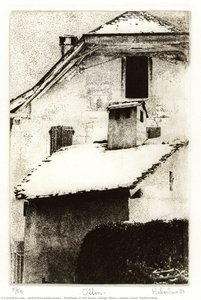
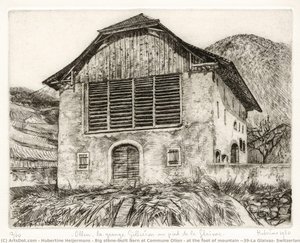
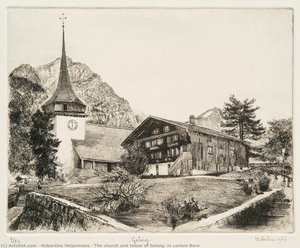
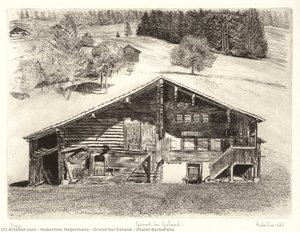
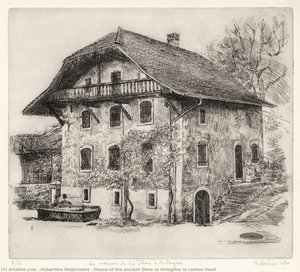
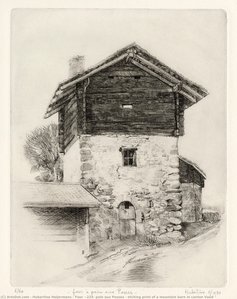
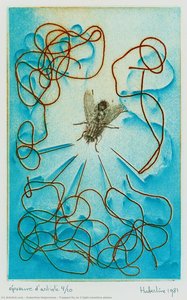
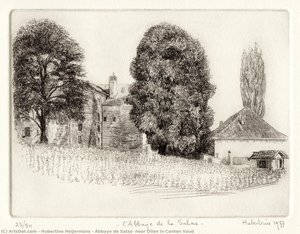
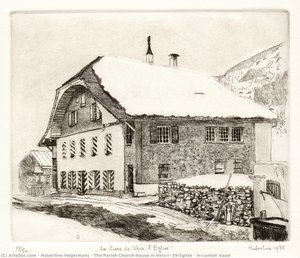
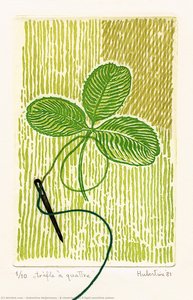
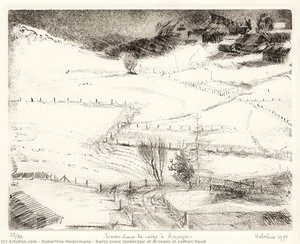
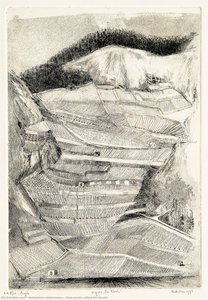
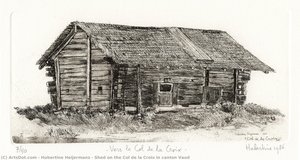
Following her divorce from Tellander in 1973, Heijermans entered a period of intense creative independence. She established Atelier ‘Hubertine’ in Canton de Vaud—a studio that would serve as her creative sanctuary for over forty years. Within this space, her work consistently explored the delicate intersections of femininity, memory, and the quiet beauty found within everyday landscapes. Her artistic style is characterized by meticulous detail and a masterful command of tonal gradation, particularly evident in her heliogravure prints, where light seems to emerge from the very fibers of the paper.
Her ability to weave profound emotion into narrative complexity earned her significant international recognition. In 1972, she was awarded the prestigious Premio Brunelleschi prize for a series of seven oil paintings depicting a Haitian woman, an achievement honored by Mayor Piero Bargellini of Florence. This milestone underscored her capacity to capture the essence of the human condition through both the broad strokes of oil painting and the precise, biting lines of engraving. Whether working with the heavy weight of an etching press or the fluid grace of a brush, Heijermans remained devoted to preserving the tactile quality of art in an increasingly digital age.
A Lasting Impression on Contemporary Realism
The significance of Hubertine Heijermans lies not only in her technical virtuosity but in her role as a guardian of classical printmaking traditions. Her oeuvre serves as a bridge between the rigorous academic training of the mid-20th century and the expressive freedom of contemporary figurative art. Through her multi-plate etchings and intricate engravings, she left behind a body of work that invites viewers to slow down and observe the subtle nuances of light, texture, and shadow.
Her life's work can be summarized through several defining pillars:
- Technical Dedication: A lifelong commitment to demanding, traditional methods such as multi-plate etching and heliogravure.
- Thematic Depth: An exploration of the human experience, focusing on femininity, memory, and the serenity of the Swiss landscape.
- Artistic Lineage: Carrying forward the legacy of Dutch masters while integrating the influences of Italian and Swiss artistic traditions.
As we reflect on her passing in 2022, Heijermans remains a vital figure in the history of European printmaking, leaving an indelible mark on the art world through her ability to etch both physical beauty and profound human narratives into the very fabric of her medium.