The Architecture of Memory: The Art of Iz Öztat
Born in the vibrant, layered metropolis of Istanbul in 1981, Iz Öztat has cultivated an artistic practice that functions as a profound excavation of the human psyche and historical trauma. Her work does not merely observe the world; it interrogates the silent echoes left behind by violent narratives within seemingly tranquil landscapes. To encounter an Öztat installation is to witness a paradoxical juxtaposition where stillness meets the residue of upheaval. This ability to find the tension between beauty and brutality defines her unique visual language, making her one of the most compelling voices in contemporary Turkish art.
Öztat’s intellectual foundation was significantly shaped by her time at Oberlin College, where she earned a Master’s degree in Visual Arts & Visual Communication Design. This academic rigor instilled in her a meticulous methodology, blending deep-seated research with experimental practice. Her creative process is characterized by a commitment to what curator Anna Jardini described as being “conducted in depth and projected at length.” For Öztat, art is a tool for uncovering the unspoken traumas that linger beneath the surface of everyday objects and environments, seeking to bring the emotional weight of history into the light of the present moment.
A Multidisciplinary Exploration of Presence
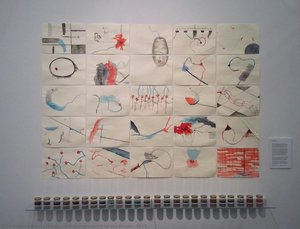
The breadth of Öztat’s medium is as vast as the themes she explores. She refuses to be confined by a single discipline, instead utilizing a diverse toolkit that includes video installation, sculptural interventions, performance art, writing, and translation. Each medium serves as a specific conduit for her investigations into memory, identity, and societal impact. In her sculptural work, she often employs reclaimed materials and found objects, breathing new life into discarded items to transform them into potent symbols of resilience. Through this process, the debris of the past is repurposed to tell stories of transformation and endurance.
Her installations frequently challenge the viewer's perception of space and time. By layering narratives through multimedia elements, she creates immersive environments where history feels palpably present. Whether through the movement of a video loop or the heavy presence of a physical sculpture, her work invites a dialogue about how much of our "peaceful" reality is constructed upon layers of forgotten or suppressed histories. This approach fosters a critical space for contemplating marginalized voices and the enduring impact of societal shifts.
Global Recognition and Artistic Legacy
The significance of Öztat’s contribution to contemporary art has been recognized by some of the most prestigious institutions and biennials in the world. Her ability to translate complex, often uncomfortable truths into evocative aesthetic experiences has earned her a place in major international exhibitions. Notable milestones in her career include:
- Tamawuj, Sharjah Biennial 13 (2017): A showcase of her ability to engage with global contemporary discourses.
- Land without Land, Heidelberger Kunstverein (2016): An exploration of territory and identity through her unique lens.
- Saltwater: A Theory of Thought Forms, 14th Istanbul Biennial (2015): A profound engagement with the cultural landscape of her home city.
- Conducted in Depth and Projected at Length, Heidelberger Kunstverein (2014): An exhibition that mirrored the very essence of her investigative process.
As she continues to evolve, Iz Öztat remains a vital figure in the movement to confront difficult histories through art. Her work stands as a testament to the power of storytelling—not just as a way to recount what has happened, but as a way to understand how those events continue to shape our collective soul. Through her dedication to uncovering the emotional residue of the past, she ensures that the voices of history are never truly silenced.