The Elegance of a Golden Age: The Life and Art of Jan Frederik Pieter Portielje
In the heart of the nineteenth century, a period defined by both rigid social structures and a burgeoning fascination with the exotic, the works of Jan Frederik Pieter Portielje emerged as a testament to refined beauty. Born in Amsterdam in 1829 to a family of booksellers, Portielje’s early life was steeped in the intellectual richness of Dutch culture. As the tenth of eleven children, his path was shaped by a profound connection to the written word and the visual arts alike. His formal education at the Koninklijke Akademie van Beeldende Kunsten under masters such as Valentijn Bing and Jan Braet von Überfeldt provided him with more than just technical proficiency; it instilled in him an academic rigor that would allow him to capture the delicate textures of silk, the soft glow of skin, and the opulent atmosphere of high society with unparalleled precision.
The trajectory of Portielje’s career was irrevocably altered by his travels to Paris between 1851 and 1853. This Parisian sojourn acted as a window to the wider European art scene, exposing him to the evolving trends of Romanticism and the burgeoning interest in Orientalist themes. It was during these formative years that he began to cultivate the sophisticated style that would later define his reputation in Brussels and Antwerp. His ability to blend the meticulousness of Dutch tradition with the atmospheric allure of French influence allowed him to create portraits that were not merely likenesses, but evocative narratives of status and grace.
A Mastery of Light, Texture, and Orientalist Charm
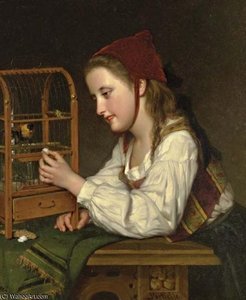
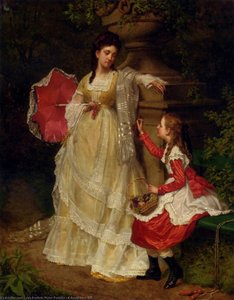
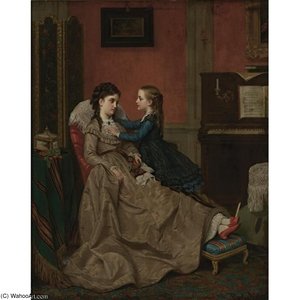
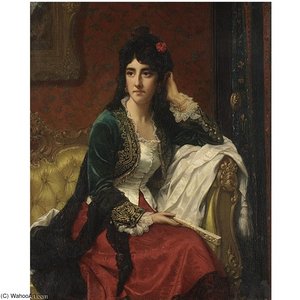
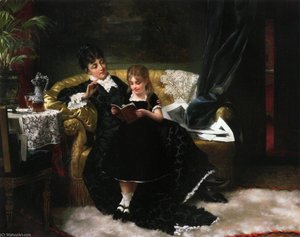
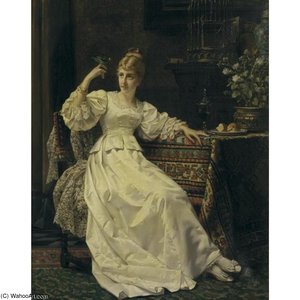
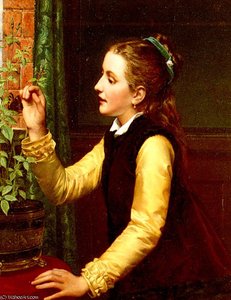
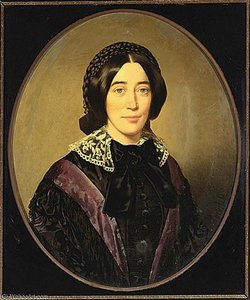
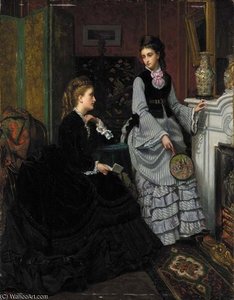
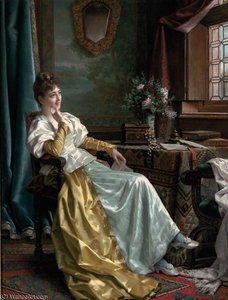
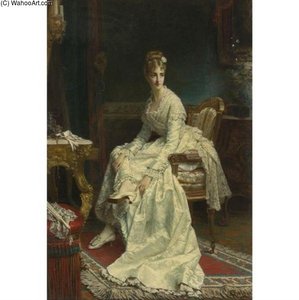
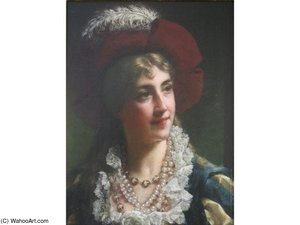
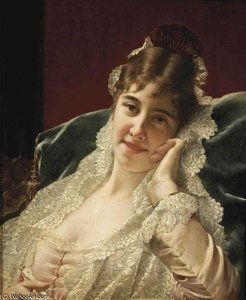
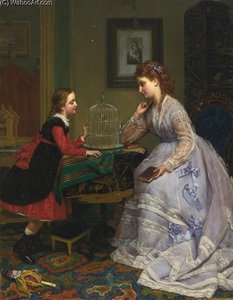
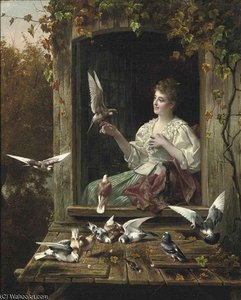
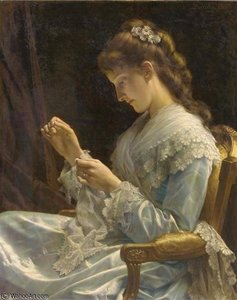
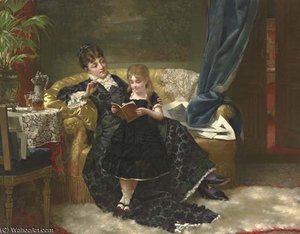
Portielje’s oeuvre is most celebrated for its exquisite genre scenes and portraits, which frequently centered on the feminine form. His subjects—often women of high standing—are depicted within luxurious interiors or serene gardens, draped in fabrics that seem to shimmer under a carefully controlled light. A hallmark of his technique was his collaborative spirit; he often worked alongside talented artists like Eugène Rémy Maes and Frans Lebret, who contributed the intricate backgrounds and foreground details that breathed life into his compositions. This synergy allowed Portielje to focus intensely on the nuanced expressions and psychological depth of his sitters, creating a sense of intimacy that draws the viewer into his painted worlds.
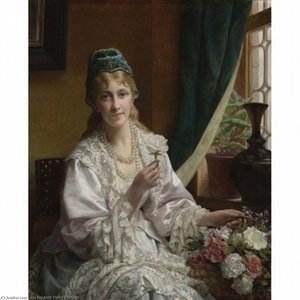
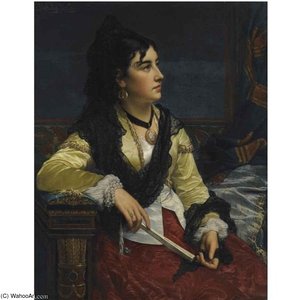
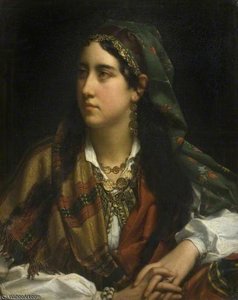
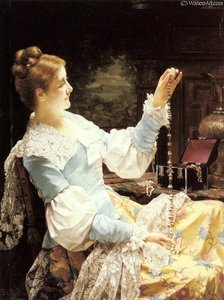
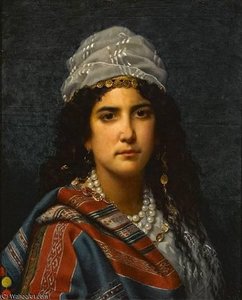
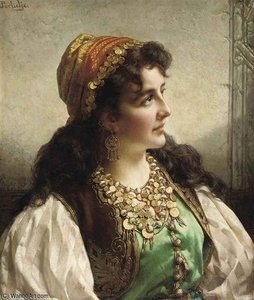
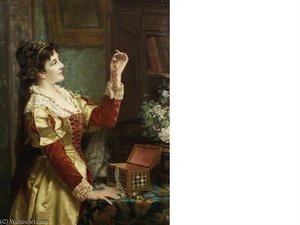
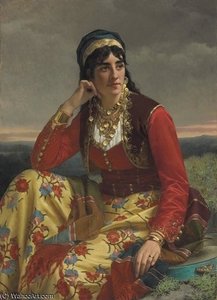
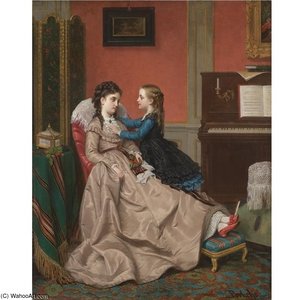
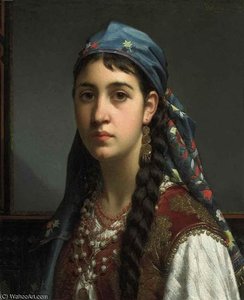
Beyond the traditional European portraiture, Portielje embraced the Orientalist movement, a trend that captivated the Victorian imagination. By dressing his subjects in exotic attire and placing them within settings suggestive of distant, opulent lands, he tapped into a collective longing for the mysterious and the far-reaching. Whether it is the melancholic beauty found in A Daughter's Gift or the shimmering opulence of Admiring her Jewels, his work consistently balances the tangible reality of material wealth with a dreamlike, almost ethereal quality. His use of color—rich golds, deep greens, and soft, luminous skin tones—serves to heighten this sense of sensory indulgence.
Legacy and Global Resonance
The influence of Portielje’s art extended far beyond the borders of the Netherlands and Belgium. His works found a particularly enthusiastic reception in the United States, where his depictions of Victorian elegance and exotic splendor resonated with the tastes of a growing class of collectors. Through the efforts of prominent art dealers like the D'Huyvetter family and the Prinz Brothers, his canvases traveled across the Atlantic, securing his place in the international art market. His participation in prestigious exhibitions, such as the Exposition Internationale d'Anvers in 1894, further cemented his status as a master of his era.
Portielje’s personal life was also deeply intertwined with the world of art. His marriage to Eulalie Lemaire in 1853 established a domestic environment where creativity flourished, as evidenced by his sons, Gerard and Edward, who both followed in their father's footsteps to become accomplished painters. As we look back upon his life, we see an artist who did not merely document the era but elevated it. Through his brush, the fleeting moments of beauty, the weight of fine lace, and the quiet dignity of his subjects were preserved, leaving behind a legacy of timeless sophistication that continues to enchant admirers of nineteenth-century academic art.