A Collector’s Eye and the Soul of African Photography
Jean ‘Johnny’ Pigozzi, born in Paris in 1952, is an Italian businessman, art collector, photographer, and fashion designer whose career has been inextricably linked to the burgeoning world of contemporary African art. His journey began not with formal artistic training but with a formative encounter at the “Magiciens de la Terre” exhibition held at Pompidou Centre and Grande Halle de la Villette in Paris in 1989 – an event that irrevocably altered his artistic trajectory and ignited a lifelong passion for documenting and celebrating African visual culture. Growing up within a wealthy family from Turin, Pigozzi’s early life was marked by profound personal complexities, yet it was during his years at Harvard College that the seeds of his aesthetic sensibility were sown. Influenced by the legendary professor Douglas Huebler and the raw, humanistic power of Robert Frank’s The Americans, Pigozzi developed a deep-seated appreciation for art that captures the essence of ordinary subjects through an unvarnished lens.
Pigozzi’s fascination with the medium stemmed from a profound appreciation for the expressive power of photography, particularly its ability to capture moments of truth and beauty within marginalized communities. He honed his skills initially working for Gaumont and 20th Century Fox, gaining invaluable experience in filmmaking and storytelling – disciplines that undoubtedly informed his artistic sensibilities. This professional background in the cinematic arts allowed him to view the world through a frame of narrative and light, a perspective that would later define his approach to curation. His dedication to collecting African art was never merely about the acquisition of objects; it was an intentional effort to foster a global dialogue between Western audiences and African artists, recognizing the vital importance of preserving cultural heritage and promoting international artistic exchange.
The Visionary Architect of the Contemporary African Art Collection
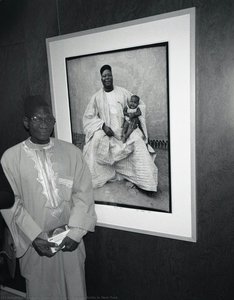
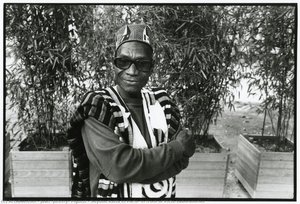
His collection is remarkable not only for its immense scale but also for its breathtaking breadth, encompassing a rich tapestry of portraits, sculptures, and textiles from across the African continent. Pigozzi’s reputation as a visionary connoisseur was cemented by his ability to identify and champion masters of photography whose work had previously remained largely unseen in the West. His collection features the iconic studio portraits of Seydou Keïta and Malick Sidibé, artists whose work serves as a profound visual record of urban Malian society during the era of decolonization. Through his curation, Pigozzi brought these narratives of identity, fashion, and social change to the international stage, ensuring that the transformative power of African photography could resonate within the halls of major global museums.
Beyond the preservation of historical archives, Pigozzi’s work as a photographer is uniquely personal. He is widely recognized for his extensive collection of selfies taken with celebrities since the mid-1970s, a practice that blends the boundaries between high art and social documentation. This intersection of the personal and the public reflects his broader mission: to bridge the gap between disparate worlds. His approach to collecting was characterized by an active commitment to the artists themselves, organizing exhibitions and publishing books that brought their work to a wider readership, thereby acting as both a guardian of history and a catalyst for contemporary recognition.
Legacy and Cultural Significance
The historical significance of Jean Pigozzi lies in his role as a cultural bridge-builder. By assembling The Contemporary African Art Collection—the largest private collection of its kind in the world—he has fundamentally shifted the Western art historical canon to include voices that were long excluded from the mainstream discourse. His work serves as a testament to the transformative potential of the collector's eye, where the act of gathering becomes an act of advocacy.
The enduring impact of his life's work can be summarized through several key contributions:
- Global Recognition: Elevating African studio photography from regional importance to international museum prominence.
- Cultural Preservation: Safeguarding the visual history of African urban identity and the transition toward independence.
- Artistic Dialogue: Creating a platform for continuous exchange between African creators and the global art market.
- Narrative Documentation: Utilizing his background in film to celebrate the storytelling inherent in portraiture and textiles.