The Legacy of Johann Heinrich Tischbein the Younger
Johann Heinrich Tischbein the Younger stands as a pivotal figure within German Romantic art, primarily recognized for his masterful engravings and portraits that captured the spirit of his era. Born in Haina, Germany, in 1751, he descended from a distinguished artistic lineage that deeply influenced his creative trajectory. His father, Johann Konrad Tischbein, was a skilled craftsman, while his uncle, the sculptor Johann Heinrich Tischbein Senior, established a celebrated art gallery for William VIII, Landgrave of Hesse-Kassel. This familial connection provided the young artist with an unparalleled foundation, fostering an early appreciation for visual arts and placing him at the heart of significant cultural movements.
His artistic journey commenced with formal training in Amsterdam, where he honed his technical skills alongside fellow artists and absorbed the profound influences of Dutch Baroque aesthetics. However, it was Kassel that became his true creative home. His appointment as the inspector of the Landgrave’s gallery was far more than a professional milestone; it granted him intimate access to the most significant artistic trends of the time and facilitated collaborations that propelled his career forward. Tischbein's life was also marked by a profound sense of duty and mentorship, evidenced by his care for his nephew, Franz Pforr, whom he diligently educated and helped secure admission to the prestigious Vienna Academy of Fine Arts.
A Versatile Mastery of Subject and Medium
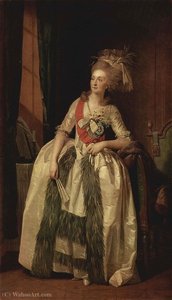
The oeuvre of Tischbein is characterized by an extraordinary versatility that allowed him to navigate the diverse landscapes of late 18th-century art. He was a master of the portrait, capable of imbuing his subjects with a psychological depth that reflected the burgeoning sensibilities of Romanticism. One of his most notable achievements includes his 1771 portrait of Gottfried August Bürger, an image that captures not just a likeness, but the very essence of the era's intellectual fervor. His ability to translate human emotion onto paper or canvas made him a sought-after chronicler of his contemporaries.
Beyond the intimacy of portraiture, Tischbein excelled in capturing the dramatic and the serene through landscapes and animal studies:
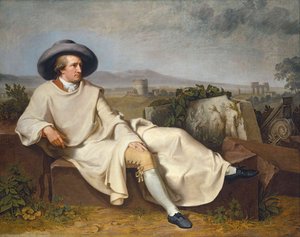
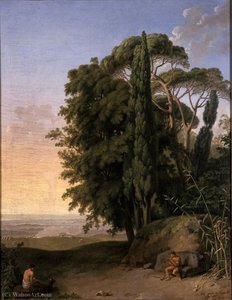
- Landscape Art: In works such as Landscape at Frascati, he demonstrated a remarkable ability to compose tranquil scenes featuring rolling hills and ancient trees, inviting viewers into a state of quiet contemplation.
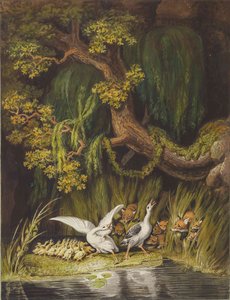
- Wildlife and Drama: His engravings often explored the tension inherent in the natural world. A striking example is his depiction of a goose and gander with their goslings, caught in a moment of alarm as foxes emerge from the rushes, showcasing his talent for capturing movement and narrative drama.
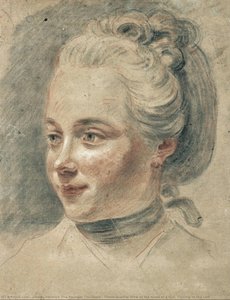
- Charcoal and Detail: His technical range extended to delicate charcoal works, such as his Three-Quarter View of the Head of a Girl, where he utilized light and shadow to create captivating, lifelike textures.
Historical Significance and Artistic Impact
Tischbein’s contribution to the German art canon extends beyond his individual compositions; he served as a vital link between the classical traditions of his predecessors and the emotive power of the Romantic movement. His work embodies the transition from the structured elegance of the Enlightenment to the more turbulent, nature-focused explorations of the 19th century. By documenting both the human face and the untamed natural world, he helped define a visual language that resonated with the cultural shifts of his time.
Today, the works of Johann Heinrich Tischbein the Younger remain essential for understanding the evolution of German Romanticism. His ability to blend meticulous detail with profound emotional resonance ensures that his legacy continues to captivate art historians and enthusiasts alike. Through his engravings, portraits, and landscapes, he left an indelible mark on the artistic landscape of Europe, preserving the fleeting moments of nature and the enduring spirits of humanity within his timeless creations.