The Poetic Eye of Joseph Dankowski
To encounter the work of Joseph Dankowski is to witness a profound dialogue between the mundane and the monumental. Born in Camden, New Jersey, on September 2, 1932, Dankowski’s artistic journey began not with the lens, but with the tactile intimacy of paint and sculpture. This foundational period as a painter allowed him to develop an acute sensitivity to form, texture, and light—elements that would later define his legendary photographic output. When he moved to New York City in 1958, the urban landscape beckoned, prompting a transition into photography that would eventually secure his place within the pantheon of mid-20th-century fine art.
Dankowski’s photographic language was deeply rooted in the tradition of reportage, yet it transcended mere documentation through its haunting, atmospheric quality. He was profoundly moved by the masters of the black-and-white medium, drawing inspiration from the street-level truths of Eugène Atget, the structural precision of Harry Callahan, and the raw, social narratives of Robert Frank and Bruce Davidson. His work did not merely record a scene; it sought to capture the very soul of place, finding a strange, rhythmic beauty in the overlooked corners of the industrial world.
The Architecture of Decay: Manholes and Gutters
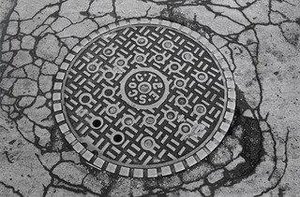
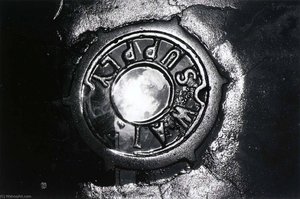
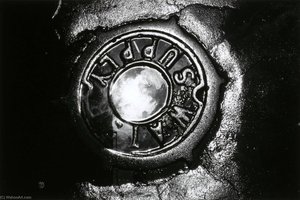
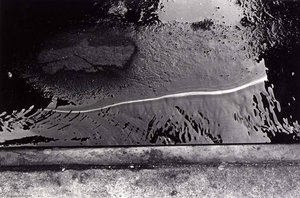
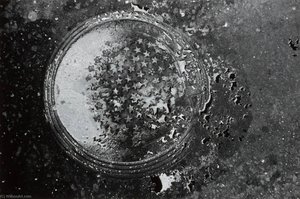
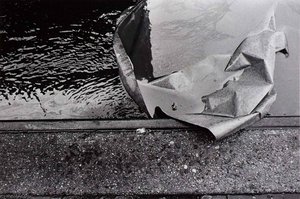
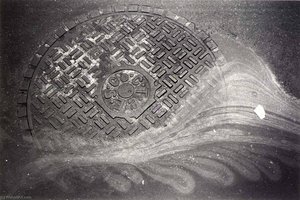
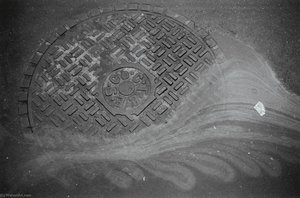
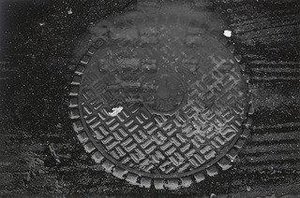
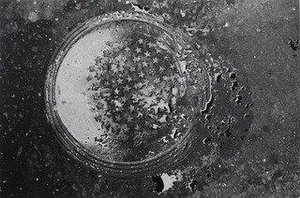
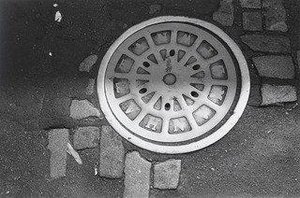
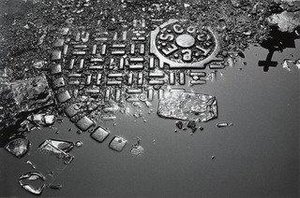
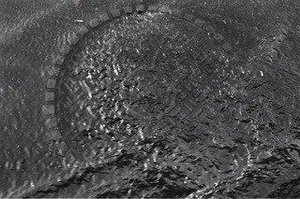
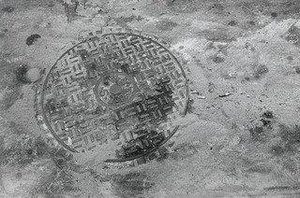
The zenith of Dankowski’s career is perhaps most vibrantly embodied in his celebrated 50-print portfolio, "Manholes and Gutters" (1969–71). In this series, the artist transformed the gritty, often ignored infrastructure of the city into subjects of high art. Through a masterful command of tonal range and composition, he elevated weathered metal, cracked pavement, and urban detritus to the status of abstract sculpture. These images are characterized by an uncompromising realism that rejects superficial embellishment in favor of emotional resonance, inviting the viewer to find grace within industrial decay.
His technical prowess as a master printer allowed him to manipulate light and shadow to create deep, velvety blacks and luminous highlights, turning a simple manhole cover into a celestial map or a piece of textured topography. This ability to find the extraordinary within the ordinary became his signature, a way of documenting the resilience and character of urban environments that felt both timeless and urgently present.
A Legacy of Light and Landscape
As his life progressed, Dankowski’s gaze expanded beyond the concrete canyons of the city. Moving to Shirley, Maine, in 1974, he embraced a new palette of subjects, integrating color into his repertoire and exploring the natural world with the same meticulous detail he once applied to urban textures. His portfolio "Fall in Black and White", featuring sequences such as "Ice on the River," demonstrated his ability to translate the ephemeral beauty of the seasons into enduring visual poetry. This period marked a beautiful evolution from the structured grit of New York to the organic, fluid rhythms of the Maine landscape.
The historical significance of Dankowski’s contribution to photography is cemented by the prestigious institutions that house his vision. His work resides in the permanent collections of some of the world's most esteemed museums, including:
- The Museum of Modern Art (MoMA) in New York
- The Smithsonian American Art Museum in Washington, D.C.
- The Bowdoin College Museum of Art in Brunswick, Maine
Through his dual mastery of the urban and the natural, Joseph Dankowski left behind a legacy that challenges us to look closer at the world around us. He taught us that beauty is not found only in the grand or the pristine, but is often hiding in plain sight—within the shadows of a gutter, the texture of a rusted lid, or the quiet frost of a riverbank.