The Solitary Soul of Medieval Norwich
In the heart of a bustling, medieval port city, amidst the shadows of the Black Death and the tremors of the Peasants’ Revolt, lived a woman whose voice would transcend the stone walls of her enclosure. Julian of Norwich, known variously as Lady Julian or Mother Julian, carved out a life of profound stillness within the Holy Cell of Norwich Cathedral. Her existence was one of voluntary exile, an anchoress dedicated to the rhythms of prayer and contemplation. Born around 1343, she navigated a landscape of immense social upheaval and personal grief, having endured the loss of her husband and children. Yet, it was within this very crucible of suffering that her spiritual perception sharpened, turning her inward gaze toward a divine presence that promised something far more enduring than the fleeting tragedies of the mortal world.
Visions of an Unwavering Love
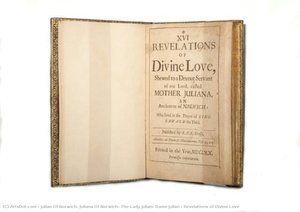
The essence of Julian’s legacy lies in her extraordinary mystical experiences, captured in the seminal manuscript, Revelations of Divine Love. These were not mere hallucinations but a series of vivid, transformative visions that unfolded during a period of intense physical illness. Through these spiritual windows, she glimpsed a God characterized not by distant judgment, but by an overwhelming, compassionate intimacy. She famously portrayed the divine as a nurturing force, a Father whose love sustains all of creation. Her writings offer a breathtakingly tender theology, where the boundaries between the human and the divine blur in a dance of grace. In her most famous articulation, she reminds us that "all shall be well, and all shall be well, and all manner of thing shall be well," a phrase that has provided solace to countless souls for over six centuries.
A Literary Landmark in the English Tongue
Beyond her theological contributions, Julian holds a singular place in the history of English literature. Her work represents the earliest surviving English-language text attributed to a woman, making her a pioneer of the written word in her native Middle English. At a time when much of formal scholarship was conducted in Latin, Julian’s decision—or necessity—to write in the vernacular allowed her profound insights to reach a broader, more intimate audience. Her achievement is a testament to the power of the individual spirit to command authority through the medium of language. Today, she stands as a monumental figure, an artist of the soul whose literary and spiritual fingerprints remain indelibly pressed upon the fabric of Western mysticism.