A Legacy of Compassion and Color: The Life of Katharine R. Maurer
In the tapestry of American art history, few figures weave together the threads of creative expression and humanitarian devotion as seamlessly as Katharine R. Maurer. Born in San Francisco in 1881, Maurer was a woman whose life was defined by an extraordinary duality: she was both a sensitive observer of the natural world and a tireless guardian of those navigating the turbulent waters of immigration. Her journey began within the spiritual and social framework of the Methodist Episcopal Church Women's Home Missionary Society, an influence that would later imbue her artistic vision with a profound sense of empathy and a deep-seated commitment to alleviating human suffering.
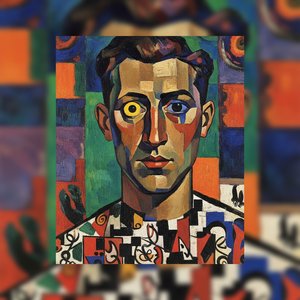
Maurer’s artistic development was marked by a sophisticated engagement with the most transformative movements of her era. Drawing inspiration from the revolutionary techniques of Impressionism and Post-Impressionism, she looked toward masters such as Cézanne and Van Gogh to inform her own visual language. This influence manifested in a style characterized by bold, emotive color palettes and expressive, rhythmic brushstrokes. When she captured the rugged landscapes of California’s mountains and hillsides, she did more than merely record topography; she translated the very soul of the terrain, imbuing each vista with a palpable sense of both grandeur and vulnerability.
The Intersection of Art and Activism
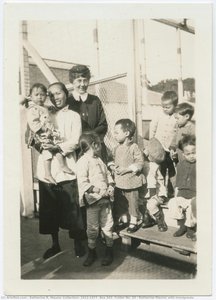
While her canvases were finding their voice in the galleries of the early 20th century—notably gaining recognition at the landmark Armory Show of 1913—Maurer’s life was undergoing a profound transformation. In 1912, she stepped into a role that would define her historical significance: serving at the Angel Island Immigration Station. For nearly three decades, Maurer acted as a bridge between worlds, providing essential assistance to thousands of immigrants detained during one of the most complex eras in American immigration history. Often referred to with reverence as "The Angel of Angel Island," her presence offered a glimmer of hope to those facing uncertain futures.
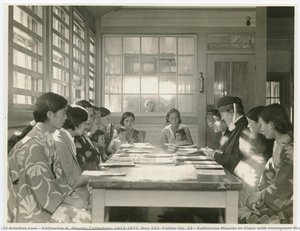
This period of service was not a departure from her artistry but rather an extension of it. The same keen eye that observed the subtle shifts of light on a California hillside was now applied to the human condition. Her work during this time, such as the poignant Katharine Maurer in Class with Immigrant Women, reflects a deep connection to the social realities of her community. Her life’s work stands as a testament to the idea that art and activism are not separate endeavors, but rather two different ways of witnessing and honoring the truth of human existence.
Historical Significance and Lasting Impression
The enduring importance of Katharine R. Maurer lies in her ability to transcend the boundaries of traditional biography. She remains a singular figure whose legacy is preserved not only in the halls of major institutions like the Museum of Modern Art (MoMA) and the Carnegie Museum but also in the historical memory of San Francisco. Her paintings serve as windows into a vanished era of American landscape and social history, while her humanitarian efforts continue to inspire reflections on empathy and social justice.
To study Maurer is to encounter an artist who refused to separate the beauty of the world from the responsibility one holds toward its people. Her life remains a powerful narrative of how a dedicated spirit can use both the brush and the heart to leave an indelible mark on the world:
- Artistic Mastery: A distinctive fusion of Impressionist light and Post-Impressionist emotion.
- Social Impact: Decades of dedicated service to immigrant populations at Angel Island.
- Cultural Legacy: A body of work that bridges the gap between fine art and historical documentation.