The Genesis of European Porcelain: A Legacy Forged in Saxony
In the annals of art history, few manufactories command such reverence and enduring prestige as the königlich-sächsische porzellanmanufaktur meissen – simply known as Meissen. Founded in 1710 under the visionary patronage of Augustus II the Strong, Elector of Saxony and King of Poland, Meissen wasn’t merely a workshop; it was an ambitious endeavor to unlock one of the most closely guarded secrets of the East: the creation of true hard-paste porcelain. For centuries, European artisans had attempted to replicate the delicate beauty and translucence of Chinese and Japanese ceramics, but their efforts consistently fell short. Augustus II, a man driven by insatiable curiosity and a desire for unparalleled opulence, believed that Saxony could not only match these Eastern masterpieces but surpass them.
The initial quest was fraught with challenges. The early experiments, led by Ehrenfried Walther von Tschirnhaus and later continued by Johann Friedrich Böttger, focused on deciphering the precise formula required to transform local materials into porcelain of comparable quality. After years of relentless trial and error, Böttger achieved a breakthrough, successfully producing a white, hard-paste porcelain in 1708 – a pivotal moment that heralded a new era for European ceramics. The establishment of the manufactory in Meissen marked the official beginning of this revolution, attracting skilled artists and craftsmen from across the continent eager to participate in this groundbreaking venture.
From Imitation to Innovation: Shaping a Distinctive Style
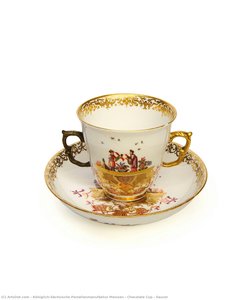
The early years of Meissen were characterized by a deliberate attempt to emulate the aesthetics of its Eastern inspirations. Pieces produced during this period often featured intricate designs mirroring Chinese and Japanese motifs, demonstrating the manufactory’s mastery of existing techniques. However, Augustus II's ambition extended beyond mere replication. He envisioned a porcelain style that was uniquely European, infused with the artistic sensibilities of the West. This led to the employment of talented painters like Johann Gregorius Höroldt, who skillfully adapted Eastern decorative styles – known as “Höroldt chinoiseries” – and introduced Indian-inspired floral patterns, adding a layer of complexity and originality to Meissen’s repertoire.
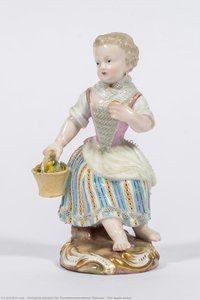
The appointment of Johann Joachim Kändler in 1731 proved transformative. A sculptor of exceptional talent, Kändler revolutionized porcelain modeling, introducing a playful Rococo style that captivated European courts. His whimsical figurines – depicting allegorical figures, mythological scenes, and everyday life – became synonymous with Meissen’s identity. The manufactory continued to adapt to evolving tastes, embracing the elegance of Louis XVI designs and later incorporating the Neoclassical ideals of symmetry and restraint. Throughout these stylistic shifts, however, Meissen maintained its commitment to exceptional craftsmanship and artistic innovation.
The Crossed Swords: A Symbol of Quality and Legacy
In 1720, a simple yet powerful symbol was introduced to safeguard the manufactory’s burgeoning reputation: the crossed swords logo. This mark, reportedly one of the oldest trademarks in existence, quickly became synonymous with quality, authenticity, and artistic excellence. It served as a guarantee that each piece bearing the crossed swords had been meticulously crafted at Meissen according to the highest standards.
The 18th century witnessed an unprecedented demand for Meissen porcelain among European aristocracy. The factory received large commissions for elaborate tableware, decorative pieces, and sculptures, adorning palaces and private collections across the continent. This period cemented Meissen’s position as a leading force in the world of luxury goods, shaping artistic trends and influencing ceramic production far beyond Saxony's borders.
Enduring Influence and Modern Transformations
Despite facing challenges throughout its history – including periods of political upheaval and economic hardship – Meissen has consistently adapted and thrived. The 19th century saw the factory embrace technological advancements while remaining true to its artistic heritage, catering to a growing interest in floral designs and Romanticism. In the early 20th century, Meissen continued to produce exquisite table services, vases, and sculptures, solidifying its reputation as a timeless symbol of German craftsmanship.
Today, operating as the *Staatliche Porzellan-Manufaktur Meissen GmbH* since 1991 – owned by the Free State of Saxony – Meissen remains one of the world’s leading porcelain manufacturers. The legacy forged in 1710 continues to inspire artisans and captivate collectors worldwide, a testament to the enduring power of innovation, artistry, and a relentless pursuit of perfection. The crossed swords logo still adorns each piece, not merely as a mark of origin but as an emblem of a centuries-old tradition – a symbol of German luxury and the unparalleled beauty of Meissen porcelain.