Menu
FREE ART CONSULTATION

lorenzo d'alessandro da sanseverino

1445 - 1503

Quick Facts

  • Also known as: Lorenzo Salimbeni
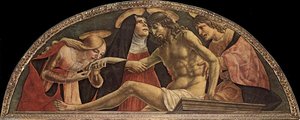
  • Top-ranked work: Pietà
  • Typical colors: earthy
  • Works on APS: 6
  • Top 3 works:
    • Pietà
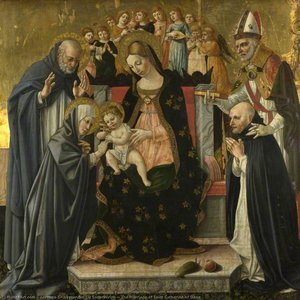
    • The Marriage of Saint Catherine of Siena
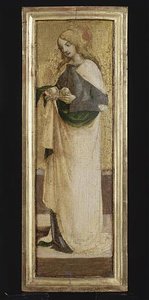
    • SAINTE AGATHE
  • Color intensity: vivid
  • More…
  • Born: 1445
  • Copyright status: Public domain
  • Died: 1503
  • Lifespan: 58 years
  • Art period: Renaissance
  • Museums on APS: Galleria degli Uffizi

Art Quiz

There is only one correct answer for each question.

Question 1:
Q1
Question 2:
Q2
Question 3:
Q3
Question 4:
Q4
Question 5:
Q5

Lorenzo d’Alessandro da Sanseverino: Bridging Gothic Tradition and Renaissance Innovation

Lorenzo d’Alessandro (c. 1455 – 1503) stands as a pivotal figure in the artistic landscape of late fifteenth-century Italy, embodying the confluence of stylistic currents that defined the era. While biographical details remain somewhat elusive—records are sparse compared to contemporaries like Piero della Francesca or Carlo Crivelli—scholarly consensus establishes him as a prominent painter hailing from San Severino Marche, a region steeped in artistic heritage and profoundly impacted by the burgeoning Renaissance spirit. His legacy resides not merely in individual artworks but in his role as a transmitter of stylistic ideas, shaping the visual culture of his time through collaborations with masters like Salimbeni brothers and Niccolò Di Liberatore.

Early Life and Artistic Formation

Born around 1455, Lorenzo’s origins are firmly rooted in San Severino Marche, a city renowned for its artistic patronage during the Gothic period. Precise information regarding his family background is scant; however, he emerged as part of a vibrant artistic milieu—a tradition nurtured by the Salimbeni brothers who had established themselves as influential painters and sculptors in the region. This formative environment undoubtedly instilled within him an appreciation for the expressive power of Gothic art, characterized by its solemn grandeur, intricate ornamentation, and profound spiritual depth. Notably, Lorenzo’s stylistic trajectory intersected with that of Niccolò Di Liberatore (“L'Alunno”), who spent two years residing in San Severino and collaborated on a monumental polyptych—a testament to the interconnectedness of artistic circles during this transitional period.

Style and Influences: A Synthesis of Traditions

Lorenzo’s artistic style represents a remarkable synthesis of Gothic and Renaissance sensibilities. Like his predecessors, he embraced the expressive conventions of late Gothic art—particularly evident in his depictions of saints—employing techniques that prioritized emotional intensity and symbolic representation. However, he simultaneously absorbed elements from the burgeoning Renaissance movement, demonstrating an awareness of humanist ideals and a fascination with classical proportions and perspective. This duality is strikingly apparent in his frescoes adorning Chiesa della Maestà in San Severino Marche, where he skillfully blended Gothic ornamentation with Renaissance compositional principles. Influences extended beyond immediate contemporaries; Carlo Crivelli’s refined style—characterized by luminous color palettes and elegant drapery—and Piero della Francesca's mastery of linear perspective undoubtedly contributed to Lorenzo’s artistic vision.

Notable Works and Artistic Legacy

Lorenzo d’Alessandro’s oeuvre comprises several significant paintings, including the Nativity, Madonna with Child, and Pietà housed in the Pinacoteca Civica Padre Pietro Tacchi Venturi in San Severino Marche. These works exemplify his distinctive approach to religious iconography—infused with both Gothic solemnity and Renaissance refinement. The Pietà, in particular, stands as a masterpiece of emotional expression, conveying profound sorrow and compassion through masterful drapery and anatomical accuracy. Lorenzo’s influence extended beyond his own artistic creations; he served as a teacher to Bernardino di Mariotto of Perugia, fostering the development of a younger generation of artists who carried forward his stylistic legacy. His children—Antonio, Giangentile, and Severino—followed in his footsteps, perpetuating the artistic traditions of San Severino Marche for generations to come.

Historical Significance: A Voice Amidst Artistic Transformations

Lorenzo d’Alessandro’s contribution to Italian art is significant not only for its stylistic achievements but also for its role as a mediator between Gothic and Renaissance artistic paradigms. He represents a crucial link in the chain of artistic innovation that propelled Italy toward the glories of the High Renaissance, demonstrating that artistic evolution rarely occurs in isolation—rather, it emerges from dialogues between established traditions and emerging ideas. By embracing both Gothic solemnity and Renaissance refinement, Lorenzo d’Alessandro solidified his place as one of the most compelling voices within the artistic landscape of his time—a testament to the enduring power of stylistic synthesis and the transformative potential of artistic exchange.