Early Life and Apprenticeship
Lorenzo di Niccolò, a name resonating softly from the cusp of the Renaissance, was a Florentine painter whose career unfolded between 1391 and 1412. Born around 1374, his existence first appears in documented records with his association to Niccolò di Pietro Gerini in 1392. They collaborated on frescoes within the church of San Francesco in Pisa—a foundational moment for the young artist. While often mistakenly identified as Gerini’s son due to their close working relationship and stylistic similarities, it is more likely that Lorenzo was a dedicated pupil within Gerini's workshop. This early training deeply imprinted upon him the traditions of the Trecento style, yet even then, hints of a burgeoning artistic sensibility began to emerge.
Lorenzo’s education wasn’t one of rigorous academic pursuit but rather the practical immersion of a bottega environment. Gerini, it seems, was more adept at managing large-scale projects and coordinating teams of artists than acting as a hands-on instructor focused on cultivating individual mastery. This perhaps explains the subtle yet persistent Gothic influences that would characterize Lorenzo’s work throughout his life. However, this lack of formal instruction didn't hinder his development; instead, it allowed for a unique artistic voice to blossom, nurtured by exposure to other contemporary masters.
A Transitional Style: Bridging Gothic and Renaissance
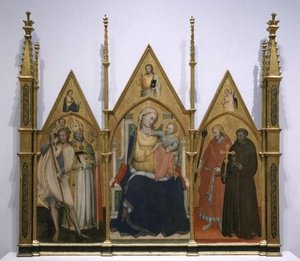
Lorenzo di Niccolò occupies a fascinating position in art history—a pivotal figure bridging the waning elegance of the Gothic period with the nascent humanism of the early Renaissance. His paintings are not radical departures from established norms, but rather graceful evolutions. He maintained the decorative patterns and rich symbolism inherent to Trecento painting while subtly introducing elements that foreshadowed the classical ideals soon to dominate Florentine art. Religious scenes, predominantly executed in tempera with lavish gold backgrounds, formed the core of his oeuvre.
The influence of Spinello Aretino proved particularly significant. Lorenzo drew inspiration from Aretino’s expansive fresco cycles and the imaginative freedom they embodied. This is evident in the narrative quality of Lorenzo's compositions, which often feature a dynamic interplay between figures and settings. Further shaping his artistic vision were artists like Lorenzo Monaco, Mariotto di Nardo, and Andrea di Giusto—each contributing to the complex tapestry of influences that defined his style. He skillfully balanced Gothic aesthetics with an emerging sense of movement in his figures, setting him apart from contemporaries like Mariotto di Nardo who remained more firmly rooted in traditional forms.
Career and Guild Affiliations
By 1401, Lorenzo was working independently, establishing himself as a respected painter within the Florentine artistic community. He enrolled in the Arte dei Medici e Speziali around 1408—a guild encompassing physicians, pharmacists, and painters—and became a member of the Compagnia di San Luca in 1410, a prestigious society dedicated to Saint Luke, patron saint of artists. These affiliations underscore his growing professional standing and integration into the city’s vibrant cultural life.
Lorenzo's workshop continued to thrive, and he passed on his knowledge to his son, Piero, who received training at the Arte dei Medici e Speziali in 1422 and followed in his father’s footsteps as a painter. Sadly, Lorenzo di Niccolò died before witnessing his son fully establish himself, but his legacy lived on through Piero's work and the continued appreciation of his own artistic contributions.
Major Works and Lasting Significance
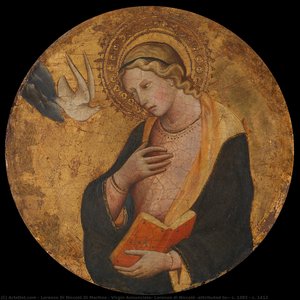
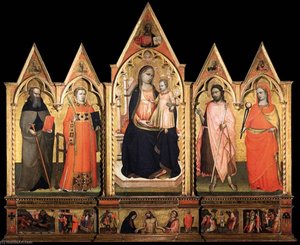
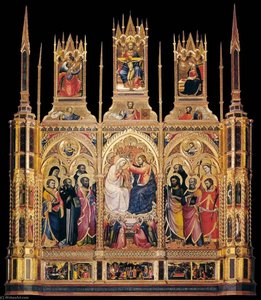
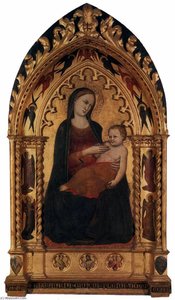
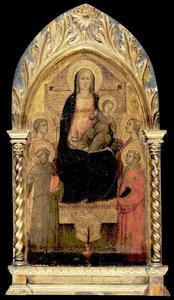
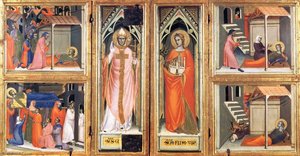
While a comprehensive catalog of Lorenzo di Niccolò’s works remains elusive, several key pieces offer insight into his evolving style. The ‘Virgin Annunciate,’ a fragment of an early Renaissance oil painting, exemplifies the serene beauty and symbolic detail that characterized his work. His 1402 triptych, ‘Reliquary with scenes from the legend of St Fina,’ showcases a captivating blend of Byzantine and Renaissance elements—rich colors, detailed tempera on wood, and a profound sense of religious devotion. Other notable works include depictions of the Madonna and Child, each imbued with a delicate grace and refined craftsmanship.
Lorenzo di Niccolò’s significance lies not in revolutionary innovation but in his ability to synthesize diverse influences into a harmonious and compelling artistic vision. He represents a crucial transitional period in Florentine art—a moment when the Gothic sensibilities of the Middle Ages yielded to the classical ideals of the Renaissance. His works, though often overlooked, serve as defining models of this evolution, connecting the artist to a vital circle of Proto-Renaissance painters who paved the way for the artistic triumphs that would follow. He was a master craftsman who skillfully maintained a Gothic style while allowing his figures some sense of movement and emotion, marking him as a key figure in the development of early Renaissance painting.