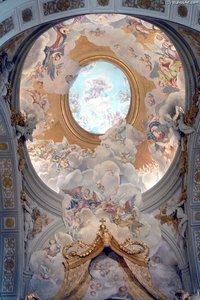
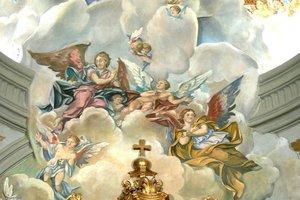
Louis Dorigny (1654-1742): The Painter of Parisian Elegance
Louis Dorigny (1654-1742) stands as a pivotal figure in 17th-century French art, celebrated primarily for his exquisitely detailed interiors and architectural scenes that captured the spirit of Paris and Italy during the Baroque era. Born in Paris to a family steeped in artistic tradition—his father was a painter and printmaker—Dorigny’s formative years instilled within him an unwavering dedication to observation and meticulous craftsmanship. This passion would propel him to become one of the foremost artists documenting the grandeur of his time, securing his legacy as “the Painter of Parisian Elegance.”
Early Life and Artistic Training
Dorigny's formal artistic training commenced under Nicolas Frémiot, a Huguenot painter who championed classical ideals amidst religious upheaval. This exposure to humanist principles profoundly shaped Dorigny’s aesthetic sensibilities, emphasizing balance, proportion, and harmonious composition—characteristics that would define his oeuvre. He continued his studies with Pierre Théophile Verschaffelt, further honing his skills in disegno (drawing) and fresco painting, preparing him for a career dedicated to portraying the refined tastes of aristocratic patrons.
The Parisian Atelier and Architectural Documentation
Dorigny established an atelier in Paris where he cultivated a collaborative environment, attracting talented assistants who aided in the execution of ambitious projects. His reputation soared as he undertook commissions to decorate palaces and churches—most notably the Hôtel de Ville (City Hall) and Sainte-Chapelle—resulting in monumental frescoes that showcased his mastery of perspective and color. However, Dorigny’s enduring fame rests upon his unparalleled ability to capture the essence of Parisian life through architectural renderings. His drawings—particularly those depicting the Louvre Palace and Saint Germain—are considered masterpieces of topographical art, offering invaluable insights into the urban landscape of Louis XIV's court.
Italian Travels and Baroque Influence
Dorigny embarked on extensive voyages to Italy between 1683 and 1702, immersing himself in the artistic fervor of Rome and Florence. These travels profoundly impacted his style, introducing him to the principles of Caravaggio and Bernini—artists who championed dramatic chiaroscuro (light and shadow) and theatrical grandeur. Dorigny skillfully assimilated these influences into his own work, elevating the emotional intensity of his compositions while retaining a commitment to classical accuracy. His frescoes in Palazzo Pallavicini and Villa Borghese exemplify this synthesis of Baroque dynamism and humanist restraint.
Major Achievements and Legacy
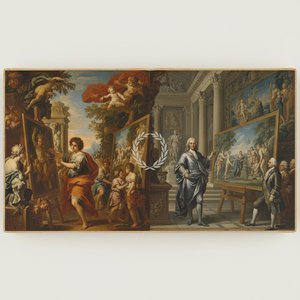
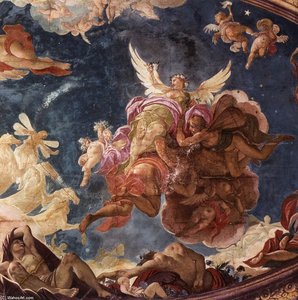
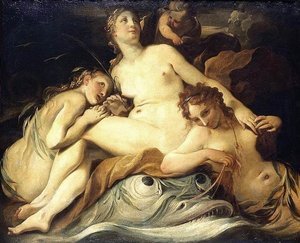
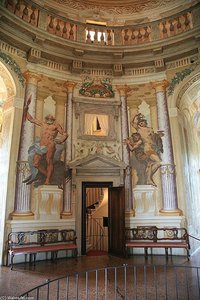
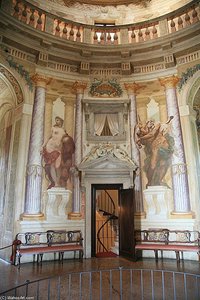
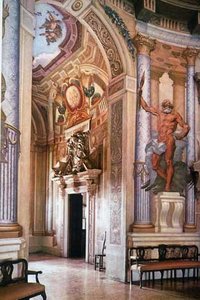
Dorigny’s prolific output encompassed over 300 paintings and drawings—a testament to his unwavering dedication to artistic excellence. Among his most celebrated achievements are “Celebration of the Myth of Apollo” (1687), a monumental ceiling fresco adorning Palazzo Pallavicini, and “Palladio Rotonda Interior” (1695), depicting the iconic villa designed by Andrea Palladio—a project that cemented Dorigny’s reputation as a virtuoso architectural painter. His meticulous documentation of Parisian spaces continues to inspire scholars and artists alike, ensuring his place among the foremost chroniclers of his era. Louis Dorigny's legacy resides not merely in his artistic accomplishments but also in his embodiment of the humanist spirit—a pursuit of beauty and truth that resonated deeply within the cultural landscape of 17th-century France.