Marjorie Tulip Ritchie ('Trekke') Parsons: A Bloomsbury Illustrator's Quiet Vision
Marjorie Tulip Ritchie Parsons, known affectionately as 'Trekke', was a British illustrator and artist who quietly cemented her place within the celebrated Bloomsbury Group. Born in 1902, she possessed an uncommon sensitivity to capturing the essence of English landscapes and domestic life – qualities that resonated deeply with Leonard Woolf, whose collaborative partnership yielded some of Parsons’ most enduring works. Her artistic journey began amidst the intellectual ferment of the early twentieth century, a period profoundly shaped by figures like Virginia Woolf and Ezra Pound, fostering an environment ripe for experimentation and nuanced observation.
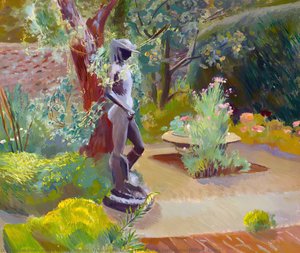
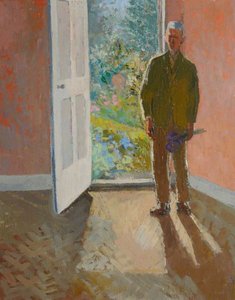
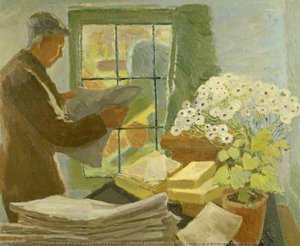
Parsons' formative years instilled in her a meticulous attention to detail and a profound appreciation for Impressionistic techniques. Influenced heavily by Barnett Freedman’s stylistic approach—particularly his masterful use of color and light—she developed a distinctive visual language characterized by serene palettes and subtly rendered forms. This aesthetic sensibility found its fullest expression in her illustrations for Woolf's novels, notably “The Garden Statue” depicting Donatello’s David and “Leonard Sidney Woolf (1880–1969), in the Doorway,” capturing intimate moments within a home setting. These commissions weren’t merely decorative; they were imbued with Woolf’s philosophical concerns about humanity and nature—themes Parsons skillfully conveyed through her evocative compositions.
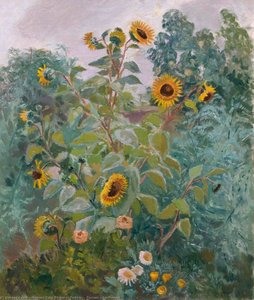
Her artistic output extended beyond literary collaborations, encompassing landscapes and botanical studies that reflected her deep connection to the English countryside. Parsons' meticulous observation of natural forms translated into exquisitely rendered watercolors and drawings, demonstrating a remarkable ability to distill complex subjects into deceptively simple visual representations. Unlike many artists of her time who sought grand narratives or dramatic gestures, Parsons prioritized capturing subtle beauty—the dappled sunlight filtering through leaves, the quiet stillness of a garden—reflecting a humanist ethos that aligned perfectly with Woolf’s worldview.
Throughout her life, Parsons maintained a modest artistic practice, prioritizing personal fulfillment alongside her professional endeavors. Despite lacking formal training beyond self-directed study and experimentation, she achieved considerable renown within the Bloomsbury circle for her unwavering dedication to craft and her profound understanding of visual storytelling. Her legacy resides not in monumental achievements but in the quiet dignity of her art—a testament to the power of observation and a celebration of understated elegance. Parsons passed away peacefully in 1995, leaving behind a body of work that continues to inspire admiration for its sensitivity and artistic integrity.