Master of the View of Saint Gudula – A Flemish Visionary
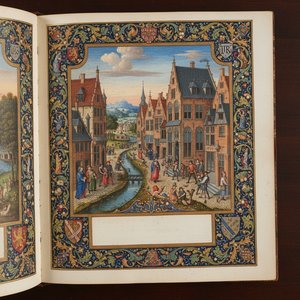
The Master of the View of Saint Gudula, a name shrouded in mystery yet undeniably significant within Early Netherlandish painting, emerged during the latter half of the fifteenth century in Brussels. Precise biographical details remain elusive, leaving scholars to reconstruct his life and artistic output primarily from stylistic analysis and comparative iconography. He was born in Brussels, though definitive records are scarce, marking him as one of the many anonymous figures who contributed to the vibrant artistic landscape of the Burgundian Netherlands.- Stylistic Characteristics: His distinctive style is characterized by a meticulous attention to detail—particularly evident in his depictions of architectural interiors and landscapes—combined with a subtle expressive quality that distinguishes him from more rigidly formal contemporaries.
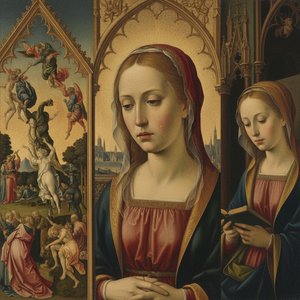
- Influences: While pinpointing specific artistic mentors remains challenging, evidence suggests considerable engagement with the Flemish School’s dominant aesthetic sensibilities, notably those championed by Jan van Eyck and Rogier van der Weyden. The influence of Byzantine iconography is also discernible in certain compositions, reflecting broader European artistic currents during the period.
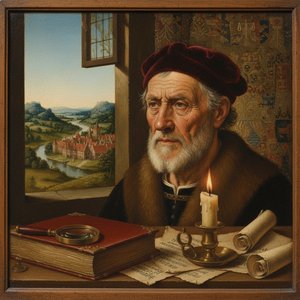
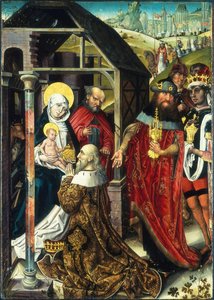
- Notable Works: Among his surviving oeuvre are several portraits of prominent ecclesiastical patrons—most famously “Young Man Holding a Book”—demonstrating an adeptness at capturing psychological nuance and conveying spiritual contemplation. Equally impressive are his religious paintings, including "The Adoration of the Magi," which showcases masterful perspective and luminous color palettes typical of the Ghent-Bruges School.
Brussels’s Artistic Crucible – Contextualizing His Output
Brussels during the late fifteenth century served as a crucial nexus for artistic innovation, attracting artists from across Europe and fostering a competitive environment that spurred stylistic experimentation. The patronage of wealthy Burgundian dukes—particularly Philip the Good—fueled ambitious architectural projects and commissioned lavish artworks intended to glorify royal authority and reinforce religious piety. This milieu undoubtedly shaped the Master’s creative vision.
Technique & Innovation
The Master's technique is notable for its meticulous rendering of textures and surfaces, achieved through painstaking layering of glazes—a hallmark of Flemish painting—that imbue his canvases with remarkable luminosity. His use of perspective—though not as rigorously developed as in later Renaissance artists—demonstrates a sophisticated understanding of spatial representation. Furthermore, he skillfully employed symbolism to convey theological ideas, reflecting the pervasive influence of humanist thought on artistic practice.
Legacy & Historical Significance
Despite the paucity of biographical information, the Master of the View of Saint Gudula’s paintings endure as testament to the enduring power of Early Netherlandish art. His works exemplify the Flemish School's commitment to realism and spiritual contemplation—values that resonated deeply with audiences across Europe during the Renaissance. He remains a pivotal figure in understanding the artistic achievements of his era, securing his place among the most accomplished painters of the Ghent-Bruges School.