Gustav Grunewald: A Pioneer of Female Artistic Education
The story of Gustav Grunewald is inextricably linked to the Moravian Seminary for Young Ladies in Bethlehem, Pennsylvania – a place where he dedicated his life not just as an instructor, but as a pivotal figure in shaping the artistic landscape and opportunities for young women during the 19th century. Born in 1805 in Gnadau, Germany, Grunewald’s journey from a Moravian religious community to becoming a respected artist and educator represents a fascinating intersection of faith, art, and social reform. His legacy extends beyond his individual paintings; he fundamentally altered the trajectory of artistic education for girls in America, advocating for their inclusion and nurturing their talents within a traditionally male-dominated field.
Grunewald’s early life was deeply rooted in the Moravian tradition, a Pietist movement emphasizing community, simplicity, and spiritual devotion. He received his artistic training at the Dresden Art Academy, gaining a solid foundation in classical techniques. However, it wasn't until he immigrated to the United States in 1831 that his path truly diverged. Settling in Bethlehem, Pennsylvania – a significant Moravian settlement – he found employment as an instructor of drawing and painting at the newly established Moravian Seminary for Young Ladies. This appointment marked a turning point not only for Grunewald’s career but also for the institution itself. The seminary, founded in 1742, was the first Protestant boarding school for girls in what would become the United States, and Grunewald quickly became an integral part of its mission – to provide a comprehensive education encompassing both faith and intellectual pursuits.
Botanical Studies and Class Scenes: A Distinctive Artistic Voice
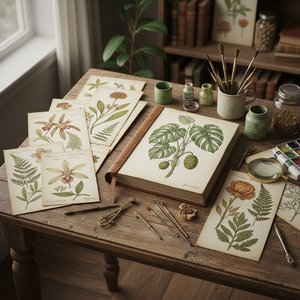
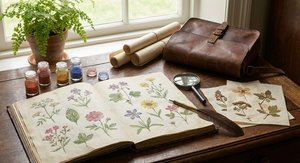
Grunewald’s artistic style is characterized by a remarkable blend of realism and sensitivity. While he was influenced by the Romantic landscape painters of his time, particularly the Hudson River School, he developed a distinctive approach that focused on detailed botanical studies alongside engaging class scenes depicting his students at the seminary. His watercolors are renowned for their meticulous observation of nature – orchids, ferns, and wildflowers are rendered with astonishing accuracy and delicate beauty. These botanical illustrations weren’t merely decorative; they served as an integral part of his curriculum, encouraging a deep appreciation for the natural world among his young pupils.
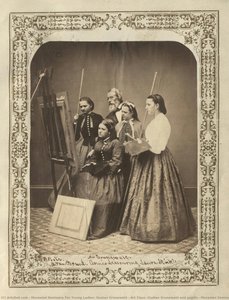
However, Grunewald's work wasn't solely defined by botanical precision. He skillfully captured the essence of his students in vibrant class scenes – girls diligently practicing their penmanship, sketching landscapes, or engaged in spirited discussions. These portraits weren’t idealized representations; they offered a genuine glimpse into the lives and personalities of these young women, reflecting Grunewald’s belief that education should nurture both intellect and character. His ability to portray his students with warmth and respect was a testament to his pedagogical philosophy.
The Moravian Seminary: A Crucible for Artistic Development
Grunewald's tenure at the Moravian Seminary for Young Ladies extended over three decades, from 1836 until his retirement in 1866. During this time, he wasn’t just an instructor; he was a mentor and advocate for female artistic development. He recognized that art education offered young women opportunities for self-expression, critical thinking, and intellectual growth – qualities often undervalued in the Victorian era. He meticulously designed his curriculum to cater to their individual talents and interests, fostering a supportive environment where creativity could flourish.
His influence extended beyond the classroom walls. Grunewald’s students included young women from across the United States and even abroad, creating a diverse and stimulating learning community. The seminary became a hub for artistic exchange, attracting talented individuals who went on to pursue careers in art and education. The establishment of the Moravian Seminary as a center for female artistic training was a bold step forward, challenging prevailing social norms and paving the way for greater opportunities for women in the arts.
Landscapes of Pennsylvania: A Regional Perspective
While his botanical studies gained particular renown, Grunewald’s broader landscape paintings offer a valuable record of 19th-century Pennsylvania. His depictions of the Delaware Water Gap, Niagara Falls, and Pocono Mountains are not simply scenic views; they reflect a deep appreciation for the region's natural beauty and a keen eye for detail. His series of Niagara Falls paintings – “Niagara from the Foot of American Falls” and “Table Rock, Niagara” – stand as some of his most celebrated works, showcasing his mastery of light, color, and composition.
Notably, Grunewald’s work was commissioned by Charles F. Seidel, then principal of the Moravian Seminary for Young Ladies, as an outgoing gift to the school. This commission underscores the importance he held within the institution and highlights the connection between his artistic practice and his role in shaping the educational experience of young women. His paintings served not only as decorative pieces but also as visual representations of the values and ideals that the seminary championed – a commitment to knowledge, faith, and community.
Legacy and Historical Significance
Gustav Grunewald’s contribution to art education extends far beyond his individual artistic achievements. He is remembered as a pioneer who challenged conventional notions about women's roles in society and opened doors for future generations of female artists. His dedication to nurturing the talents of young women at the Moravian Seminary for Young Ladies left an enduring legacy, transforming the institution into a leading center for female artistic development. His work continues to be studied and admired today as a testament to his vision, skill, and unwavering belief in the power of art to enrich lives.