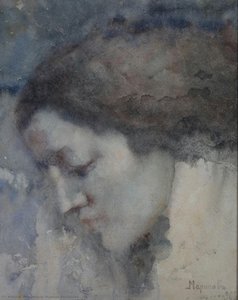
Nikola Marinov Abadzhiev: A Bulgarian Master of Light and Emotion
Born in Targovishte, Bulgaria, in 1879, Nikola Marinov Abadzhiev’s life was a testament to the enduring power of artistic dedication. His early exposure to art ignited a lifelong passion, leading him on a journey that intertwined rigorous training with profound creative expression. Marinov's career unfolded against the backdrop of a rapidly changing Bulgaria, navigating periods of political and social upheaval while consistently producing works imbued with a unique blend of realism and evocative emotion.
Early Years and Artistic Training
Marinov’s artistic foundation was meticulously built. He began his formal training at the Albertina Academy of Fine Arts in Turin, Italy, a prestigious institution that exposed him to the techniques and philosophies of renowned European artists. Under the tutelage of masters like Andrea Tavernier and Giacomo Grosso, he honed his skills in drawing, painting, and composition. This Italian sojourn proved crucial, providing him with not only technical expertise but also an appreciation for the expressive possibilities of light and color – a characteristic that would become deeply ingrained in his style. Returning to Bulgaria in 1906, he initially found work as a teacher in Sofia, laying the groundwork for his future role as a mentor and influential figure in Bulgarian art.
A Life Dedicated to Art and Education
Marinov’s commitment to art extended beyond personal creation. He quickly rose through the ranks of Bulgaria's artistic community, becoming a professor at the National Academy of Arts in Sofia in 1921 – a position he held for nearly two decades. During this time, he shaped the talents of numerous emerging artists, including the celebrated Ilia Beshkov and Ivan Nenov, leaving an indelible mark on Bulgarian art history. His influence wasn’t limited to the classroom; he also served as Chancellor of the Academy from 1935-1937, demonstrating his deep involvement in the broader artistic landscape. He was a man deeply invested in nurturing the next generation of Bulgarian painters.
Style and Subject Matter
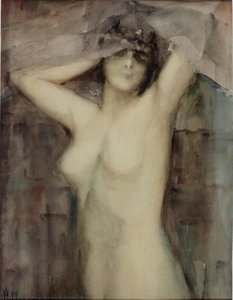
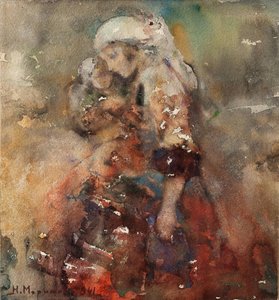
Marinov’s artistic style is characterized by a captivating interplay between realism and impressionism. He frequently employed watercolor, skillfully capturing fleeting moments of light and atmosphere. His subjects ranged from intimate portraits – often imbued with a quiet dignity – to dynamic genre scenes that offered glimpses into everyday Bulgarian life. He possessed a remarkable ability to convey emotion through subtle shifts in color and brushstroke, creating works that resonate deeply with the viewer. Notable examples include “Dancer,” a vibrant depiction of movement and grace, and his numerous frescoes adorning churches throughout Bulgaria, showcasing his mastery of architectural decoration.
Legacy and Significance
Nikola Marinov Abadzhiev’s contribution to Bulgarian art is significant. He wasn't merely a painter; he was an educator, a mentor, and a vital link in the chain of artistic development within his country. His influence can be seen in the works of his students, who went on to achieve considerable success. His dedication to preserving and promoting Bulgarian artistic traditions ensured that his legacy would endure. Today, his paintings are exhibited in galleries across Bulgaria, offering viewers a window into the soul of a remarkable artist and a pivotal figure in 20th-century Bulgarian art. The town art gallery in Targovishte stands as a testament to his life's work, showcasing a collection dedicated to his memory.