Nikolai Aleksandrovich Tarkhov (1871 - 1930): A Soulful Vision of Rural Russia
Nikolai Aleksandrovich Tarkhov (Николай Александрович Тархов) or Tarkhov was born in Moscow on January 2nd, 1871, into a family of wealthy merchants. He is three years old on the death of his mother Olga Feodorova and eight years on the death of his father Alexander Ivanov. He showed early artistic vocation, “having always had a fervent desire to be a painter (1)”. Nevertheless, he enlisted in the provincial militia at the age of eighteen to fulfil his military service obligations and subsequently found employment at the Brest-Litovsk Railways, thus delaying his entry into the world of art.
Early Life and Artistic Beginnings
Despite familial reservations about pursuing a creative career—the jury of the School of Painting, Sculpture and Architecture in Moscow rejected his application due to his revolutionary temperament—Tarkhov persevered with unwavering determination. His formative years were marked by exposure to influential artistic figures like Konstantin Korovin Alexeivich (his elder by ten years), who instilled in him a profound appreciation for Impressionism’s expressive qualities. This mentorship fostered a collaborative spirit, encouraging Tarkhov and his fellow students to experiment boldly with color and brushstroke—a practice exemplified by their depictions of nude models under Korovin's guidance. The aim was to capture the essence of form through vibrant hues and dynamic movements, reflecting the core tenets of Impressionist philosophy.
Parisian Years: Embracing Symbolism
In 1898, Tarkhov relocated to Munich, drawn by the burgeoning artistic community there, where he honed his skills alongside fellow Russian expatriates. He soon established himself in Paris, immersing himself in the vibrant cultural landscape and cultivating connections with prominent artists like Jean-Paul Laurens and Luc-Olivier Merson—figures who championed a more subjective approach to artmaking. Tarkhov’s Parisian explorations profoundly impacted his artistic vision, propelling him toward Symbolism's expressive exploration of inner emotions and psychological states. He found inspiration in the works of Vincent van Gogh, Paul Gauguin, Cézanne, and Edvard Munch, artists whose bold experimentation with color and form challenged conventional aesthetic norms.
Style and Technique
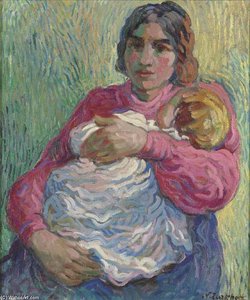
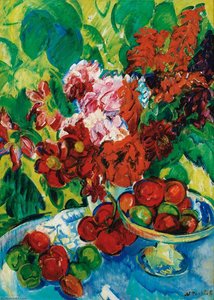
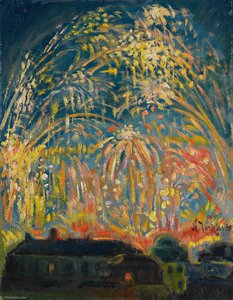
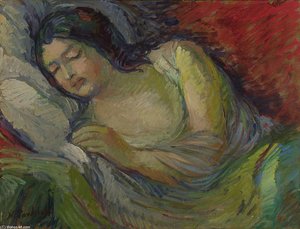
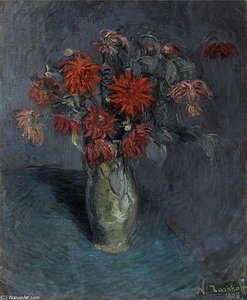
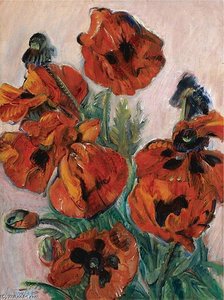
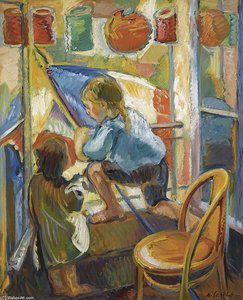
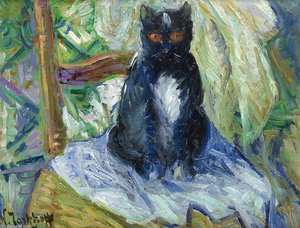
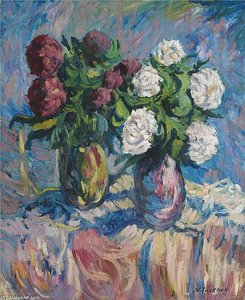
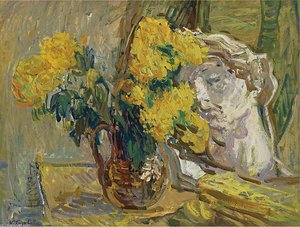
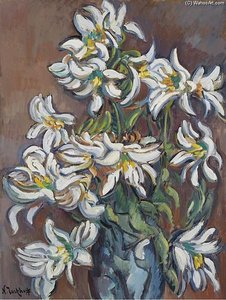
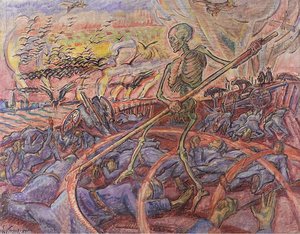
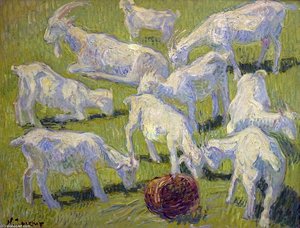
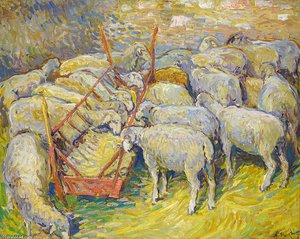
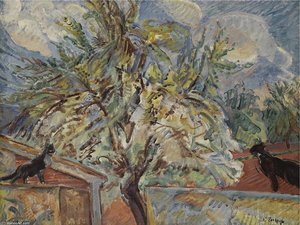
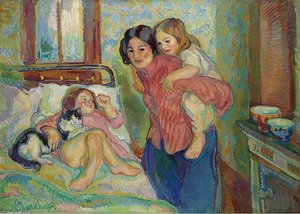
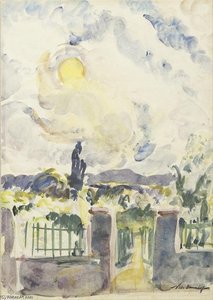
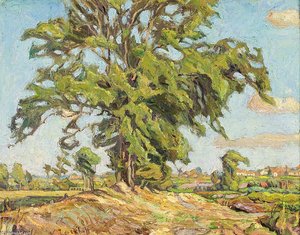
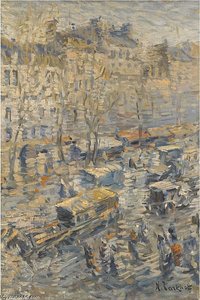
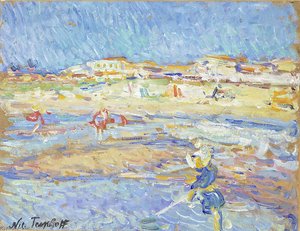
Tarkhov’s distinctive style was characterized by a masterful blend of Impressionism and Expressionism. He employed loose brushstrokes—often thick impasto—to convey texture and emotion, prioritizing the artist's subjective experience over objective representation. His palette favored luminous colors, particularly yellows and greens, reflecting his fascination with landscapes bathed in sunlight. However, he also incorporated darker hues to imbue his paintings with a sense of drama and psychological depth. Tarkhov’s technique involved layering paint onto the canvas in multiple glazes, creating an illusion of luminosity and capturing subtle nuances of light and atmosphere.
Major Works
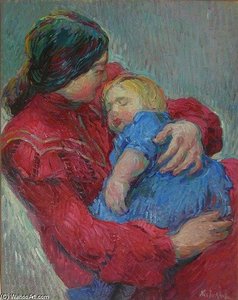
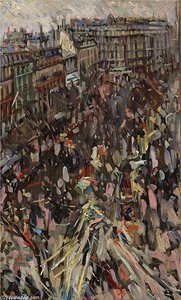
Nikolai Aleksandrovich Tarkhov produced a prolific oeuvre encompassing landscapes, portraits, and still lifes. Among his most celebrated paintings are “Goats In Sunlight,” depicting serene pastoral scenes with meticulous attention to detail; “Parisian Boulevard,” capturing the vibrant energy of urban life; and “Maternity,” an emotionally resonant portrait conveying tenderness and maternal devotion. His works exemplify Symbolist aesthetics—characterized by evocative imagery, dreamlike atmosphere, and exploration of psychological themes—and demonstrate a profound engagement with Russian folklore and mythology.
Legacy
Nikolai Tarkhov remains one of Russia’s foremost landscape painters and a pivotal figure in the Symbolist movement. His uncompromising artistic vision—rooted in philosophical contemplation and spiritual introspection—influenced subsequent generations of artists. He is remembered for his distinctive style, marked by luminous color palettes, expressive brushstrokes, and masterful rendering of light and shadow. Tarkhov's enduring legacy resides not only in his artistic accomplishments but also in his unwavering commitment to artistic integrity and his exploration of the human condition through art. His work continues to inspire artists and scholars alike, cementing his place as a cornerstone of Russian cultural heritage.