Norbert Wolfgang Stephan Hann von Hannenheim: A Shadow Composer of Schoenberg’s Legacy
Norbert Wolfgang Stephan Hann von Hannenheim, a name often whispered in the annals of 20th-century music, remains an enigmatic figure despite his prodigious output and profound connection to Arnold Schoenberg. Born in Nagyszeben (modern Sibiu), Romania, in 1898, Hannenheim’s life was tragically cut short in 1945, yet his musical legacy—a collection of complex, emotionally resonant works—continues to intrigue scholars and performers alike. He wasn't a household name during his lifetime, overshadowed by the more celebrated figures within Schoenberg’s circle, but his unique voice deserves recognition as a crucial link in the evolution of twelve-tone composition and a testament to the enduring power of individual artistic vision.
Hannenheim’s early life was steeped in musical tradition. His Saxon heritage instilled a deep appreciation for folk music, which would later subtly inform his compositions. He began studying piano privately at a young age, demonstrating an innate talent that led him to pursue formal training in Graz and Leipzig. It was during his time with Schoenberg in Berlin that Hannenheim truly blossomed, absorbing the master’s revolutionary techniques while simultaneously forging his own distinctive style. Schoenberg himself recognized Hannenheim's brilliance, describing him as “one of the most interesting personalities I have ever met,” a testament to the composer’s intellectual rigor and willingness to challenge established norms.
The Crucible of Schoenberg: Style and Technique
Hannenheim’s musical language is deeply rooted in Schoenberg's twelve-tone technique, yet it transcends mere imitation. He didn’t simply adopt Schoenberg’s system; he internalized it, transforming it into a highly personal expression. His works are characterized by dense textures, chromaticism, and a profound sense of emotional depth. Unlike some of his contemporaries who favored stark, intellectual approaches to atonality, Hannenheim imbued his music with a lyrical quality—a haunting beauty that belies the complexity beneath the surface.
His compositional output spanned a wide range of genres, including symphonies, concertos, chamber music, and vocal works. He frequently explored themes of loss, longing, and existential anxiety, reflecting the turbulent social and political climate of his time. Notably, he was a prolific composer of songs, setting poetry by prominent figures such as Rainer Maria Rilke and Friedrich Hölderlin, demonstrating a keen sensitivity to both musical form and literary expression.
“The Europeans”: A Visual Echo of Musical Complexity
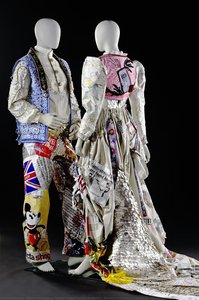
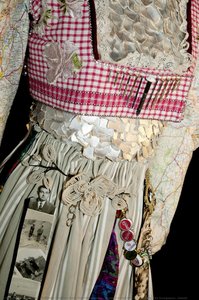
Hannenheim’s most celebrated works are undoubtedly his costume designs for “The Europeans,” a lavish theatrical production commissioned in 1932. These elaborate costumes, depicting figures from various European nations, served as a visual embodiment of the musical themes explored within the score. The intricate details—the rich fabrics, the symbolic ornamentation, and the carefully chosen colors—mirror the complexity and emotional depth of Hannenheim’s compositions. The artwork itself is a testament to his artistic versatility, showcasing not only his compositional skills but also his talent for visual design.
The “Women’s and men’s costumes ‘The Europeans’”, as documented in ArtsDot.com, offer a particularly compelling glimpse into Hannenheim's creative process. The meticulous attention to detail—the historical accuracy of the garments, the subtle variations in color and texture—reflects his deep understanding of both musical and visual aesthetics. These pieces are not merely decorative; they are integral components of the overall artistic experience, providing a powerful visual counterpart to the music.
A Fragmented Legacy: Life and Loss
Hannenheim’s life was tragically cut short by the Second World War. He suffered from recurring bouts of mental illness, exacerbated by the pressures of his career and the political turmoil of the era. His final years were spent in a German psychiatric hospital, where he continued to compose until his death in 1945. The destruction of many of his scores during the war has left a significant gap in our understanding of his oeuvre, but recent research efforts have unearthed a remarkable number of previously unknown works.
Despite the challenges posed by his fragmented legacy, Hannenheim’s music continues to be performed and studied by scholars and musicians around the world. His work stands as a poignant reminder of the creative potential that can emerge from moments of profound personal struggle—a testament to the enduring power of art in the face of adversity.
Further Exploration
For more information about Norbert von Hannenheim, please consult the following resources:
- Wikipedia Article:**
- ArtsDot.com Artist Page:*
- Ebony Band Database:*