A Pioneer of Light: The Photographic Legacy of Perez Mann Batchelder
In the mid-19th century, as the world began to shrink through technological advancement, few figures captured the shifting essence of human identity as intimately as Perez Mann Batchelder. An American pioneer whose lens traveled across vast continents, Batchelder was not merely a chronicler of faces but a master of the daguerreotype, a medium that required an extraordinary marriage of scientific precision and artistic intuition. His journey, spanning from the burgeoning landscapes of the United States to the rugged frontiers of California and the distant shores of Australia, reflects the restless, exploratory spirit of his era.
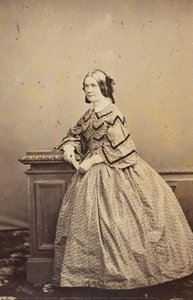
Batchelder’s artistry was defined by the unique challenges and rewards of early photography. Unlike the fluid brushstrokes of a painter, the daguerreotype demanded a stillness of subject and a mastery of light to etch silvered images onto polished plates. Through this meticulous process, he achieved a level of detail that felt almost supernatural to his contemporaries. His work often transcended simple documentation; in portraits such as the Portrait of Frances (Fanny) Perry, one finds a profound sense of Victorian elegance and a quiet, enduring dignity that invites the viewer to step back into the year 1863.
From the American Frontier to the Australian Coast
The trajectory of Batchelder’s life was as much an adventure as his photographic compositions. His presence in the California Goldfields allowed him to capture the raw, transformative energy of a landscape in flux, documenting the faces of those driven by the promise of fortune. This period of his life coincided with a global era of migration and discovery, making his visual record an invaluable historical archive of the American West.
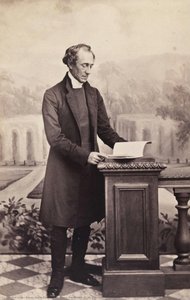
However, it was his expansion into Australia that truly solidified his international significance. By bringing his technical expertise to a new hemisphere, Batchelder helped establish a photographic tradition in a land still defining its own visual identity. His ability to adapt his craft to different climates and cultures allowed him to capture a diverse array of subjects, from the formal Portrait of Right Reverend Dr Charles Perry to sweeping landscapes that echoed the grandeur of the natural world. This versatility ensured that his work remained relevant across vastly different social strata, bridging the gap between high-society portraiture and the rugged reality of colonial life.
Historical Significance and the Art of the Image
The enduring importance of Perez Mann Batchelder lies in his role as a bridge between the era of classical portrait painting and the dawn of the modern photographic age. While he utilized the tools of science, his eye remained that of an artist, sensitive to composition, shadow, and the ephemeral nature of a single moment. His contributions to the history of photography are characterized by several key elements:
- Technical Mastery: His proficiency in the complex daguerreotype process allowed for the creation of highly detailed, permanent records of human life.
- Global Perspective: By operating in both North America and Australia, he provided a rare, interconnected visual narrative of 19th-century global movement.
- Cultural Documentation: His portraits serve as essential windows into Victorian social customs, fashion, and the psychological depth of his subjects.
Today, when we look upon the silvered plates left behind by Batchelder, we are doing more than viewing old photographs; we are engaging with a vanished world. He remains a key figure in art history, a man who understood that while light may be fleeting, the image captured through a disciplined lens can grant a form of immortality to the people and places he so lovingly documented.