Menu
FREE ART CONSULTATION

pietro di domenico da siena

1457 - 1533

Quick Facts

  • Works on APS: 1
  • Lifespan: 76 years
  • Copyright status: Public domain
  • Art period: Renaissance
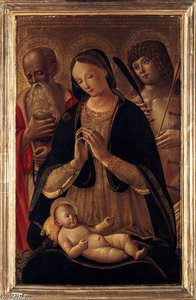
  • Top 3 works: Madonna and Child with Sts Sebastian and Jerome
  • More…

Art Quiz

There is only one correct answer for each question.

Question 1:
What is Pietro di Domenico da Siena known for primarily?
Question 2:
In what region of Italy was Pietro di Domenico born and worked?
Question 3:
What artistic style influenced Pietro di Domenico's work?
Question 4:
Which famous artist
Question 5:
What is the most notable feature of Pietro di Domenico's Madonna and Child paintings?

Pietro di Domenico da Siena

Pietro di Domenico, also Pietro di Domenico da Siena (1457–1506), was an Italian Renaissance painter born in Siena, Tuscany. Despite the scarcity of biographical details—primarily gleaned from his surviving artworks—his oeuvre reveals a masterful grasp of Sienese artistic traditions and a discernible engagement with Florentine innovations, marking him as a pivotal figure within the broader landscape of Early Renaissance art.

Early Life and Training

Information regarding Pietro’s formative years remains elusive. Records indicate he was born around 1457 in Siena, though precise birthdate documentation is absent. He honed his artistic skills under the tutelage of Bernardino Fungai, Matteo di Giovanni Martini, Francesco di Giorgio Martini, and Simone Martini—artists who epitomized the prevailing stylistic currents of their time. These masters instilled in Pietro a profound understanding of perspective, anatomy, and color theory, shaping his subsequent artistic endeavors. Notably, Pietro’s connection to Luca Signorelli—a towering figure whose frescoes at Orvieto Cathedral profoundly impacted Sienese painters—suggests an intellectual dialogue that fueled his stylistic evolution.

Style and Technique

Pietro’s distinctive style is characterized by a harmonious blend of Sienese and Florentine influences. Like Simone Martini, he embraced meticulous detail and expressive drapery, prioritizing emotional resonance alongside technical precision. However, Pietro absorbed Signorelli's mastery of spatial illusionism—particularly evident in his depiction of landscapes—introducing a dynamism that contrasted with the more static compositions favored by some contemporaries. His palette was rich and luminous, reflecting Signorelli’s penchant for capturing atmospheric effects. Furthermore, Pietro skillfully employed tempera paint on panel, a technique prevalent during his era, achieving remarkable tonal subtlety and textural richness.

Notable Works

Pietro di Domenico's artistic legacy rests primarily upon a handful of surviving paintings—most notably the Madonna and Child with Saints Peter and Paul (circa 1489), housed in the Pinacoteca Nazionale of Siena. This masterpiece exemplifies Pietro’s stylistic hallmark: a serene Madonna cradling the infant Jesus amidst a richly ornamented altarpiece featuring venerated saints. The painting showcases meticulous observation of anatomical detail, balanced by graceful drapery and harmonious color orchestration—characteristics consistent with Signorelli's aesthetic sensibilities. Another significant work is the Annunciation (circa 1490), currently displayed in the Museo Civico di Colle Val d’Elsa. This composition demonstrates Pietro’s adeptness at conveying spiritual contemplation through carefully arranged figures and evocative lighting, mirroring the humanist ideals of the Renaissance.

Historical Significance

Pietro di Domenico stands as a testament to Siena's artistic vitality during the Early Renaissance—a period marked by fervent devotion to religious iconography and an unwavering commitment to artistic excellence. His paintings served not only as devotional objects but also as embodiments of Sienese cultural identity, reflecting the city’s aspirations for prestige and intellectual engagement. Pietro’s stylistic innovations—particularly his incorporation of Signorelli's spatial techniques—contributed to shaping the trajectory of Italian Renaissance art, cementing his place among the foremost masters of his generation. His work continues to inspire admiration for its beauty and technical virtuosity, offering invaluable insight into the artistic spirit of Siena during a transformative epoch in European history.