The Sienese Context: Beccafumi’s Roots & Early Influences
The Sienese school of painting flourished in Siena, Italy, between the 13th and 15th centuries. Its most important artists include Duccio, whose work shows Byzantine influence, his pupil Simone Martini, the brothers Pietro and Ambrogio Lorenzetti and...
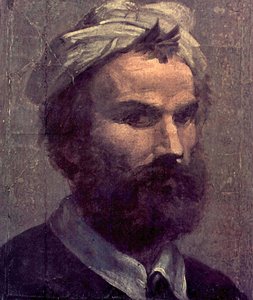
Domenico di Pace Beccafumi, born around 1486 near Siena, occupies a fascinating and somewhat isolated position in the panorama of Italian Renaissance art. To understand his singular vision, one must first appreciate the artistic climate of his native city. Unlike Florence or Rome—centers of burgeoning humanism and classical revival—Siena in the late 15th and early 16th centuries was a republic steeped in tradition, clinging to its Gothic past even as new aesthetic currents swept across Italy. Beccafumi’s father, Giacomo di Pace, worked on the estate of Lorenzo Beccafumi, who recognized the young Domenico's talent and fostered his artistic development through an apprenticeship with Mechero, a local painter of modest renown. This early training instilled in him a deep respect for Sienese painting conventions—the elegant linearity, refined color palettes, and devotional intensity that characterized the school. However, a journey to Rome around 1509 proved pivotal, exposing Beccafumi to the groundbreaking works of Michelangelo, Raphael, and other masters who were transforming the artistic landscape. Yet, crucially, he did not simply assimilate these influences; instead, he filtered them through his own unique sensibility, forging a style that remained distinctly Sienese in its essence while simultaneously pushing the boundaries of established norms.
A Unique Mannerist Vision: Style, Technique & Recurring Motifs
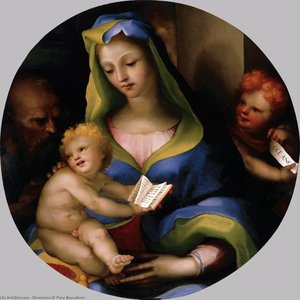
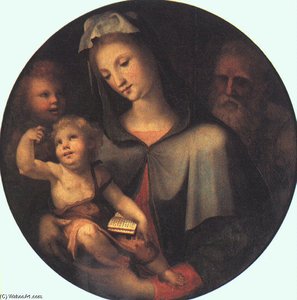
 Domenico di Pace Beccafumi
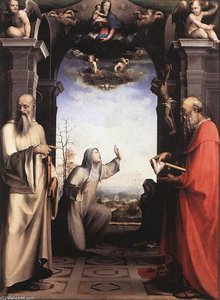
Beccafumi’s artistic personality blossomed in the years following his Roman sojourn. He quickly distinguished himself as a master of what would come to be known as Mannerism—a style characterized by elongated forms, exaggerated poses, and a deliberate departure from classical ideals of harmony and naturalism. While often described as eccentric or even unsettling, Beccafumi’s work is anything but arbitrary. His compositions are meticulously constructed, imbued with a dynamic energy that draws the viewer into a world of heightened emotion and spiritual intensity. A hallmark of his style is his masterful use of color—rich, saturated hues applied in layered glazes to create luminous effects and dramatic contrasts. He frequently employed unusual perspectives and spatial arrangements, challenging conventional notions of depth and realism. Recurring motifs in his paintings include elongated figures with graceful, serpentine lines, expressive gestures that convey a sense of inner turmoil or ecstasy, and fantastical landscapes populated by bizarre creatures and architectural forms. The Stigmatization of St Catherine
(1515) exemplifies these characteristics—the saint’s body contorted in an almost theatrical pose, the ethereal light illuminating her face, and the otherworldly setting that evokes a sense of divine mystery.Beyond the Canvas: Beccafumi as a Polymath – Pavement Designs and Architectural Projects
Beccafumi was not solely confined to the realm of painting. He possessed a remarkable versatility, excelling in diverse artistic disciplines. From 1517 until his death, he directed the celebrated pavement of Siena Cathedral—a monumental undertaking that showcased his ingenuity and technical skill. The pavement consisted of intricate designs inlaid with marble, creating vast narrative scenes from biblical history and mythology. This project demanded not only artistic vision but also a deep understanding of engineering and materials science. Furthermore, Beccafumi was involved in architectural projects, designing triumphal arches and mechanical devices for civic celebrations—testament to his inventive spirit and broad range of talents. These endeavors reveal a mind that was constantly seeking new challenges and pushing the limits of artistic expression. His involvement with these large-scale public works also underscores his prominent position within Sienese society.
Religious Narratives & Symbolic Complexity in Beccafumi’s Paintings
 Stigmatization of St Catherine of Siena
Discover Domenico Beccafumi’s ‘Stigmatization of St Catherine,’ a masterpiece of Sienese Mannerism. Explore its dramatic light, rich colors & religious narrative in this 1515 oil painting.
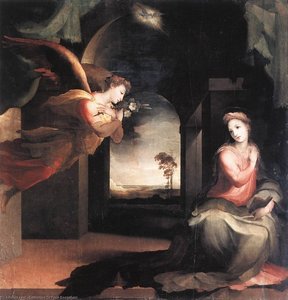
The vast majority of Beccafumi’s paintings are religious in subject matter, reflecting the deeply devout atmosphere of 16th-century Siena. However, his approach to these traditional themes is far from conventional. He imbued biblical stories with a sense of psychological depth and emotional complexity that was unprecedented for his time. His depictions of saints and prophets are not idealized figures but rather intensely human beings grappling with faith, doubt, and spiritual longing. The Annunciation, while possessing Baroque elements in its dramatic lighting, showcases Beccafumi’s unique approach to a classic subject—the Virgin Mary depicted as a young woman caught in a moment of profound contemplation, her expression conveying both awe and apprehension. He often incorporated symbolic details into his paintings, adding layers of meaning that reward careful observation. These symbols, drawn from religious texts and esoteric traditions, invite the viewer to engage with the artwork on multiple levels.
The Anticipation of Baroque: Dramatic Lighting, Emotion & Spatial Dynamics
While firmly rooted in Mannerism, Beccafumi’s work also anticipates many of the key characteristics that would define the Baroque style. His dramatic use of light and shadow—tenebrism—creates a sense of theatricality and emotional intensity that foreshadows the works of Caravaggio and other Baroque masters. He employed dynamic compositions with swirling figures and exaggerated gestures, conveying a sense of movement and energy. Furthermore, his exploration of spatial depth and perspective creates an immersive experience for the viewer, drawing them into the world of the painting. The heightened emotion and spiritual fervor evident in his work also align with the Baroque emphasis on religious ecstasy and dramatic storytelling. In this sense, Beccafumi can be seen as a transitional figure—a bridge between the refined elegance of Mannerism and the dynamic exuberance of the Baroque.
Legacy & Rediscovery: Beccafumi's Place in Art History
Despite his prominence during his lifetime, Beccafumi’s reputation waned in the centuries following his death. His eccentric style and unconventional approach to religious subject matter were often misunderstood or dismissed by later critics. However, in recent decades, there has been a growing appreciation for his unique genius. Scholars have recognized him as one of the last undiluted representatives of the Sienese school of painting—a master who preserved the traditions of his native city while simultaneously pushing the boundaries of artistic innovation. His influence can be seen in the works of later Mannerist painters, and his anticipation of Baroque aesthetics has also been increasingly acknowledged. Today, Beccafumi is celebrated as a pivotal figure in Italian art history—an artist whose singular vision continues to captivate and inspire. Explore the breadth of his work at ArtsDot.com, where high-quality reproductions allow you to experience the beauty and complexity of this remarkable master firsthand.