The Enduring Legacy of the Site of the Yaozhou Kiln
Nestled within the Huangpu Town of Tongchuan City, Shaanxi Province, lies a place steeped in centuries of ceramic artistry – the site of the Yaozhou Kiln. More than just a collection of ancient furnaces, this location represents a pivotal chapter in Chinese pottery history, specifically during the Northern Song Dynasty and beyond. Often referred to as one of the “Six Famous Kilns” of ancient China, and particularly renowned for its production of celadon wares, the Yaozhou Kiln holds a unique position: it was the primary center for producing these prized green-glazed ceramics in northern China, bridging the gap between the vibrant traditions of the south and the burgeoning artistic landscape of the north. Its story is one of imperial patronage, innovative techniques, and an enduring aesthetic that continues to captivate art lovers today.
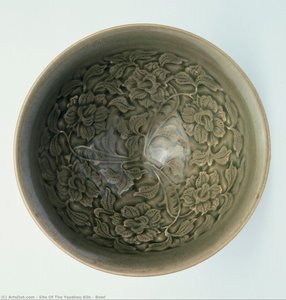
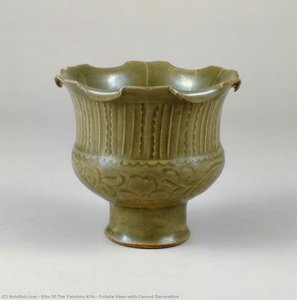
The kiln’s origins trace back to the Tang Dynasty (618-907 AD), where it initially specialized in sancai earthenware – a distinctive three-color technique utilizing copper red, black, and white slip. However, it was during the Northern Song period (960-1279 AD) that the Yaozhou Kiln truly flourished, evolving into a master of celadon production. This era witnessed a remarkable refinement in their signature style: shallow carving executed beneath a lustrous green glaze. This technique, seemingly simple, involved meticulously carving landscapes, floral motifs, and even depictions of animals directly onto the clay before firing – a process that created stunning contrasts of light and shadow as the glaze sunk into the carved depressions. The resulting surfaces were not merely glazed; they were imbued with a remarkable sense of depth and texture, capturing the essence of nature in miniature.
The Art of Shallow Carving and Celadon Mastery
What truly distinguishes Yaozhou ware is its distinctive approach to decoration. Unlike many other kilns that relied on molded designs or applied slip decorations, the artisans of Yaozhou perfected a technique of shallow carving directly onto the green celadon surface. This wasn’t simply scratching; it was a delicate dance between hand and clay, requiring immense skill and patience. The carvers employed specialized bamboo tools to create intricate landscapes – rolling hills, winding rivers, and stylized trees – often interwoven with depictions of flowers and birds. The key to their success lay in the glaze itself: the green color, achieved through careful control of iron oxide during firing, subtly deepened and intensified as it sank into the carved recesses, creating a mesmerizing interplay of light and dark.
Beyond the aesthetic beauty, this technique presented a significant technical challenge. The kiln masters had to precisely manage the firing process – achieving a high enough temperature to vitrify the clay while simultaneously ensuring that the glaze remained transparent and receptive to the carving. The resulting surfaces were remarkably durable yet possessed an ethereal quality, as if capturing fleeting moments of nature itself. This mastery of the green celadon glaze is what sets Yaozhou ware apart from other Northern Celadons, such as those produced at Linru and Baofeng, which often exhibit a more opaque or mottled appearance.
Imperial Connections and Regional Significance
The Yaozhou Kiln’s prominence extended far beyond the borders of Shaanxi Province. Located approximately 70 miles from Chang'an (modern Xi'an), the capital during much of the Tang Dynasty, and later a considerable distance from Kaifeng, the Song Dynasty’s capital, the kiln maintained vital connections with the imperial court throughout these periods. Despite its relative isolation, Yaozhou ware continued to be supplied to the emperors and wealthy patrons across China, demonstrating the enduring value of its artistic merit. This sustained demand fueled the kiln's production and contributed to the development of specialized techniques.
The site’s strategic location also played a crucial role in its success. Situated within a fertile region with access to both clay deposits and charcoal for firing, it benefited from a stable supply chain. Furthermore, the proximity to Chang'an facilitated trade and communication with other major centers of commerce and culture. The Yaozhou Kiln wasn’t merely producing pottery; it was actively participating in the broader economic and artistic networks of ancient China.
Legacy and Rediscovery
Today, the site of the Yaozhou Kiln stands as a testament to the ingenuity and artistry of its creators. Archaeological excavations have unearthed invaluable insights into the kiln’s operation, revealing details about the clay preparation process, firing techniques, and decorative styles. The discovery of remarkably well-preserved kilns, including one with an ingenious horseshoe-shaped design for preventing pieces from sticking together during firing, has provided a deeper understanding of the craftspeople's innovations. Yaozhou ware continues to be studied and appreciated by art historians and collectors worldwide, recognized as a pinnacle of Northern Song celadon production – a unique synthesis of technical skill, artistic vision, and imperial patronage.
The ArtsDot.com reproductions offer a remarkable opportunity to experience the beauty and sophistication of this extraordinary ceramic tradition firsthand. Each piece is meticulously hand-painted by skilled artisans, capturing the subtle nuances of color, texture, and carving that define Yaozhou ware’s distinctive aesthetic.