The Swift Revealing Pencil: The Life and Legacy of Sydney Prior Hall
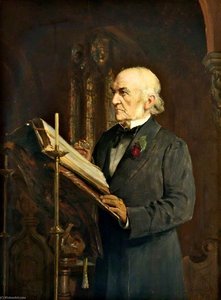
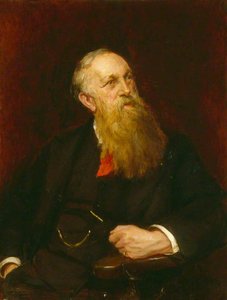
In the bustling, ink-stained atmosphere of late Victorian London, few artists possessed the ability to capture the pulse of a changing empire quite like Sir Sydney Prior Hall. Born in 1842 into an artistic lineage—the son of the esteemed animal portraitist Harry Hall—Sydney was destined for a life shaped by the visual arts. His journey from the disciplined halls of Merchant Taylors' School to the intellectual rigors of Oxford University did not lead him toward academia, but rather toward the front lines of history. It was during his time at Oxford that he joined the staff of The Graphic, a pioneering illustrated newspaper, where he would refine a style characterized by an extraordinary immediacy and a meticulous eye for the unfolding drama of his era.
Hall’s reputation was forged in the heat of conflict and the tension of political upheaval. He rose to prominence as a master of reportage, most notably during the Franco-Prussian War of 1870-1871. His sketches from this period were not merely drawings; they were windows into the chaos of battle and the profound human emotion of war. This talent for capturing the "now" earned him high praise from contemporary luminaries, including Arthur Conan Doyle, who famously described Hall’s work as possessing a “swift revealing pencil”—a tool that seemed capable of catching every subtle turn of affairs before they vanished into the annals of history.
A Versatile Vision: From Literary Classics to Royal Commissions
While his journalistic endeavors placed him in the heart of global events, Hall’s artistic range extended far beyond the battlefield. He possessed a rare versatility that allowed him to transition seamlessly from the gritty realism of news sketching to the delicate, evocative world of book illustration. His collaborations with authors like Thomas Hughes left an indelible mark on the Victorian literary landscape; his meticulous renderings for Tom Brown’s School Days and Tom Brown at Oxford helped breathe visual life into these quintessential tales of English youth. In these works, one finds a profound respect for detail and a capacity to convey character through subtle line work and atmospheric depth.
The breadth of his subject matter was truly vast, ranging from the dramatic to the stately. His portfolio included:
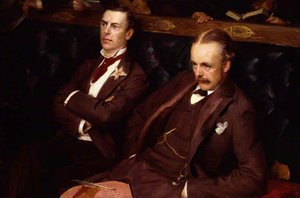
- Historical Documentation: Capturing pivotal political moments, such as the Parnell Commission and significant debates within the Houses of Lords.
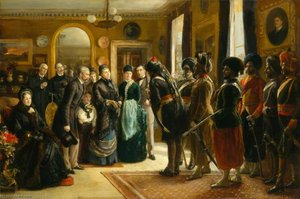
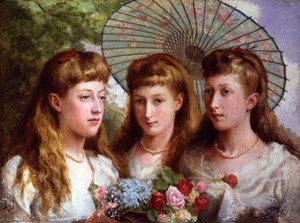
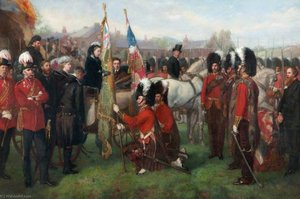
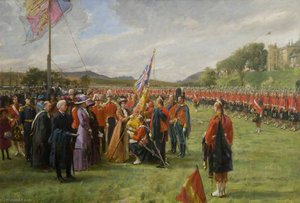
- Royal Portraiture and Events: Illustrating the grandeur of the British monarchy, including depictions of Queen Victoria presenting new colours to the 79th Cameron Highlanders and portraits of the daughters of King Edward VII.
- Narrative Painting: Evocative scenes such as “Escaped Leopard Battles with Dogs at Raglan Castle,” which showcased his ability to handle tension and movement in a more traditional painterly style.
- Travel and Exploration: Documenting the landscapes and potential of distant territories, including his sketches from the Canadian wilderness.
An Enduring Impression on British Art
Beyond the technical skill displayed in his drawings, Hall’s significance lies in his role as a visual chronicler of the Victorian age. He lived through a period of immense transition, and through his art, he provided a primary source for the emotions and social structures of his time. His life was also marked by deep personal connections to the cultural fabric of Britain; his marriage to Hannah Holland and his subsequent marriage to the painter Mary Gow placed him at the center of an interconnected community of artists and intellectuals. Even his family legacy continued through his son, Henry R. H. Hall, who contributed to the preservation of history as an Egyptologist.
When Sydney Prior Hall passed away in 1922, he left behind a body of work that serves as a bridge between the era of hand-drawn reportage and the modern age of visual journalism. His ability to marry the precision of a portraitist with the urgency of a war correspondent ensured that his "swift revealing pencil" would continue to speak to future generations, offering a vivid, textured glimpse into the heart of the Victorian world.