A Transylvanian Legacy Reaching Across Europe
Born in the historic environs of Sigmaren, Romania, in 1684, Tobias Stranover—often known by his more melodic moniker, Stranovius—was a painter whose spirit was as much shaped by his travels as by his heritage. As the son of the respected artist Jeremias Stranover, his very foundation was laid within the rich traditions of Transylvanian Saxon craftsmanship. Yet, the boundaries of his world were far from limited to the borders of Romania. His journey through the great artistic arteries of Europe—from the bustling ports of Hamburg to the refined courts of Dresden and the vibrant markets of Amsterdam—infused his work with a cosmopolitan elegance. This early exposure to diverse artistic currents allowed him to weave together a style that was both deeply rooted in tradition and strikingly modern for its time, preparing him for his eventual ascent within the English Baroque scene.
The Symbiosis of Style and Marriage
Upon arriving in England around 1703, Stranover’s life and art became inextricably linked with another great name of the era. His marriage to Elizabeth Bogdani, the daughter of the celebrated bird and flower painter Jakob Bogdány, was more than a romantic union; it was a profound artistic partnership. Together, they navigated the high demands of the English decorative arts market, often working in a shared studio environment that blurred the individual hand from the collective vision. The frequent appearance of identical exotic bird species and lush fruit compositions across their respective works suggests a seamless collaboration, a shared language of color and form. When Bogdány passed away in 1724, Stranover inherited not just a home in Finchley, but a legacy of studio contents and models that allowed him to continue the tradition of excellence established by his mentor and father-in-law.
Mastery of the Avian and the Ornamental
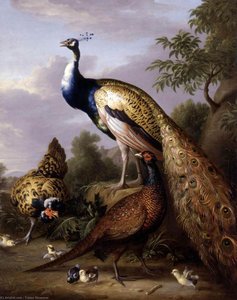
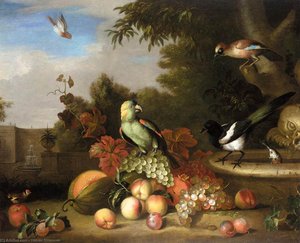
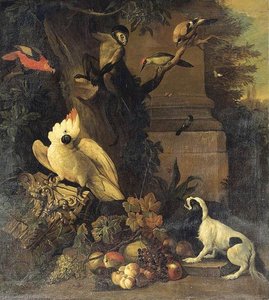
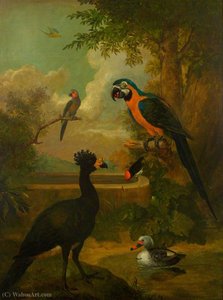
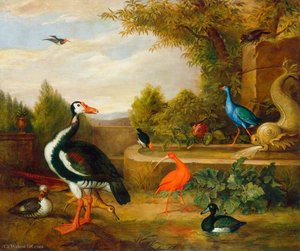
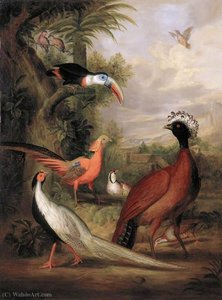
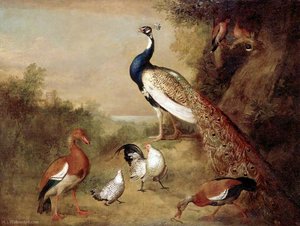
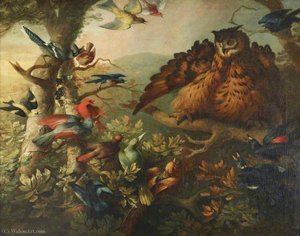
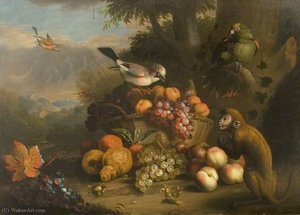
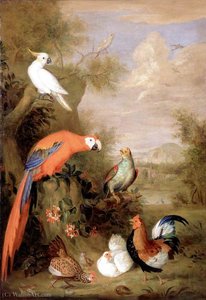
The true brilliance of Stranover’s oeuvre lies in his ability to capture the ephemeral beauty of the natural world with a precision that borders on the scientific, yet remains deeply poetic. Heavily influenced by the Dutch master Melchior d’Hondecoeter, Stranover possessed an uncanny sensitivity to the anatomy and behavior of birds. His canvases often feature:
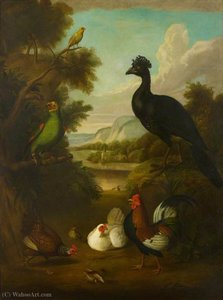
- Vibrant Avian Portraits: From the regal peacock to the delicate hen, his subjects are rendered with a lightness and freshness that distinguishes him from the heavier Baroque styles.
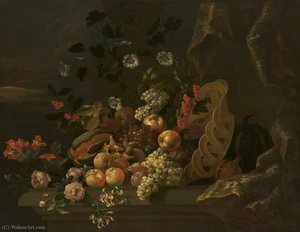
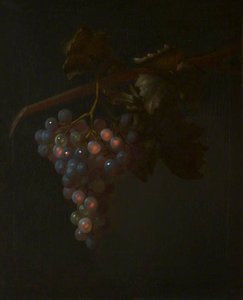
- Luminous Still Lifes: Meticulously detailed arrangements of fruit and flowers that celebrate texture, light, and the fleeting nature of life.
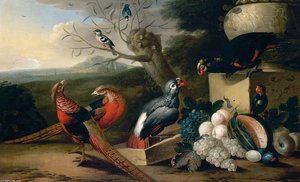
- Dynamic Landscapes: Settings where animals and birds interact within a meticulously observed environment, creating scenes of both tranquility and vitality.
Through his use of rich textures and a palette brimming with life, Stranover did more than merely document nature; he elevated the decorative arts to a level of profound observation, leaving an indelible mark on the history of European painting.