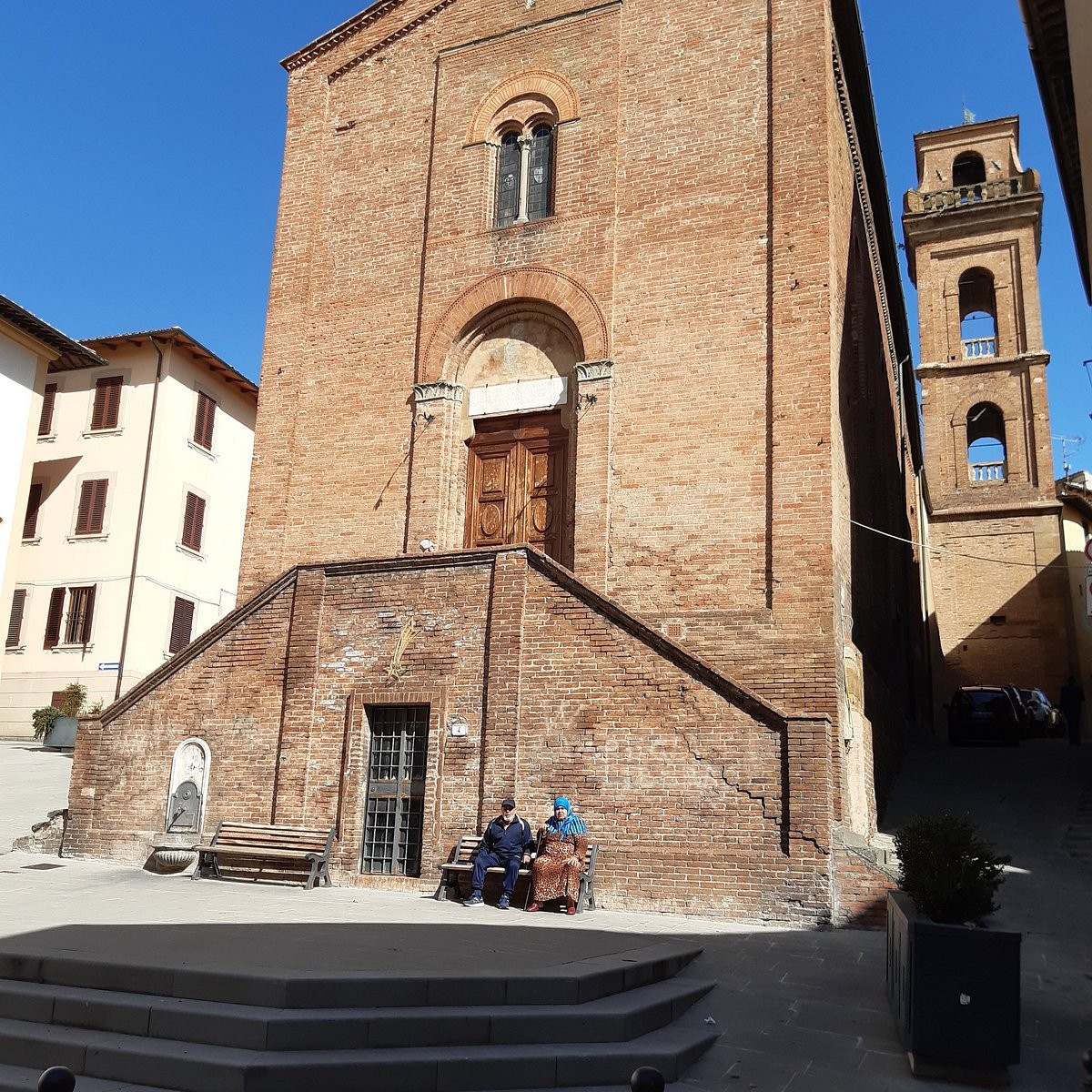


A Florentine Baroque Jewel: The Splendor of Chiesa dei Santi Lorenzo e Ippolito
In the heart of Castelfiorentino, nestled within the verdant landscapes of Tuscany, stands the Chiesa dei Santi Lorenzo e Ippolito , a breathtaking testament to the dramatic grandeur of the Florentine Baroque. To enter this sacred space is to step through a portal into the seventeenth century, leaving the modern world behind for an era defined by theatrical light, opulent ornamentation, and profound spiritual devotion. The architecture itself, masterfully conceived by Bernardo Fallani , serves as a stage for a divine drama, where every curve of the masonry and every sweep of the vaulting is designed to elevate the soul. The church’s facade, punctuated by the emotive sculptures of Ignazio Miert , announces a sanctuary of immense artistic ambition, setting the tone for the visual feast that awaits within its hallowed walls.
As one moves deeper into the basilica, the eyes are immediately drawn upward toward the soaring nave, where the weight of stone seems to dissolve into celestial vision. The barrel vault, an architectural triumph, is adorned with breathtaking frescoes by Alessandro Gherardini , whose brushwork captures the movement and light characteristic of the Baroque period. This sense of infinite space is further enriched by the magnificent dome, which houses the luminous paintings of Matteo Bonechi . These works do not merely decorate the ceiling; they transform it into a window onto the heavens, utilizing chiaroscuro and dynamic compositions to create an immersive environment that continues to captivate art historians and pilgrims alike.
The true soul of the collection lies in its intimate connection to the local spiritual heritage, specifically the veneration of Saint Verdiana . The church serves as a repository for masterpieces that weave together local legend and high Renaissance and Baroque technique. One cannot contemplate this collection without being moved by “The Virgin Assumed between Saints Anthony Abbot and Verdiana,” attributed to Giovanni Battista Guidoni , a piece that masterfully balances divine grace with the earthly presence of Castelfiorentino’s patron saint. This narrative of devotion is furthered by Giovan Battista Foggini’s “The Blessing of Saint Verdiana,” where the solemnity of the gesture is rendered with exquisite precision, and Jacopo Chimenti’s (l’Empoli) “Stories of Saint Verdiana,” which provides a visual chronicle of faith through episodic brilliance.
For the collector of fine art or the designer seeking inspiration from the classical tradition, the Chiesa dei Santi Lorenzo e Ippolito offers more than just a museum experience; it offers a masterclass in the integration of art and architecture. The synergy between the structural innovations of Fallani and the painterly genius of Gherardini and Bonechi creates a holistic atmosphere where every element is part of a singular, cohesive narrative. Whether exploring the historical depths through the nearby Museo di Santa Verdiana or standing in silent awe beneath the frescoed vaults, visitors find themselves enveloped in a legacy of Tuscan excellence that remains as vibrant and influential today as it was three centuries ago.