


A Florentine Legacy Etched in Stone
In the heart of Florence, a city where every cobblestone whispers tales of Renaissance grandeur, lies a sanctuary of unparalleled craftsmanship: the Museo dell’Opificio delle Pietre Dure. This is not merely a museum in the traditional sense; it is a living testament to the moment when mineral and stone transcend their geological origins to become a canvas for breathtaking pictorial narratives. Established in 1588 by Ferdinando I de' Medici, the institution began its life as an opulent workshop dedicated to the royal family’s most extravagant desires. Over the centuries, it evolved from a private atelier of the Medici court into a global beacon of artistic innovation, where the boundaries between sculpture, painting, and jewelry dissolve into a singular, luminous expression of beauty.
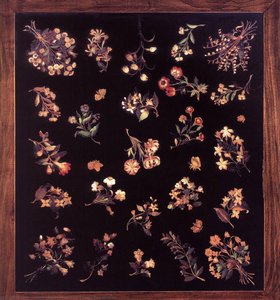
The soul of the museum resides in the mastery of commesso fiorentino , a technique so sophisticated it is often described as painting with stone. Unlike standard mosaics that rely on small, uniform tesserae, this Florentine method involves the meticulous cutting and fitting of thin veneers of precious materials—lapis lazulated, agate, jasper, and coral—to create seamless transitions of color and light. To witness a finished piece is to experience an optical illusion; the artisan exploits the natural veining and translucency of the stone to mimic the soft shadows of a petal or the delicate glint of water. This painstaking process demands a profound intimacy with nature, as the artist must listen to the inherent character of each mineral, shaping it into intricate floral arrangements and complex landscapes that rival the finest oil paintings in their depth and vibrancy.
Architectural Grandeur and the Art of Preservation
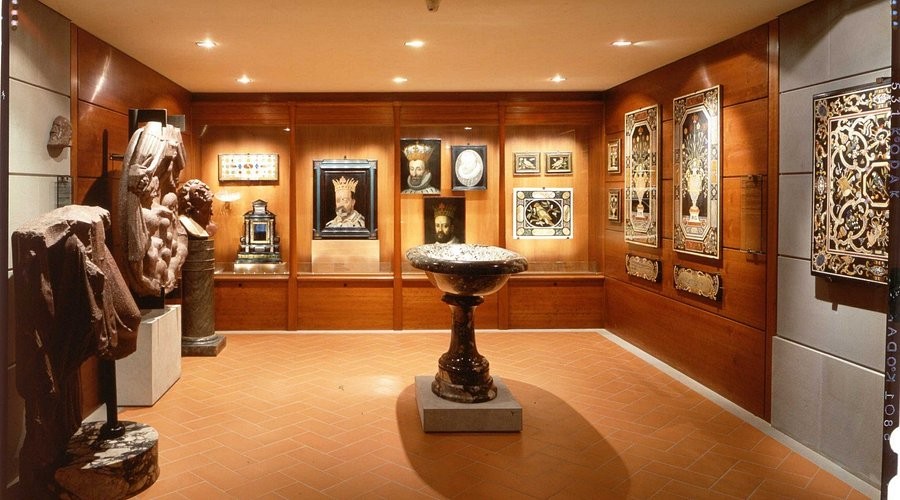
Housed within the historic walls of the Palazzo Vecchio, the museum’s setting provides a majestic backdrop that mirrors the splendor of its collection. The architecture itself serves as a bridge between eras, guiding visitors through halls that reflect the evolution of Florentine decorative arts. As one wanders through the spacious galleries, the transition from the heavy, monumental displays of the Chapel of Princes to the delicate, intimate objects of the later centuries becomes a journey through time and power. The museum’s layout is designed to foster an intimate connection with the art, allowing for a close study of the microscopic precision required by the pietre dure masters.
What truly distinguishes the Museo dell’Opificio delle Pietre Dure from its contemporaries is its dual identity as both a museum and a premier institution of scientific conservation. The laboratories are not hidden away in shadows but serve as an integral part of the visitor experience, offering a rare glimpse into the cutting-edge technologies used to safeguard Italy's most precious cultural treasures. This commitment to preservation ensures that the legacy of the Medici workshop remains vibrant. For the art lover and the collector alike, the museum offers more than just a viewing of finished masterpieces; it provides an education in the very science of immortality, showcasing how modern scholarship and ancient skill converge to protect the delicate beauty of the past for future generations.