


A Legacy Etched in Anatomy: The Soul of the Royal College of Surgeons
Nestled within the historic embrace of Lincoln’s Inn Fields, the Royal College of Surgeons of England stands as a profound testament to the intersection of scientific rigor and artistic contemplation. It is far more than a mere repository for medical artifacts; it is a sanctuary where the boundaries between biological reality and aesthetic wonder blur. To step into this institution is to enter a narrative woven from centuries of pioneering discovery, where the meticulous observation required for surgery meets the evocative power of visual storytelling. The College embodies a history that began with the humble Guild of Surgeons in 1368, blossoming over eras of profound change into a global beacon of excellence, much like a masterpiece that gains depth and complexity through every layer of varnish applied by time.
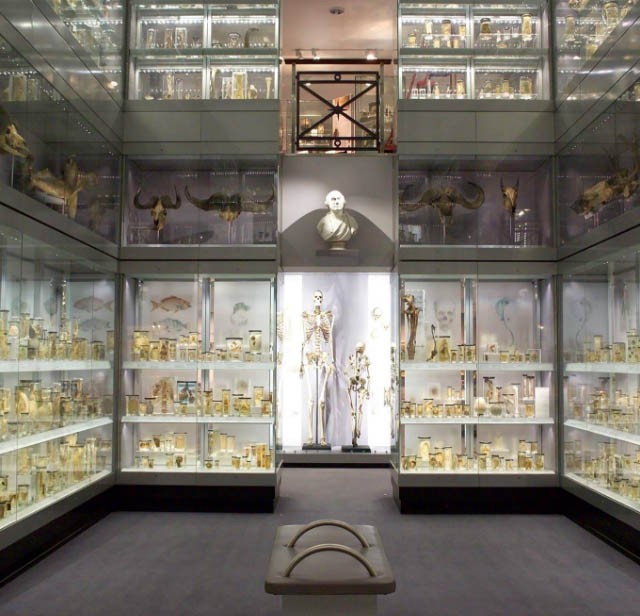
At the very heart of this venerable institution lies the Hunterian Museum, a space that offers an immersive journey into the astonishing complexity of the human form. Named after the legendary polymath John Hunter, whose revolutionary experiments reshaped surgical understanding, the museum presents collections that are as hauntingly beautiful as they are scientifically significant. Here, the viewer encounters thousands of specimens—from the delicate architecture of skeletal structures to the exquisitely detailed dissections of organs—that demand a reflective gaze. These preparations are not merely clinical objects; they are powerful visual narratives that evoke awe and prompt deep reflection on the fragility and resilience of life. For the art lover, there is a striking parallel between Hunter’s dedication to anatomical precision and the meticulous rendering found in classical realism, where every tissue and vessel is captured with an almost reverent accuracy.
Architectural Grandeur and the Victorian Aesthetic
The architectural grandeur of the College itself serves as a magnificent backdrop to these collections, acting as an architectural palimpsest that reveals layers of London's history. Designed by Sir Charles Barry, the architect famed for his classical sensibilities, the building utilizes innovative materials like cast concrete and stucco to achieve a balance of imposing presence and elegant proportion. The façade, bearing the subtle scars of wartime reconstruction, tells a story of endurance and resilience, much like a weathered canvas that retains its dignity through the ages. With elements subtly referencing Roman architecture, Barry’s design reflects the Victorian era's commitment to aesthetic ideals, ensuring that the very walls housing these scientific treasures resonate with a sense of classical permanence and grace.
For the interior designer or collector seeking inspiration, the College offers a masterclass in how structure can dictate mood. The interplay of light and shadow within its halls creates an atmosphere of scholarly reverence, making it a premier destination for those who appreciate the dramatic tension found in Baroque compositions. The building does not merely house history; it performs it, providing a stage where the weight of tradition meets the sharp clarity of scientific inquiry.
A Unique Cultural Identity
What truly distinguishes the Royal College of Surgeons is its unique cultural identity, found even in the subtle nuances of its traditions. The enduring practice of addressing members as “Mr,” “Miss,” or “Ms” —a departure from the customary “Dr”—serves as a poignant reminder of the historical distinctions between surgeons and physicians. This tradition speaks to a legacy of meritocracy and intellectual rigor that transcends traditional hierarchies. It is a living piece of social art, preserved through the centuries.
For collectors and designers alike, the College represents a rare convergence of the analytical and the sublime, offering an inspiration drawn from the profound beauty found in the intricate details of our own existence. It remains a place where the annals of medical progress are written with the same care and passion as the finest strokes of a master's brush, inviting all who enter to witness the artistry inherent in the very fabric of life.