 Ver en contexto
 Enviar
 Compartir
 Detalles

 Descargar
 Similares
 Radiografía
 Presentación de diapositivas
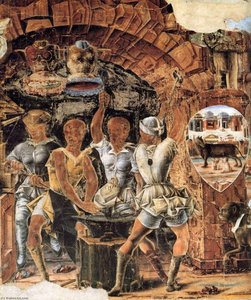
English Allegory of August Triumph of Ceres
 Acrylic On Canvas
- WallArt
- Early Renaissance
 1484
1484 500.0 x 320.0 cm
 Palazzo Schifanoia
 Ver más
Giclée / Impresión de arte
Impresiones giclée o en lienzo de calidad de museo con producción rápida y opciones de acabado flexibles. ( Comprar pintura hecha a mano Comprar imagen)




P118B $10

P118H $10

P118W $10

P438Z $10

P508JH $12

P508YH $12

P805H $10

P805Z $10

P919BZ $10

P919G $10

P919XJ $10

P959ZH $10

P968JZ $12

W106C $8

W218G $10

W218JH $8

W218Y $10

W307PJ $10

W316G $10

W316PJ $8

W316Y $10

W398PJ $8

W4111J $10

W500HY $15

W500JH $15

W692G $12

W849H $8

W940BG $15

W953PJ $8




Elija entre nuestros tamaños predefinidos que respetan las proporciones originales de la obra.

Puede introducir sus propias dimensiones para adaptarse a un marco o espacio específico. Si el tamaño seleccionado no coincide con las proporciones de la imagen original, recortaremos la obra de arte o extenderemos la imagen con un borde con efecto espejo o de color sólido. Se enviará una maqueta digital para su aprobación antes de que comience la producción.
Tenga en cuenta que la vista previa en pantalla no refleja el recorte o la extensión real. Solo la maqueta mostrará con precisión la composición final.
Aunque existen tamaños personalizados, recomendamos seleccionar una dimensión de la lista predefinida para preservar las proporciones originales.
Envío a todo el mundo () en 2 semanas en lugar de las 4/5 semanas estándar. (6 septiembre)

Envío exprés gratuito a todo el mundo

Lienzo de lino de alta calidad

Seguro de envío total

Garantía de reembolso de impuestos aduaneros

Garantía de fidelidad cromática exacta

Política de devolución de 100 días (solo por defectos)

Garantía de devolución del 100% del dinero

Descuento por cantidad
 La opción de vidrio solo está disponible en tamaños inferiores a 110 cm.

English Allegory of August Triumph of Ceres
Giclée / Impresión de arte
Dimensiones de la reproducción
-


Precio total final
$ 62
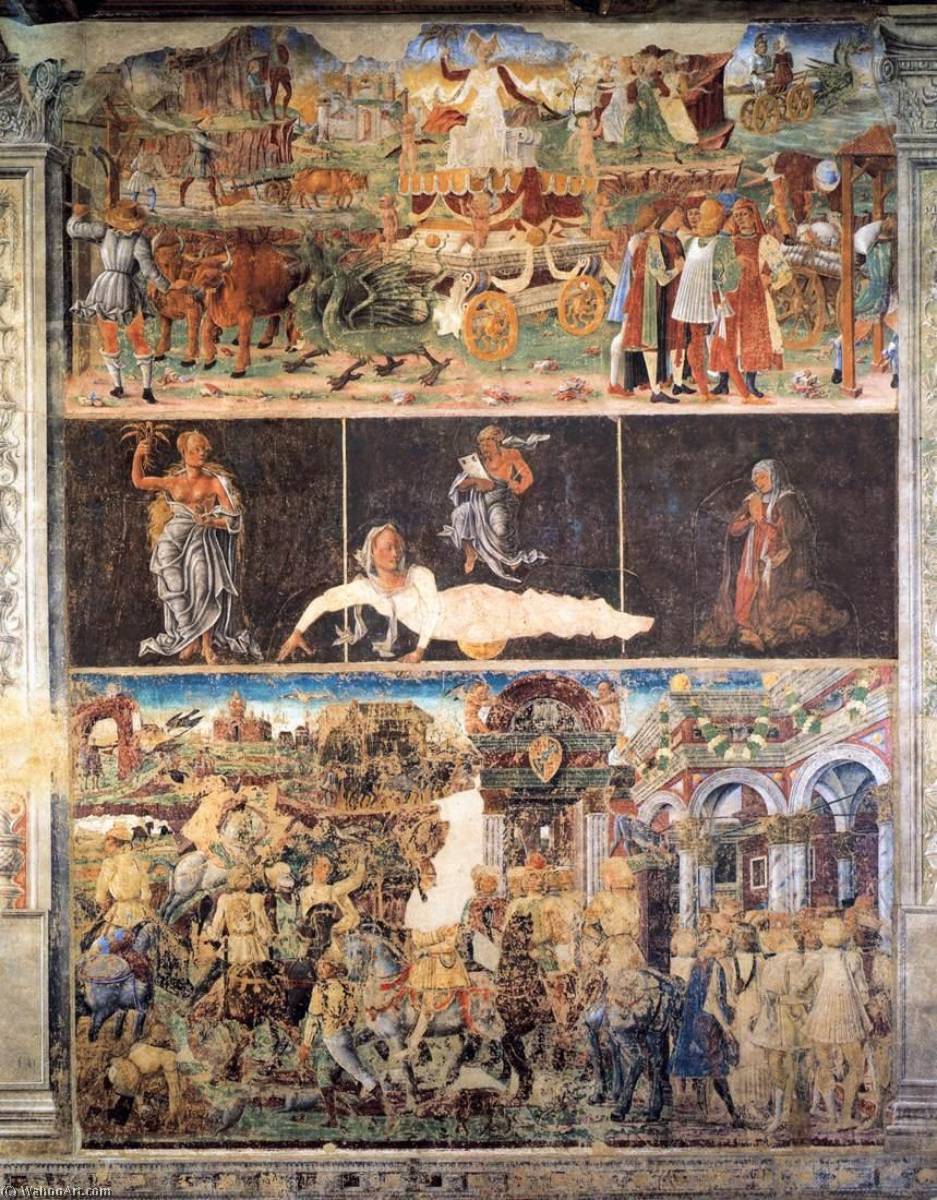
Cosmè Tura’s “English Allegory of August Triumph of Ceres”: A Vision of Renaissance Ferrara
The world of 15th-century Ferrara pulsed with artistic fervor, fueled by the patronage of the Este family and a burgeoning spirit of innovation. Within this vibrant milieu emerged Cosmè Tura (c. 1430 – 1495), an artist whose distinctive style—characterized by bold forms, dramatic lighting, and a potent blend of classical influence and Venetian realism—left an indelible mark on the city’s artistic landscape. His “English Allegory of August Triumph of Ceres,” painted in 1484, stands as a testament to this creative energy, offering a captivating glimpse into the complexities of Renaissance thought and the opulent world of the Ferrara court.
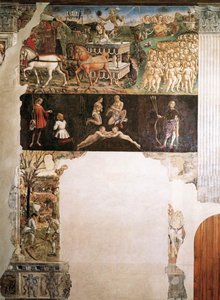
This fresco, now residing within the Galleria Estense in Modena, depicts a complex allegorical scene centered around the Roman goddess Ceres, patroness of agriculture and harvest. The composition unfolds within a grand town square, teeming with figures engaged in various activities—a triumphal procession led by Ceres herself, dignitaries receiving honors, huntsmen pursuing game, and merchants exchanging goods. The sheer density of figures, rendered with remarkable detail and dynamism, immediately draws the viewer into this bustling tableau. Tura masterfully employs perspective to create a sense of depth and spatial coherence, guiding our eye through the scene with confident strokes.
A Symphony of Color and Light: Technique and Style
Tura’s technical prowess is immediately apparent in his masterful manipulation of color and light. He utilizes a rich palette—deep reds, vibrant blues, and earthy greens—to create a visually arresting effect. The use of chiaroscuro – the dramatic contrast between light and shadow – is particularly striking, lending a theatrical quality to the scene. Notice how Tura sculpts forms through carefully placed highlights, emphasizing the musculature of the figures and creating an illusion of three-dimensionality. The application of paint itself is notable; Tura’s technique leans towards a slightly impastoed surface, adding texture and visual interest to the fresco.
Stylistically, “August Triumph of Ceres” reflects Tura's unique synthesis of influences. He draws upon the classical ideals of proportion and harmony evident in the works of Piero della Francesca, particularly in the monumental scale and geometric precision of the composition. Simultaneously, he incorporates elements of Venetian painting—a heightened sense of realism, a focus on capturing fleeting moments of expression, and an appreciation for atmospheric effects—demonstrating his exposure to the artistic currents circulating through Venice during his formative years.
Symbolism and Historical Context
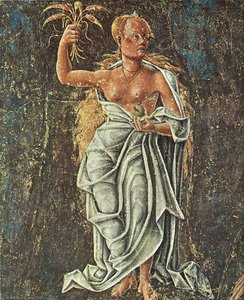
The “English Allegory of August Triumph of Ceres” is not merely a decorative fresco; it’s a carefully constructed allegory laden with symbolic meaning. Ceres, depicted as a majestic figure adorned in rich robes and holding sheaves of wheat, represents the bounty of the harvest and the prosperity of Ferrara under the rule of the Este family. The figures surrounding her—the dignitaries, merchants, and hunters—symbolize various aspects of civic life and economic activity. The astrological symbol Virgo, prominently featured in the center of the scene, further reinforces the theme of agriculture and fertility.
Painted during the reign of Borso d’Este (1452-1486), a period marked by significant political and cultural developments in Ferrara, the fresco likely served as a celebration of the Duke's power and influence. The inclusion of figures from England—a detail that has fueled scholarly debate—suggests a deliberate attempt to project an image of Ferrara as a cosmopolitan center engaged with European affairs. The painting’s commission reflects the Este family’s commitment to fostering artistic excellence and creating a court renowned for its patronage of the arts.
Emotional Resonance and Lasting Legacy
Beyond its historical and symbolic significance, “English Allegory of August Triumph of Ceres” possesses a profound emotional resonance. The dynamic composition, vibrant colors, and dramatic lighting evoke a sense of energy and excitement, capturing the spirit of a bustling Renaissance town. The figures themselves—their expressions ranging from solemn dignity to boisterous celebration—seem to come alive before our eyes. Tura’s ability to imbue his work with such life and vitality is a testament to his artistic genius.
Today, this remarkable fresco continues to captivate viewers with its beauty and complexity. It stands as a powerful reminder of Cosmè Tura's pivotal role in shaping the artistic identity of Renaissance Ferrara—a city that, for a brief but brilliant period, became a beacon of innovation and creativity within Europe.
Obras relacionadas
Biografía del artista
Cosmè Tura: Un Pionero de la Escuela Ferraresa
- Nacido: c. 1430 en Ferrera, Italia
- Fallecido: 1495
- Conocido por: Pintor del primer Renacimiento y fundador de la Escuela Ferraresa
Primeros Años y Formación
- Cosmè Tura nació alrededor de 1430 en Ferrara, Italia, hijo de un zapatero. Los detalles sobre su vida temprana son escasos.
- Su formación artística no está bien documentada, pero se cree que pudo haber sido influenciado por artistas como Fra Angelico, Piero della Francesca y Andrea Mantegna.
- Existe la especulación de que podría haber tenido un aprendizaje bajo Galasso Galassi, un artista algo misterioso vinculado a Piero della Francesca.
- De 1452 a 1456, la presencia de Tura en Ferrara no está documentada, lo que lleva a algunos historiadores a creer que pudo haber viajado, posiblemente a Venecia o Padua.
- Un posible viaje a Padua le expuso al taller de Francesco Squarcione, un importante centro para el arte del Renacimiento, y artistas como Carlo Crivelli, Michael Pacher y Andrea Mantegna. Esta exposición probablemente influyó en su estilo.
Estilo Artístico e Influencias
- El estilo artístico de Tura se caracteriza por líneas claras y nítidas, exuberancia decorativa y referencias a la antigüedad clásica.
- Fue un adoptante temprano de la pintura al óleo, utilizándola hábilmente para representar diferentes texturas en sus obras.
- Las influencias incluyen innovaciones toscanas traídas a Padua por Donatello, evidentes en su uso de la perspectiva lineal y las formas fuertes.
- Su estilo también muestra el impacto de los artistas flamencos que trabajaban en Ferrara.
Obras Principales y Logros
- Tura trabajó extensamente para la familia Este, Duques de Ferrara, creando decoraciones para torneos, diseñando muebles y contribuyendo a la moda.
- Entre sus obras notables se incluyen los frescos en el Palazzo Schifanoia en Ferrara, que representan escenas alegóricas.
- Pintó retratos, paneles religiosos (como "San Antonio de Padua Leyendo") y otras obras de arte que muestran su estilo único.
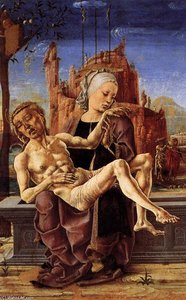
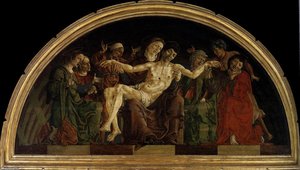
- Su “Pietà” es un ejemplo notable del arte gótico tardío con influencias renacentistas.
Significado Histórico
- Cosmè Tura es considerado uno de los artistas más importantes del primer Renacimiento, particularmente en el norte de Italia.
- Fundó y lideró la Escuela Ferraresa, influyendo en artistas posteriores como Giovanni Andrea Ghirardoni.
- Su innovador uso de la pintura al óleo y su estilo distintivo contribuyeron significativamente al desarrollo del arte italiano.
- El legado de Tura se conserva a través de obras expuestas en museos como el Museo di Ferrara.
Cosmè Tura
1430 - 1495 , Italia
Datos clave
- Artistas Influenciados: ['Giovanni Andrea Ghirardoni']
- Artistas Que Influyeron:
- Fra Angelico
- Piero della Francesca
- Andrea Mantegna
- Fecha De Muerte: 1495
- Fecha De Nacimiento: c. 1430
- Lugar De Nacimiento: Ferrara, Italia
- Movimiento Artístico: Primer Renacimiento
- Nacionalidad: Italiana
- Nombre Completo: Cosmè Tura
- Obras Notables:
- St. Anthony of Padua Reading
- Pietà
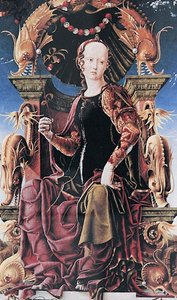
- A Muse (detail)
Artículos relacionados

Legado en las Paredes: Frescos Familiares que Trascienden el Tiempo
Descubre el arte del fresco muralístico para inmortalizar tu historia familiar. Expertos en frescos personalizados y técnicas ancestrales. Crea un legado visual único con .
Renoir: Las 25 Obras Maestras del Impresionismo para Decorar tu Hogar con Arte
Descubre las 25 obras maestras de Renoir, el rey del impresionismo. Explora su técnica, historia y significado en cada pintura. Encuentra reproducciones de arte de alta calidad para decorar tu hogar con ArtsDot.com.
Cosmè Tura: Rediscovering the Ferrarese Master & His Distinctive Style
Discover Cosmè Tura (1430-1495), founder of the Ferrara School. Explore his unique style, key artworks & lasting influence. Expert insights for collectors.

The Enduring Legacy of Fresco Painting: Techniques, History & Contemporary Relevance
Explore the rich history & enduring artistry of fresco painting – from Giotto to Michelangelo! Discover techniques, conservation efforts, & modern applications. Learn how ArtsDot brings this timeless art form to your home.

The Enduring Legacy of Fresco: Technique, History & Artistic Expression Across Cultures
Explore the rich history & enduring legacy of fresco painting! Discover ancient techniques, Giotto's masterpieces, and modern applications. Expert insights for art lovers & professionals.