 Ver en contexto
 Enviar
 Compartir
 Detalles

 Descargar
 Similares
 Radiografía
 Presentación de diapositivas
 Estadísticas
Coronet
 Hyperrealism
 1980
1980 51.0 x 40.0 cm
 Ver más
Giclée / Impresión de arte
Impresiones giclée o en lienzo de calidad de museo con producción rápida y opciones de acabado flexibles. ( Comprar pintura hecha a mano Cambiar a imagen digital)




































Elija entre nuestros tamaños predefinidos que respetan las proporciones originales de la obra.

Puede introducir sus propias dimensiones para adaptarse a un marco o espacio específico. Si el tamaño seleccionado no coincide con las proporciones de la imagen original, recortaremos la obra de arte o extenderemos la imagen con un borde con efecto espejo o de color sólido. Se enviará una maqueta digital para su aprobación antes de que comience la producción.
Tenga en cuenta que la vista previa en pantalla no refleja el recorte o la extensión real. Solo la maqueta mostrará con precisión la composición final.
Aunque existen tamaños personalizados, recomendamos seleccionar una dimensión de la lista predefinida para preservar las proporciones originales.
Envío a todo el mundo () en 2 semanas en lugar de las 4/5 semanas estándar. (9 septiembre)

Envío exprés gratuito a todo el mundo

Lienzo de lino de alta calidad

Seguro de envío total

Garantía de reembolso de impuestos aduaneros

Garantía de fidelidad cromática exacta

Política de devolución de 100 días (solo por defectos)

Garantía de devolución del 100% del dinero

Descuento por cantidad
 La opción de vidrio solo está disponible en tamaños inferiores a 110 cm.

Coronet
Giclée / Impresión de arte
Dimensiones de la reproducción
-


Precio total final
$ 62
The Artistic Vision
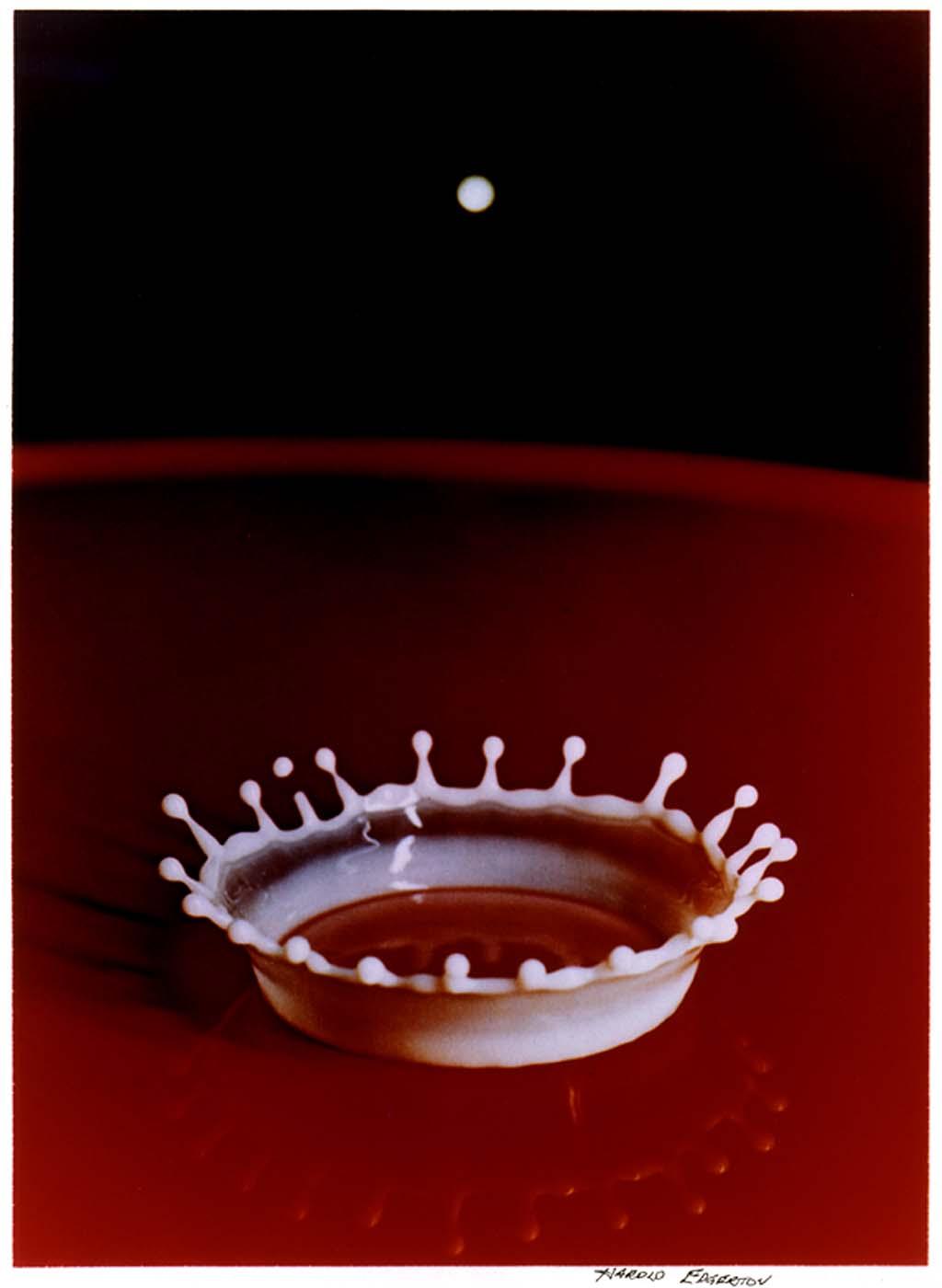
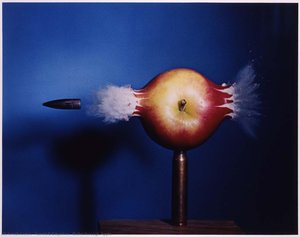
Edgerton's Coronet is a stunning example of his ability to transform everyday moments into works of art. The photograph features a drop of milk splashing into a thin film of milk, creating a coronet shape that is both delicate and powerful. The use of milk as the subject matter adds an element of simplicity and elegance to the piece, making it a masterpiece of Hyper-Realism. As seen on ArtsDot.com, this photograph is a prime example of Edgerton's contribution to the development of modern photography.Technical Expertise
Edgerton's technical expertise was instrumental in creating the Coronet. He developed an electronic flash technology that allowed for color photography with a short exposure time, resulting in a crisp image of the moving milk droplets. The triggering scheme and delay used to capture this critical moment in the evolving shape of the splash were also devised by Edgerton. The Smithsonian American Art Museum is home to many of Edgerton's works, including the Coronet, which is a testament to his innovative approach to photography.- The Coronet is considered one of the most important photographs of all time.
- Edgerton's use of electronic flash technology allowed for color photography with a short exposure time.
- The Smithsonian American Art Museum is home to many of Edgerton's works, including the Coronet.
The Coronet is a masterpiece that continues to inspire artists and photographers today. Its beauty and technical expertise make it a must-see for anyone interested in photography and Hyper-Realism. As seen on ArtsDot.com, Edgerton's works are a testament to his innovative approach to photography and his contribution to the development of modern art.
Obras relacionadas
Biografía del artista
The Architect of Frozen Time: The Life and Legacy of Harold E. Edgerton
In the quiet intersection where rigorous scientific inquiry meets the profound beauty of visual art, few figures loom as large as Harold Eugene Edgerton. Affectionately remembered by many as “Papa Flash,” Edgerton was far more than a physicist or an engineer; he was a visionary who possessed the rare ability to peel back the veil of the invisible. Born in 1903 in Fremont, Nebraska, his journey began in a landscape of intellectual curiosity, shaped by a father whose mastery of language and oratory instilled in him a deep respect for communication. This early foundation would later manifest in his ability to communicate complex physical phenomena through the medium of light, turning the fleeting, imperceptible movements of our world into permanent, breathtaking icons of frozen motion.
Edgerton’s academic path was one of relentless pursuit and precision. After earning his bachelor’s degree in electrical engineering from the University of Nebraska–Lincoln in 1925, he moved toward the prestigious halls of the Massachusetts Institute of Technology (MIT). It was here, through his Master of Science and subsequent Doctor of Science degrees, that his fascination with synchronous motors and stroboscopic studies began to coalesce into a revolutionary methodology. He did not merely study light; he learned to command it. By refining the stroboscope from an obscure laboratory tool into a powerful instrument of illumination, he paved the way for a new era of photography—one where the camera could finally compete with the speed of thought and the velocity of nature.
The Alchemy of Light and Motion
The true magic of Edgerton’s work lies in his mastery of high-speed photography, a technique that allowed him to capture what the human eye is biologically incapable of perceiving. Through his innovative use of strobe lighting, he transformed the chaotic energy of motion into structured, sculptural compositions. His lens did not just record reality; it reinterpreted it. In works such as "Coronet," created in 1957, we witness the sublime beauty of a single drop of milk colliding with a liquid surface, creating a delicate, crown-like shape that exists for only a fraction of a second. This piece remains one of the most significant achievements in photographic history, demonstrating how scientific precision can evoke deep emotional and aesthetic responses.
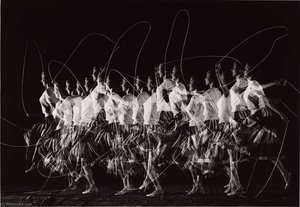
This ability to freeze time extended to the most dynamic of subjects. Whether it was the intense, muscular exertion captured in his "Boxer" series or the rhythmic, looping energy of "Moving Skip Rope," Edgerton’s images possess a hyper-realistic quality that feels both startlingly present and eternally still. His technical prowess allowed him to explore themes of:
- The Fluidity of Nature: Capturing the intricate patterns of water splashes and droplets in works like "Water Sprinkler."
- Kinetic Energy: Revealing the hidden mechanics of physical movement, from sports to everyday gestures.
- Scientific Visualization: Using photography as a tool to document and explain complex physical processes through visual clarity.
A Lasting Impact on Science and Art
Beyond the frame of his photographs, Edgerton’s contributions to the world were vast and transformative. His research into sonar technology and deep-sea photography revolutionized our understanding of the ocean, even leading to collaborations with legendary explorers like Jacques Cousteau. His equipment played a pivotal role in searching for shipwrecks and exploring the mysteries of the deep, proving that his scientific mind was always tethered to a sense of wonder about the unknown. He bridged the gap between the laboratory and the gallery, demonstrating that the tools used to measure the universe are the very same tools used to celebrate its beauty.
As we reflect on the life of Harold E. Edgerton, we see a legacy defined by the illumination of the dark and the capture of the ephemeral. He taught us that there is an entire universe of motion occurring just beyond our perception, waiting for the right flash of light to bring it into view. His work remains a testament to the idea that science and art are not opposing forces, but rather two different languages describing the same magnificent reality. Through his eyes, the world was never just moving; it was dancing in a series of perfect, unforgettable moments.
harold e edgerton
1903 - 1990
Datos clave
- Artistic Movement Or Style: Hyperrealism
- Artists Or Movements Influenced By This Artist: ['Photography']
- Artists Who Influenced This Artist: ['Charles Stark Draper']
- Date Of Birth: April 6, 1903
- Date Of Death: January 4, 1990
- Full Name: Harold Eugene Edgerton
- Nationality: American
- Notable Artworks:
- Coronet
- Boxer
- Place Of Birth: Fremont, Nebraska
Artículos relacionados
Harold Copping: A Life Depicted – Exploring the Narrative Power of a Golden Age Illustrator
Explore the life and art of Harold Copping, renowned for his beautiful biblical illustrations and Victorian depictions. Discover the story behind 'The Copping Bible' and his lasting impact on religious art history.
Rescatando Recuerdos: Reconstrucción Artística de Fotografías de Baja Resolución en Pinturas al Óleo de Alta Fidelidad
Transforme sus fotografías en impresionantes pinturas al óleo hechas a mano por artistas expertos. Preserve recuerdos con calidad museo y un servicio personalizado de confianza. ¡Solicite su obra maestra hoy!
Berenice Abbott: Documenting a Changing America Through Photographic Vision
Explore the groundbreaking work of Berenice Abbott, a pioneer of documentary photography. Discover her iconic images of New York City, portraits, and scientific studies. Learn about her unique style & lasting legacy at ArtsDot.
Aaron Siskind: Deconstructing Reality – A Photographic Exploration of Texture, Form & the Abstract Landscape
Explore the transformative journey of Aaron Siskind, from social realism to pioneering abstract photography. Discover his iconic series & lasting influence on modern art. A guide for collectors.

Los 10 Maestros de la Fotografía Documental: Obras que Cambiaron el Arte y la Decoración
Descubre los 10 iconos de la fotografía documental que cambiaron el arte. Explora las historias detrás de obras maestras de Dorothea Lange, Robert Capa y más. Reproducciones de alta calidad para decorar tu hogar con arte atemporal en .